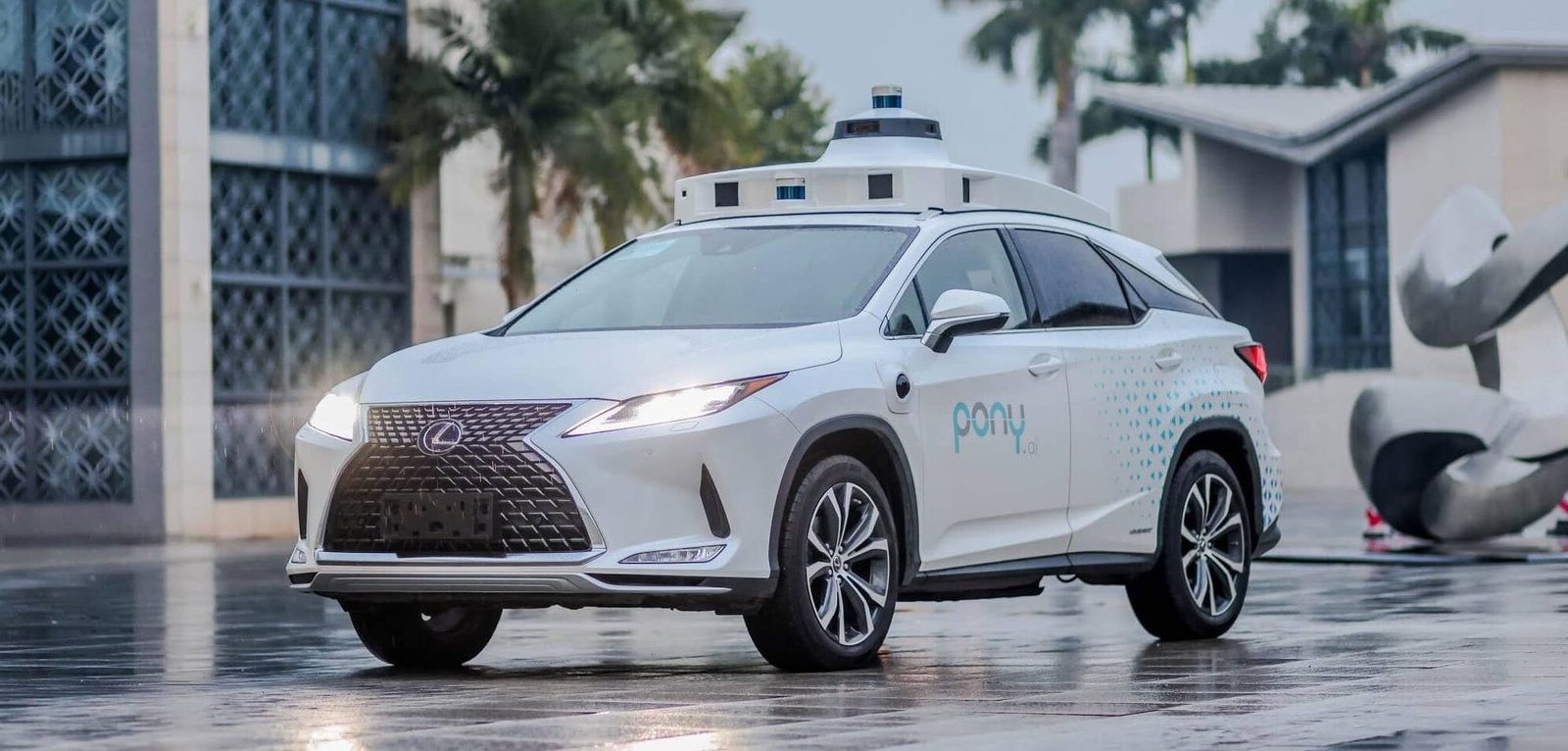

Pony.ai and Toyota have officially launched the mass production of their co-developed robotaxis in China, marking a significant stride towards the commercialization of autonomous ride-hailing services. The first “Bozhi 4X” robotaxis, based on Toyota’s bZ4X electric vehicle, have begun rolling off the assembly line, signaling a new era for autonomous mobility in the region.
The collaboration between Pony.ai and Toyota, a shareholder in the self-driving technology firm, has reached a new milestone with the commencement of scaled production. The Guangzhou-based Pony.ai announced that 1,000 driverless cabs are slated to be produced this year, with plans to deploy them in major Chinese cities. This initiative is a crucial step in Pony.ai’s broader strategy to operate a robotaxi fleet exceeding 3,000 units across mainland China and international markets by the end of 2026.
The “Bozhi 4X” robotaxi is equipped with Pony.ai’s seventh-generation autonomous driving system, which has been extensively validated in complex urban environments across Beijing, Shanghai, Guangzhou, and Shenzhen. This system boasts automotive-grade components and multi-layer safety redundancies. Notably, the hardware costs for the autonomous kit have been reduced by approximately 70% compared to the previous generation, improving the economic viability of large-scale deployment. The production line itself integrates the Toyota Production System (TPS), ensuring adherence to Toyota’s QDR (Quality, Durability, and Reliability) principles.
Beyond safety and efficiency, the new robotaxis incorporate user-centric features designed to enhance comfort and convenience. These include Bluetooth-based automatic unlocking, voice interaction, integrated online music services, and pre-trip climate control. Smoother acceleration and braking are also implemented to minimize motion sickness, offering a more pleasant ride-hailing experience.
This development occurs amidst an intensifying global race in the robotaxi sector. Competitors like Tesla, Baidu, WeRide, and XPeng are also making significant moves in autonomous vehicle deployment. Pony.ai’s ambitious fleet expansion plans, aiming for 100,000 vehicles by 2030 and potential breakeven before then, underscore the high stakes involved in shaping the future of mobility.