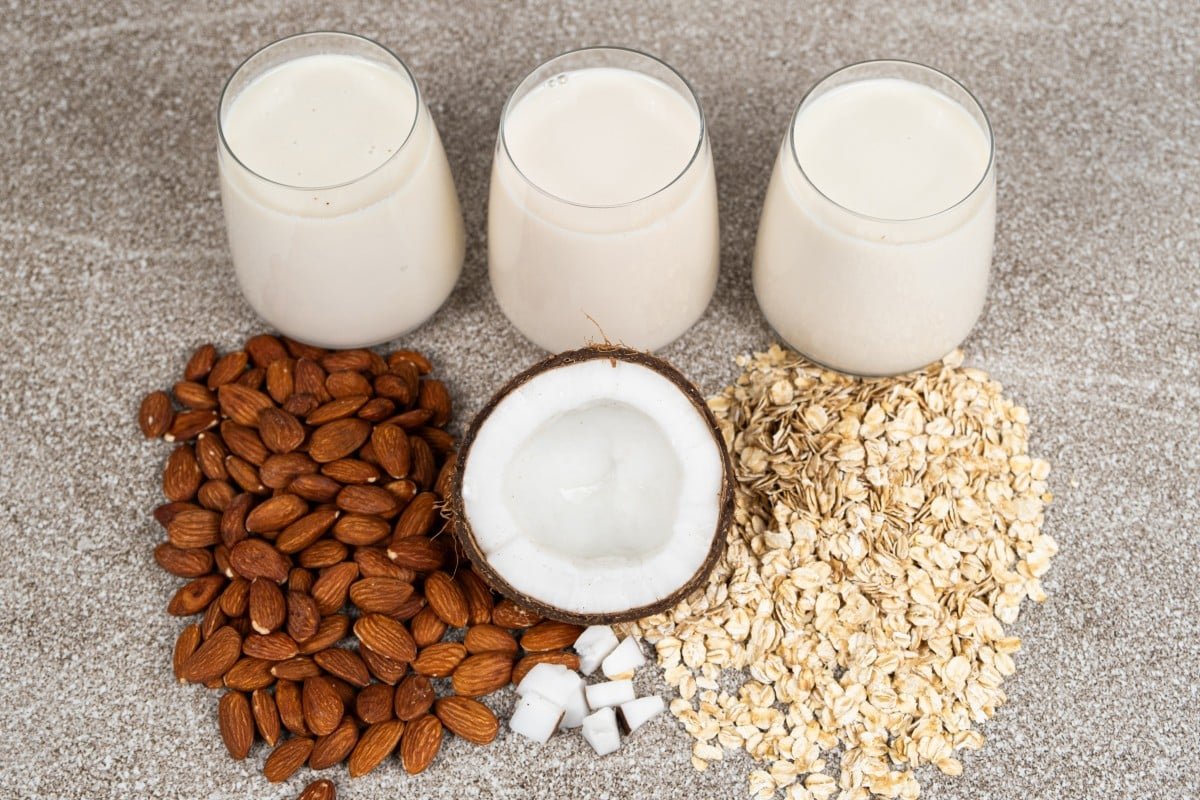

When it comes to plant-based milk alternatives, the choice between almond, soy, coconut, and oat milk not only affects flavor but also calories and nutritional content. Whether you’re watching your calorie intake or aiming to boost protein levels, each option offers different benefits.
For those focusing on low-calorie options, almond and coconut milk are the lightest choices. According to German consumer advice, unsweetened almond milk contains between 13 to 21 kilocalories (kcal) per 100ml, making it an excellent option for calorie-conscious consumers. Coconut milk is similarly low in calories, but keep in mind this only applies to unsweetened varieties. Both almond and coconut milk also have lower fat content than traditional cow’s milk, which contains about 65 kcal per 100ml in whole form and 45 kcal per 100ml in skimmed form.
If protein intake is a priority, soy milk stands out. Soy milk, with around 38 kcal per 100ml, offers the best “protein quality” of the plant-based alternatives, according to research from Germany’s Max Rubner Institute. This is due to soy milk’s high proportion of essential amino acids, which are easier for the body to process compared to other options like oat and almond milk. As a result, soy milk is an excellent choice for those looking to increase their protein consumption without relying on animal-based products.
Oat milk, while a popular option, is higher in calories and carbohydrates due to its grain-based composition. With 46 kcal per 100ml, oat milk contains the most calories of the plant-based alternatives reviewed. It also has lower protein content than soy milk, making it less ideal for those looking to boost their protein intake. However, oat milk is rich in carbohydrates, making it a good energy source for active individuals.
For those who enjoy frothed milk in their coffee, it’s important to note that barista versions of plant-based milks, designed for frothing, tend to contain more calories and fat than their regular counterparts.
In conclusion, choosing the best plant-based milk depends on your specific dietary needs. Almond and coconut milk are ideal for low-calorie diets, soy milk is best for protein intake, and oat milk provides energy-rich carbohydrates. Always check the labels to ensure you’re selecting unsweetened versions to avoid unnecessary added sugars.
READ MORE: