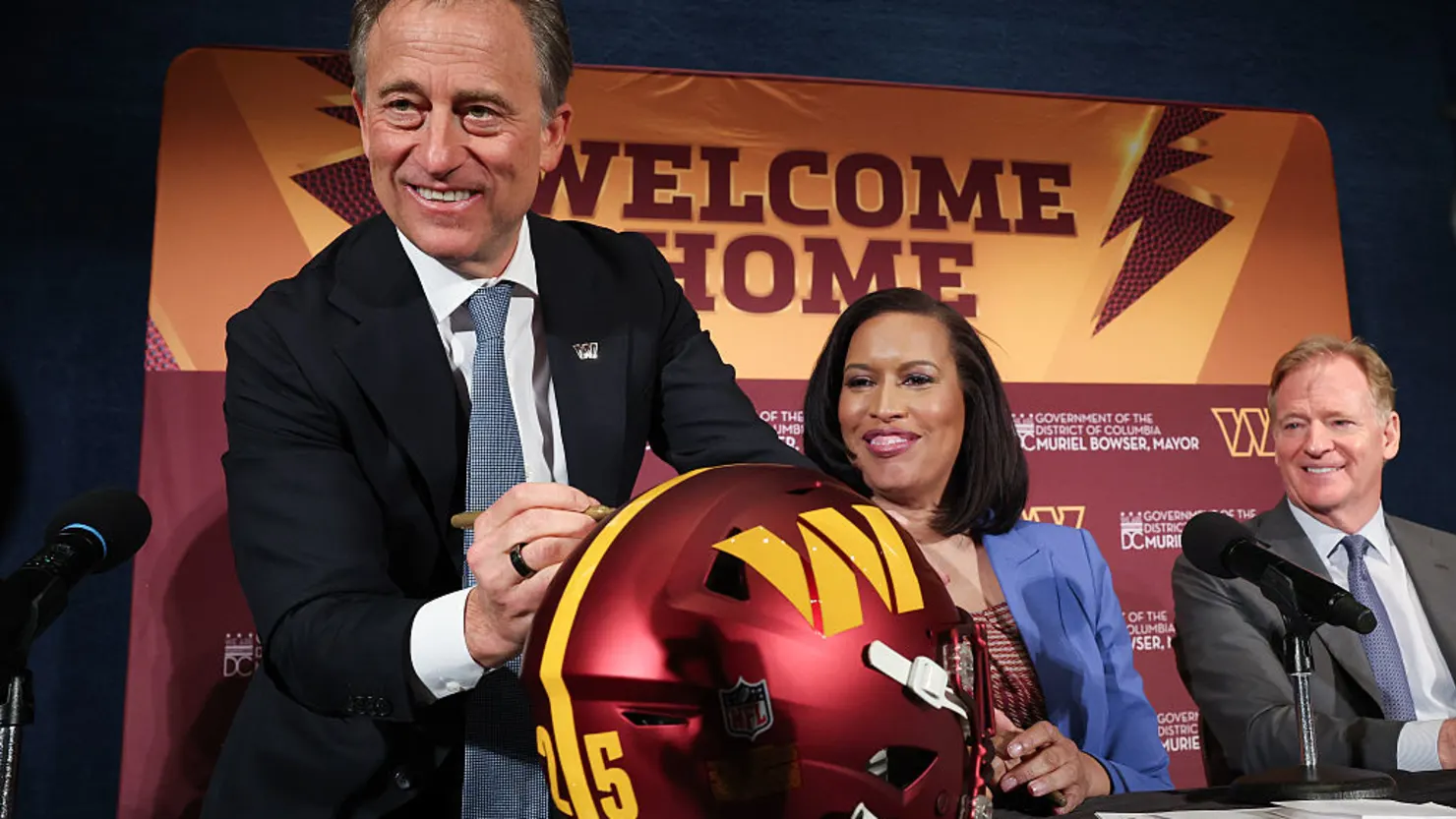

Over the last decade, private equity investor Josh Harris has built one of the most influential sports ownership conglomerates in the world. Through Harris Blitzer Sports & Entertainment (HBSE), which he co-founded with David Blitzer in 2017, Harris has expanded into nearly every major sports league, acquiring high-profile stakes across football, basketball, hockey, and soccer. The group’s portfolio includes majority stakes in the NFL’s Washington Commanders, the NBA’s Philadelphia 76ers, the NHL’s New Jersey Devils, and the Premier League’s Crystal Palace. Earlier this year, HBSE also paid $250 million in a franchise fee for a Philadelphia WNBA expansion team, expected to begin play in 2030.
HBSE’s rapid expansion has elevated it into the upper tier of global sports empires. With a current valuation of $14.58 billion, it now ranks as the third most valuable ownership group worldwide. Such growth has sparked speculation about whether HBSE or similar sports conglomerates could eventually look toward public markets.
Harris has been clear in his stance: going public is not in the plans. He emphasized that sports assets have historically commanded higher valuations as private holdings compared to public markets. According to him, the limited number of U.S. teams tied to public companies, such as Madison Square Garden’s sports properties, often trade below their intrinsic value and fail to generate the kind of market enthusiasm one might expect.
A key reason for this preference for private ownership lies in operational flexibility. Harris explained that team owners need the ability to make long-term investments, such as funding player acquisitions or building infrastructure, without the quarterly pressures of public shareholders. The recent $3.7 billion deal to relocate the Washington Commanders to a new stadium on the site of the Robert F. Kennedy Memorial Stadium in Washington, D.C., is a prime example. Returns on that type of investment will not be realized for years, yet ownership can commit to the project without needing to satisfy immediate demands for profitability.
Instead of pursuing IPOs, leagues have found new ways to attract capital. Last year, the NFL began allowing select private equity firms to acquire minority stakes in franchises, providing liquidity without requiring owners to relinquish control. Harris views this as a positive development, noting that these funds are structured for long-term horizons and align with the steady growth expected from cities, fans, and the leagues themselves.
For Harris and HBSE, the focus remains on building intergenerational assets and shaping the long-term future of professional sports rather than chasing short-term market valuations.
READ MORE: