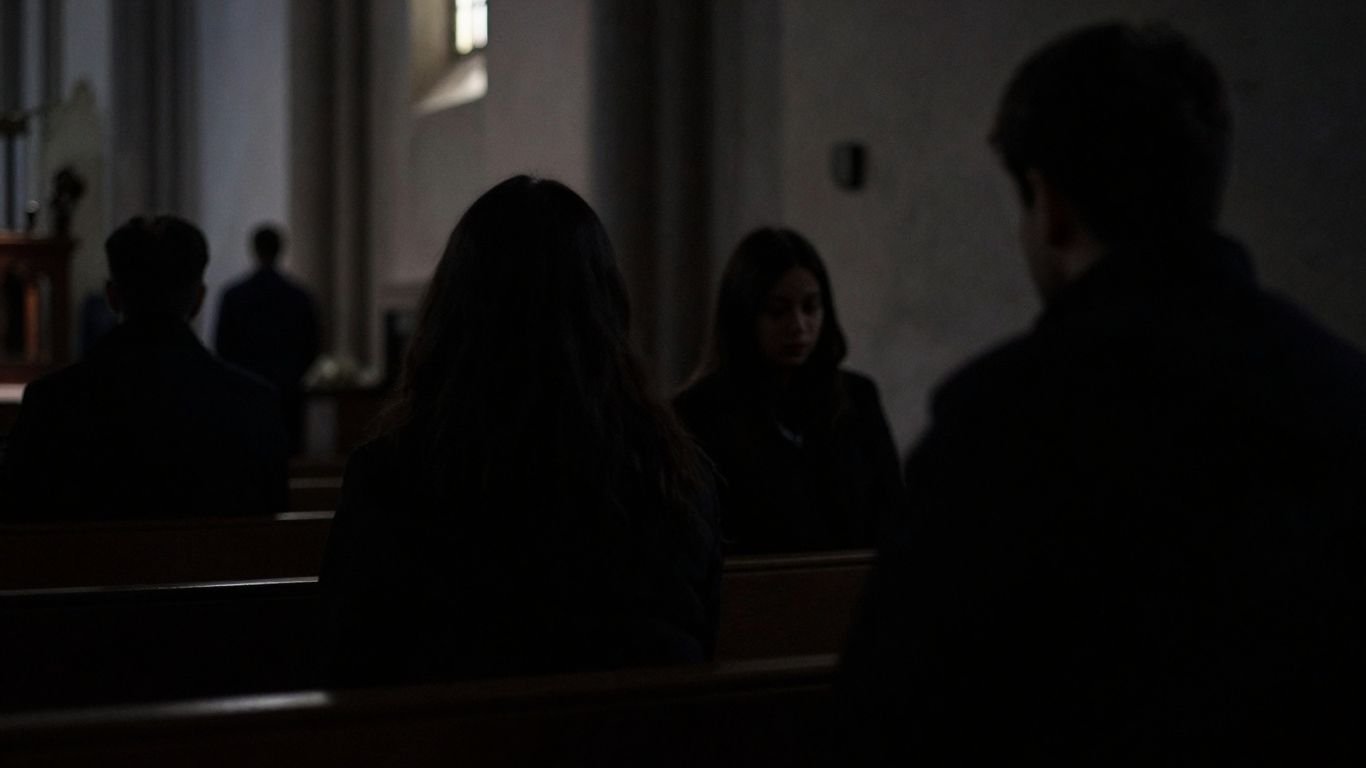

Authorities in China have intensified their crackdown on unregistered Christian groups, with recent detentions of leaders from prominent underground churches. The Early Rain Covenant Church reported the arrest of its leader, Li Yingqiang, his wife, and two other members, marking the latest in a series of actions against house churches.
Escalating Repression
Leaders of the Early Rain Covenant Church in southwest China have been detained, signaling a significant escalation in the government’s campaign against unregistered Christian communities. Li Yingqiang, the church’s leader, was taken from his home in Deyang, Sichuan province, along with his wife, Zhang Xinyue, pastor Dai Zhichao, and lay member Ye Fenghua. While some other members detained were later released, several remain out of contact.
This wave of detentions is not isolated. In October, 18 senior members of Zion Church, another prominent underground church, were arrested in a nationwide sweep. Reports from December also indicated the detention of approximately 100 members of an unofficial church in Zhejiang province.
Government’s Stance on Unregistered Religious Groups
Rights organizations view these detentions as a deliberate attack by the Chinese government on house churches. Yalkun Uluyol, China researcher at a human rights NGO, stated that unofficial churches are perceived as “disobedient” to the Communist Party’s ideology, leading them to “pay a heavy price” as Beijing tightens its ideological control.
One Early Rain member was reportedly summoned on charges of “picking quarrels and provoking trouble,” a broad offense often used against government critics. The grounds for the current detentions and whether formal charges have been laid remain unclear. Public security bureaus in Deyang and Chengdu declined to comment.
Historical Context and Future Outlook
The Early Rain Covenant Church, founded by prominent legal scholar and human rights activist Wang Yi, has been a target of government action before. Wang Yi was jailed for nine years in 2019 for inciting subversion of state power. The church has historically operated outside state-sanctioned venues, meeting in private gatherings.
Under President Xi Jinping, the space for religious freedom in China has been significantly reduced. The government officially recognizes five religions but has increasingly squeezed activities outside state-sanctioned institutions. The current crackdown appears to extend to online religious activities, with new rules banning unlicensed groups from holding online sermons introduced in September.
Despite the intensified repression, some experts believe China’s Christian community will continue to grow. While official estimates place the Christian population at around 3%, the true number may be higher. Professor Yang Fenggang of Purdue University suggests that while large, outspoken churches may be suppressed, smaller, more clandestine groups are effective at recruiting new members, making the complete eradication of house churches unlikely.