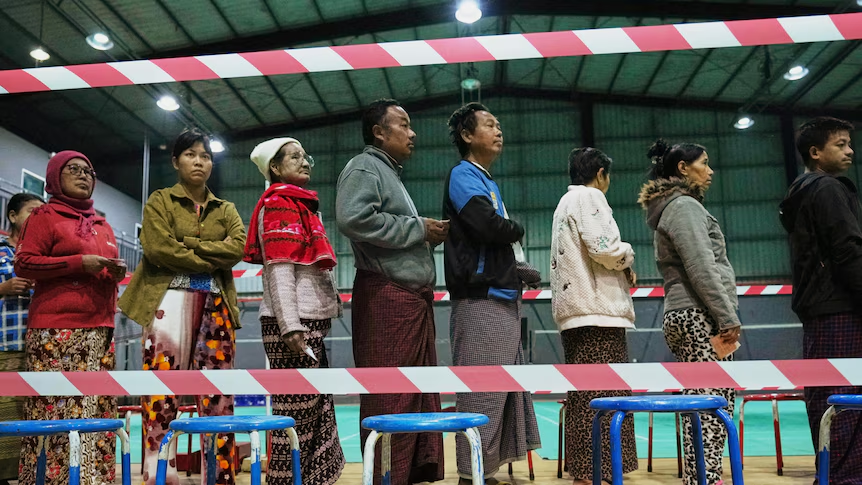

Myanmar’s military-backed political bloc has sealed a sweeping election victory in a tightly controlled vote held during an ongoing civil war, an outcome that had been widely expected after major opposition forces were excluded and voting was limited to areas under government control.
Official tallies and reporting around the vote indicate the military-aligned Union Solidarity and Development Party (USDP) took a dominant share of contested seats across the multi-phase election. The ballot was conducted in three stages, but voting was not held in 67 townships controlled by armed opponents, reducing the total number of parliamentary seats from 664 to 586.
Even before accounting for final seat totals, the structure of Myanmar’s post-coup political system strongly favored the military. The armed forces are guaranteed 25% of parliamentary seats, meaning the military and its allied party begin with a large built-in voting bloc that makes it difficult for any rival civilian coalition to win control.
The next steps are expected to move quickly: parliament is expected to convene to elect a president and vice presidents, with the new government set to take over after that transition. Reports have repeatedly suggested the coup leader, Senior General Min Aung Hlaing, could emerge as president under the new arrangement.
The election was held under the shadow of escalating conflict and air power. UN-linked reporting said at least 170 civilians were killed in air strikes during the voting period, with the same reporting pointing to hundreds of aerial attacks during the December-to-January election window.
Regional and international criticism has focused on legitimacy: opponents argue the vote was designed to formalize military dominance rather than restore genuine civilian rule, while the authorities insist the process was “free and fair” and reflects public support.