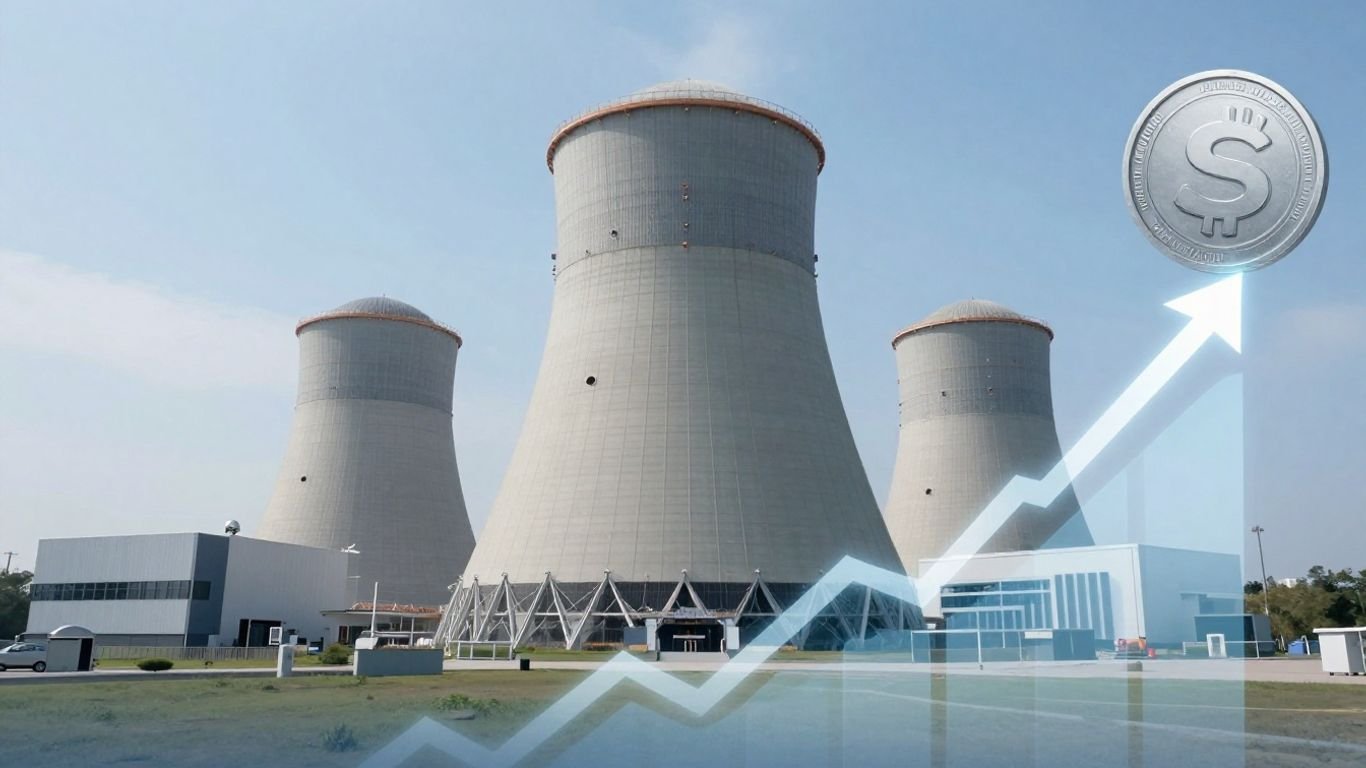

Jeff Bezos’ philanthropic arm, the Bezos Earth Fund, has committed $3.5 million to the Nuclear Scaling Initiative (NSI). This grant aims to streamline the construction of new nuclear reactors in the United States by fostering an “orderbook” model, which encourages multiple buyers to commit to the same reactor design. The initiative seeks to reduce costs, mitigate risks, and provide greater certainty for developers and suppliers, ultimately paving the way for at least 10 new U.S. nuclear reactors.
The $3.5 million grant from the Bezos Earth Fund will directly support the NSI’s efforts to establish an orderbook for new large reactor builds of mature designs in the United States. This model, proven in industries like aviation and shipping, involves aggregating demand for a specific reactor design. By committing to multiple identical builds, the NSI anticipates significant reductions in risk and cost over time, while also providing greater predictability for all parties involved.
This investment comes at a critical time as U.S. electricity demand is projected to grow substantially by 2050, driven by factors such as the expansion of artificial intelligence, data centers, and the electrification of various sectors. The NSI, a collaboration between the Clean Air Task Force, EFI Foundation, and the Nuclear Threat Initiative, believes that nuclear power, with its ability to provide clean, reliable, and around-the-clock electricity, is a vital component in meeting this growing demand while simultaneously addressing climate goals.
Tom Taylor, President and CEO of the Bezos Earth Fund, stated that the support for NSI represents a “targeted bet that smart coordination can unlock much larger public and private investment.” He added that the goal is to turn this initial reactor package into a model for many more. The NSI’s approach emphasizes safety, security, and nonproliferation, aiming to create a more efficient and responsible pathway for nuclear energy deployment in the U.S. Former Energy Secretary Ernest Moniz, a co-chair of the NSI steering committee, highlighted that the orderbook model is “key for managing risk and eventually lowering costs.”