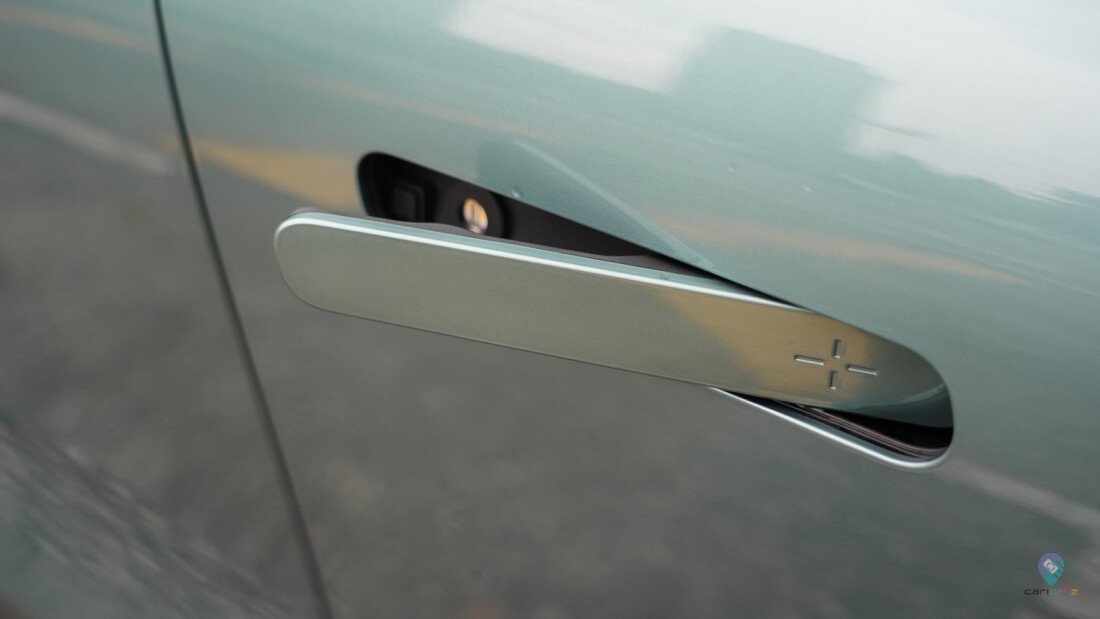

China will begin phasing out “hidden” or retractable door handles on passenger vehicles under a new safety standard that emphasizes mechanical access in emergencies, with compliance timelines that reach into 2029.
Under the updated technical requirements issued by Ministry of Industry and Information Technology, new vehicle models will need door-handle designs that meet the standard starting Jan. 1, 2027, while models already approved will have until Jan. 1, 2029 to align with the rules.
The new requirements focus on ensuring doors can be opened even when electronic systems fail. The standard calls for each passenger door to be equipped with both exterior and interior handles, with mechanical release designs mandatory and electronic solutions permitted only as optional additions. It also sets requirements for where exterior handles must be positioned and how they should function, and it requires interior handles to be clearly visible for quick identification in a crash.
Flush, electrically actuated handles became popular as automakers sought cleaner aerodynamics and a more futuristic look—features commonly associated with Tesla and widely adopted across China’s EV market. But regulators have increasingly emphasized rescue and occupant safety when power is lost or doors become difficult to operate after impact.
The policy follows a string of incidents that amplified public concern, including a widely reported case in which bystanders were unable to open a door to help the driver of a Xiaomi SU7 Ultra after a crash and fire.
Industry analysts have also signaled potential spillover effects beyond China. “China is the first major automotive market to explicitly ban electrical pop-out and press-to-release hidden door handles,” one analyst said. “While other regions have flagged safety concerns, China is the first to formalize this into a national safety standard.”
For automakers, the compliance window implies a near-term design pivot for upcoming model cycles, and a longer retrofit or redesign runway for existing platforms—especially those that built product identity around flush handles.