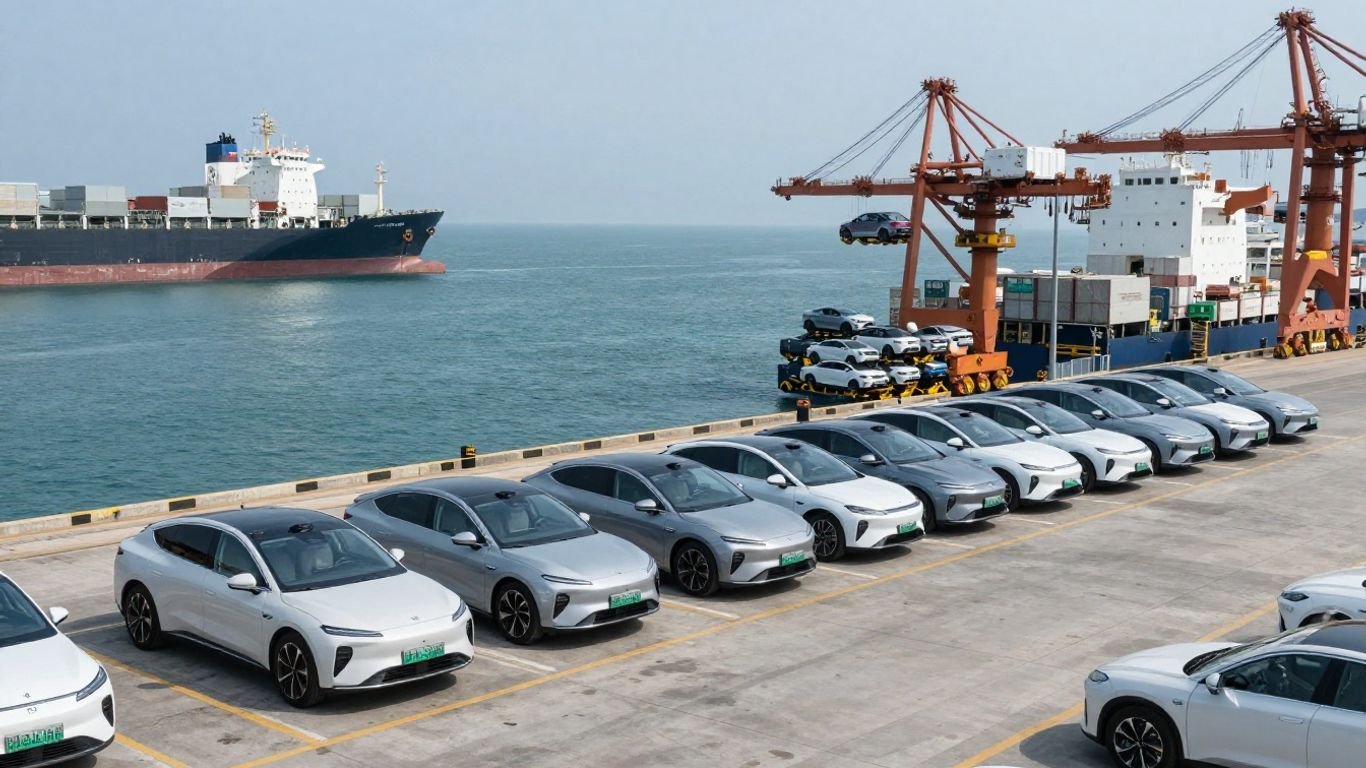

China’s electric vehicle (EV) exports are experiencing an unprecedented surge, fundamentally altering the global automotive landscape. This rapid expansion, fueled by a domestic price war and strategic market penetration, is leading to significant gains in international markets, while simultaneously raising concerns among Western automakers and policymakers about fair competition and trade imbalances.
China’s domestic EV market, while still the largest globally, has faced intense competition and shrinking profit margins. This has prompted a strategic shift, with automakers increasingly focusing on exports to drive growth. In November 2025 alone, China’s EV exports surged by 87% year-over-year, reaching nearly 200,000 units. For the first eleven months of 2025, nearly 2 million EVs were exported.
Asia remains the primary destination for Chinese EVs, but other regions are witnessing rapid expansion. Europe, despite facing import tariffs, has seen a significant influx, with Chinese brands capturing a record market share. Notably, Mexico has become a crucial entry point into North America, benefiting from looser trade barriers compared to the United States. Latin America and Africa are also experiencing substantial growth in Chinese EV imports, driven by affordability and rapid deployment.
Western nations have responded to the surge with measures like tariffs. However, Chinese automakers have shown remarkable adaptability. The European Union’s tariffs, primarily targeting fully electric vehicles, have led to a significant increase in plug-in hybrid exports, which face lower duties. Furthermore, Chinese companies are beginning to establish local production facilities in regions like Hungary, aiming to circumvent import duties and integrate more deeply into regional supply chains.
The export boom is a significant factor in China’s projected rise to become the world’s largest auto seller in 2025, potentially surpassing Japan for the first time in over two decades. Brands like BYD and Geely are climbing global rankings, signaling China’s emergence as a major force in the automotive industry. This shift presents a formidable challenge to established Western and Japanese automakers, who are grappling with increased competition, declining profits, and the need to accelerate their own EV strategies.