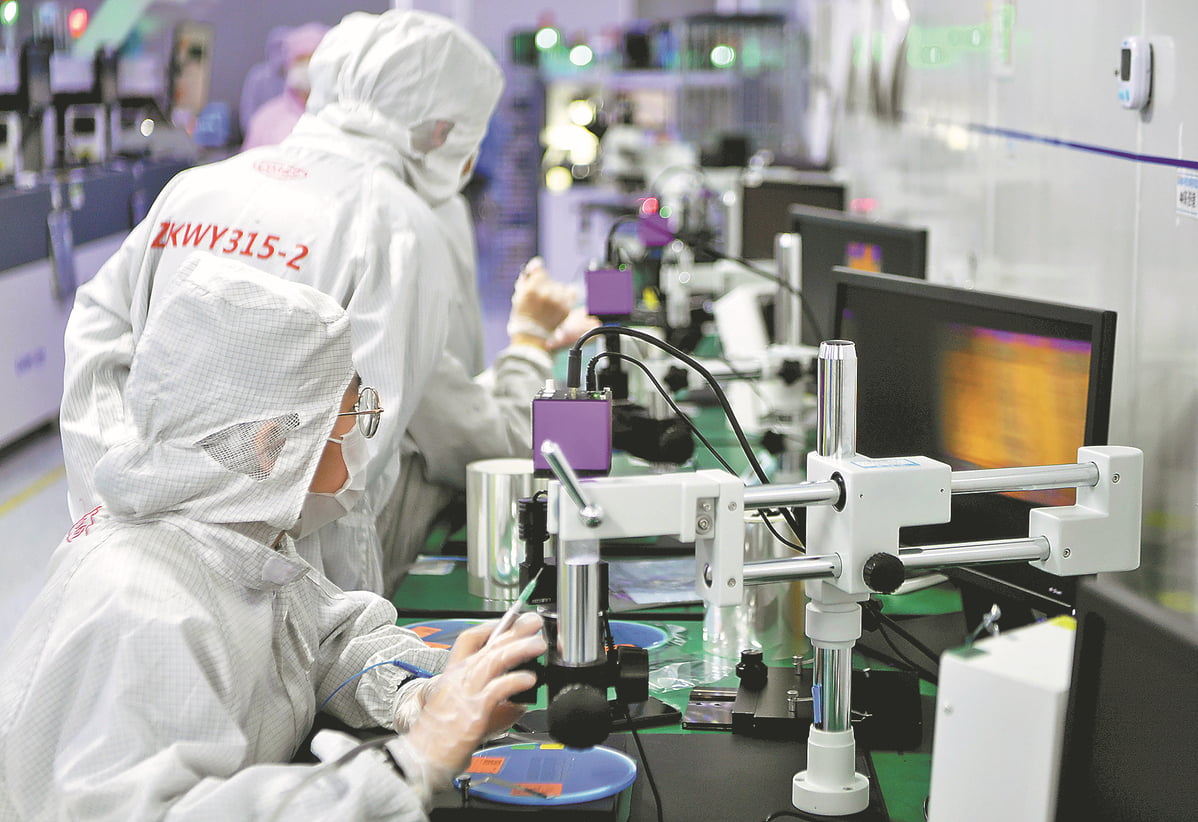

China’s aspiration to compete at the highest levels of chip-making has captured the imagination of its citizens. The country is investing heavily in the development of its semiconductor industry, with the goal of reducing its reliance on foreign chip imports. The US government’s crackdown on Chinese technology companies has also spurred China’s push to grow its domestic chip sector.
Although China is able to produce its own chips for military use and has made significant strides in the design of smartphone chips and modems, it still requires foreign semiconductor technologies and equipment to produce high-end chips for civilian use. China’s chip companies began to work on chips much later than their Western counterparts, and as a result, need more time to gain experience and accumulate knowledge. There is also a shortage of professionals with expertise in chip technologies, making it challenging to cultivate a thriving ecosystem around the industry.
Despite these obstacles, China has made significant strides in developing its chip industry. As of May 2022, 29 universities in China had established integrated circuits colleges or chip talent training bases. The Ministry of Industry and Information Technology has also published a guideline calling for more efforts to cultivate top-quality engineers. Furthermore, history has shown that Chinese companies have a knack for turning crises into opportunities. For instance, the US government’s ban on sales of premium processors to China’s high-performance computers led to an acceleration in China’s development of its own CPUs.
As China continues to mobilize resources nationwide to promote the development of ICs, it is only a matter of time before the country sorts out its chip woes and emerges as a leader in the industry.
Read More: