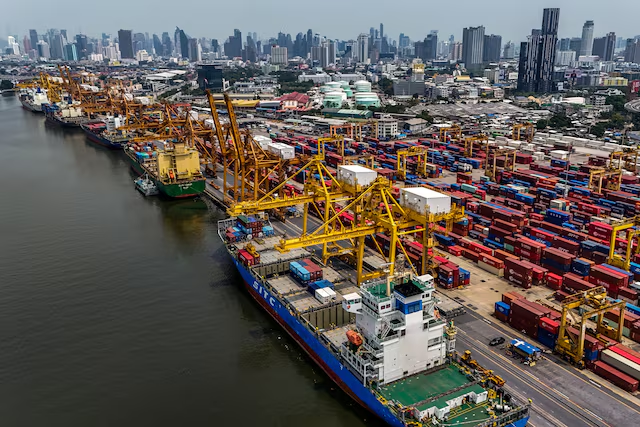

Thailand is bracing for a prolonged and uncertain impact from the United States’ evolving tariff policies, according to a statement by the country’s central bank chief. Bank of Thailand Governor Sethaput Suthiwartnarueput explained that the consequences of the U.S. measures will become clearer in the second half of the year, but the risk landscape already appears complex and challenging. The economic implications for Thailand are expected to be significant, particularly due to its strong trade relationship with the United States.
The U.S. remains Thailand’s largest export destination, accounting for 18.3% of its total exports last year. In absolute terms, this translates to $54.96 billion in shipments to the U.S., highlighting the country’s heavy reliance on American demand. However, tensions are rising as the United States has cited a $45.6 billion trade deficit with Thailand, a factor that continues to fuel protectionist measures. Unless a resolution is reached before a global moratorium expires in July, Thailand could face a steep 36% tariff on its exports to the U.S., posing a serious threat to key industries.
The manufacturing sector is expected to bear the brunt of the impact. While the disruption may not reach the severity experienced during the pandemic, the central bank governor acknowledged that it could significantly undermine Thailand’s industrial output and employment in export-related businesses. The uncertainty surrounding the duration and scope of these tariffs further complicates planning and investment decisions for Thai companies.
In addition to the direct effects on exports, Thailand is also facing secondary risks from trade diversion. With countries seeking alternative markets due to U.S. trade restrictions, there are concerns about a surge in imports entering Thailand. This influx could create new competitive pressures on domestic producers and disrupt market dynamics.
The Thai government and central bank are closely monitoring the situation and assessing policy responses to mitigate economic fallout. However, with diplomatic negotiations still uncertain and global trade tensions showing few signs of easing, businesses are being urged to prepare for continued volatility. The outlook remains clouded by global geopolitical developments and the direction of U.S. trade strategy, both of which will shape Thailand’s economic trajectory in the months ahead.
READ MORE: