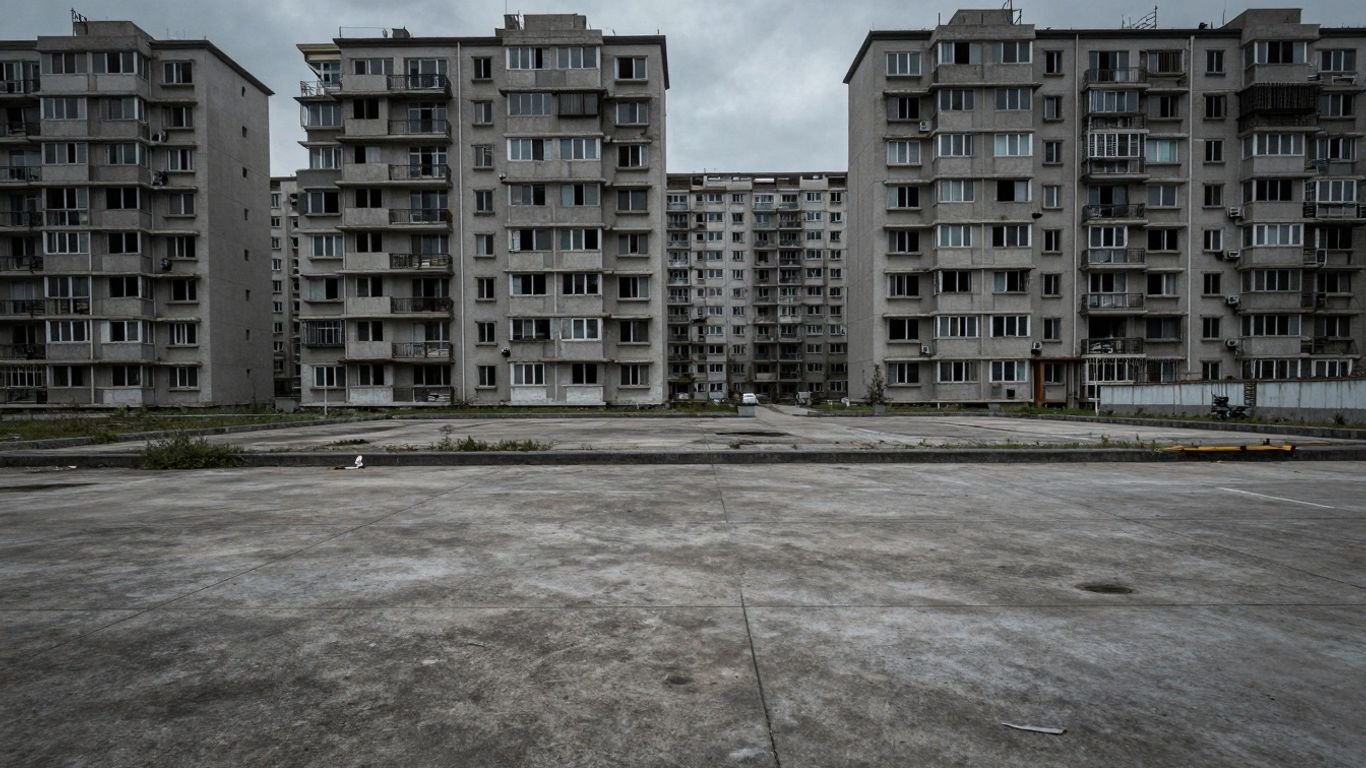

China’s real estate market is grappling with a deepening downturn, marked by persistent price declines and weak sales, now entering its fifth year. Despite government efforts to stimulate the sector, including interest rate adjustments and eased purchase restrictions, the market shows little sign of a swift recovery. Analysts suggest that a significant turnaround may still be years away, with excess inventory and fragile buyer sentiment acting as major headwinds.
Deepening Price Declines and Sales Slump
Recent data reveals a worsening trend in China’s housing market. In November, sales for the top 100 developers saw a substantial year-on-year plunge of 36%, a slight improvement from October’s 42% decline, but still indicative of a severe slump. For the first eleven months of the year, home sales contracted by 19%. Secondary home prices in 100 surveyed cities dropped by 7.95% in November, widening from the previous month, attributed to high listing volumes and weak buyer sentiment.
Government Support and Its Limitations
Beijing’s goal to “halt the declines in the housing market” appears increasingly unrealistic. While the central government has lowered credit interest rates and minimum down payments, and local governments have implemented supportive policies, these measures have yet to reverse the overall trend. Analysts suggest that further stimulus, such as interest-rate subsidies for homebuyers, might be necessary to stabilize prices and encourage a gradual recovery. However, the government seems hesitant to implement aggressive monetary easing, focusing instead on restructuring indebted firms and ensuring home deliveries.
Inventory Overhang and Future Outlook
Excess inventory continues to be a major drag on the market. As of August 2025, completed but unsold housing inventory stood at approximately 762 million square meters, an increase from the previous year. S&P Global Ratings projects that new home sales could drop by 8% in 2025, a steeper decline than previously anticipated. The ratings agency expects sales to continue falling in 2026, with primary home prices also projected to decrease. A sustainable recovery is not expected until at least the first half of 2027, contingent on effective policy measures to reduce inventory and boost demand, particularly in higher-tier cities.
Broader Economic Implications
The real estate sector’s prolonged slump has significant implications for China’s economy. Historically a major engine of growth, the sector’s downturn affects related industries like cement and steel. The government’s long-term strategy involves shifting resources towards sectors such as electric vehicles and renewable energy, viewing real estate as a less efficient economic layer. However, the “systemic importance” of the housing market means its instability can cause serious fluctuations in the financial sector and impact overall economic growth and social stability.
Sources
- Why China’s real estate market is still searching for a bottom, CNBC.
- China’s real estate market faces more issues amid falling housing prices, Anadolu Ajansı.
- China’s housing slide deepens as October prices fall at fastest pace in a year, South China Morning Post.