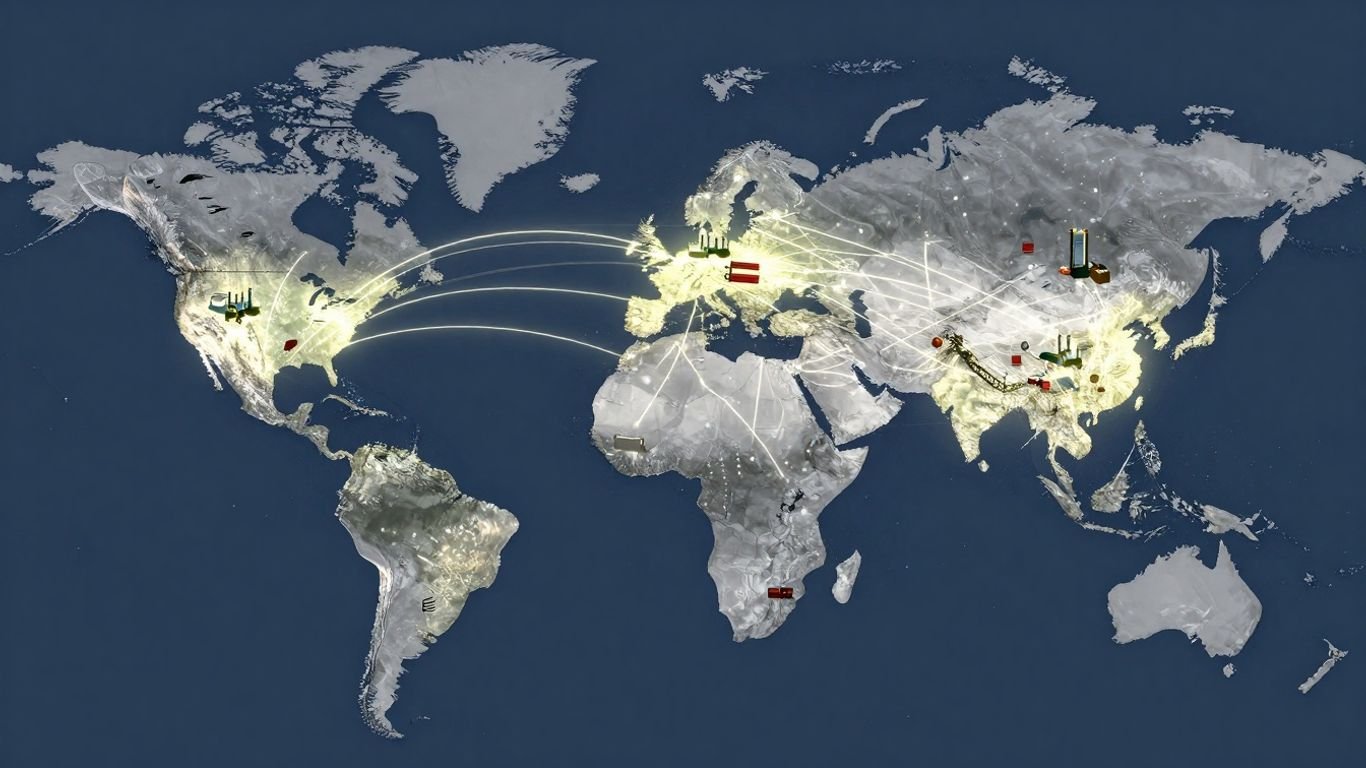

Global manufacturing is undergoing a significant transformation as companies increasingly diversify their production bases away from China. This strategic shift is driven by a complex interplay of factors including trade tensions, rising costs, and a desire for greater supply chain resilience. While China remains a dominant manufacturing hub, alternative locations in Southeast Asia and even a return to domestic production in the U.S. are gaining traction.
The “China Plus One” Strategy Gains Momentum
The “China Plus One” strategy, which involves maintaining operations in China while developing alternative production sites, is no longer just a theoretical concept but a growing reality. This approach is fueled by geopolitical uncertainties, including trade tariffs and regulatory shifts, which have prompted businesses to spread their manufacturing footprint across multiple countries. Vietnam, in particular, has seen a boom in foreign investment, with cities like Bac Ninh transforming into bustling factory zones. This influx is partly due to Chinese companies themselves diversifying to circumvent U.S. tariffs.
Challenges and Opportunities in New Manufacturing Hubs
While Vietnam has benefited immensely, it faces its own set of challenges. Rising labor costs, worker shortages, and the need for improved infrastructure are becoming apparent. The country is striving to move up the value chain, focusing on higher-value manufacturing and expanding export markets. To support this, Vietnam is investing in new infrastructure, such as highways and railways, and promoting high-tech manufacturing zones. However, it’s acknowledged that Vietnam cannot fully replace China’s vast manufacturing ecosystem, which has been built over decades with significant government support and a large labor pool.
Diversification Beyond Vietnam
As Vietnam grapples with its growing pains, other nations are stepping up to attract manufacturing. Indonesia and the Philippines are actively promoting themselves as strategic alternatives. The Philippines, for instance, has introduced new laws to encourage long-term foreign investment. In the e-bike sector, Indonesia is emerging as a key location for batteries manufactured outside of China.
U.S. Reshoring and Automation
Simultaneously, some companies are looking to bring manufacturing back to the United States. J-Star Holding, a provider of carbon fiber and composite solutions, announced its intention to exit most of its China operations and establish its first automated production line in the U.S. This move aims to enhance efficiency, supply chain resilience, and proximity to key customers, while also focusing on innovation and intellectual property creation. This trend suggests a broader move towards automation and a more resilient, geographically diverse manufacturing strategy.