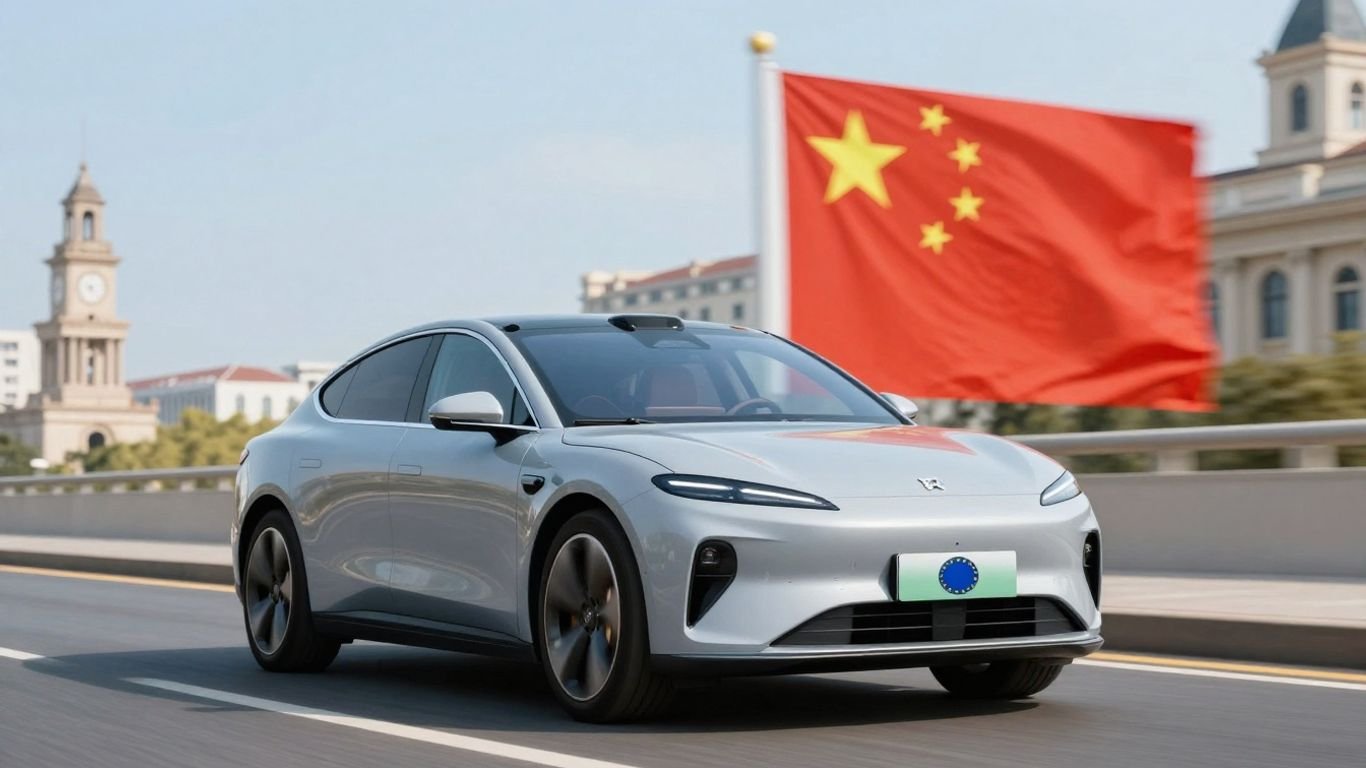

The European Union and China have taken a significant step towards de-escalating their trade dispute over electric vehicles (EVs). The European Commission has released new guidance that could see anti-subsidy tariffs replaced by minimum pricing agreements for Chinese-made EVs imported into the bloc. This move aims to protect European automakers while allowing Chinese manufacturers to maintain profitability.
A New Path Forward
The European Commission has outlined a procedure allowing automakers to voluntarily limit the number of electric vehicles they export from China to Europe. Crucially, these companies would also commit to setting minimum prices for these vehicles. This initiative is designed to offer an alternative to the anti-subsidy duties, which currently range up to 35 percent.
Olof Gill, a spokesperson for the European Commission, stated that the commission has always been open to exploring alternatives to the duties it imposed. This new guidance represents a willingness to find a mutually agreeable solution.
Minimum Pricing and Trade Protection
Under the proposed plan, steep tariffs on Chinese EVs could be substituted with a minimum pricing system. This system would consider the state subsidies received by Chinese manufacturers, thereby preserving a level of protection for European carmakers. For Chinese producers like BYD Co., this could mean retaining profits on European sales rather than paying them out in tariffs.
Addressing Trade Tensions
The dispute over Chinese electric vehicles has been a significant point of contention in EU-China trade relations. Brussels initiated its anti-subsidy investigation in October 2023, culminating in the imposition of duties a year later. In response, Beijing had launched its own probes into European products such as cognac, dairy, and pork.
The new guidance encourages exporters to strengthen their proposals by including commitments on annual shipment volumes and future investment plans within the EU. The European Commission has assured that each assessment will be conducted objectively and fairly, adhering to World Trade Organization rules and the principle of non-discrimination. This development is viewed as a milestone in resolving the protracted trade disagreement.