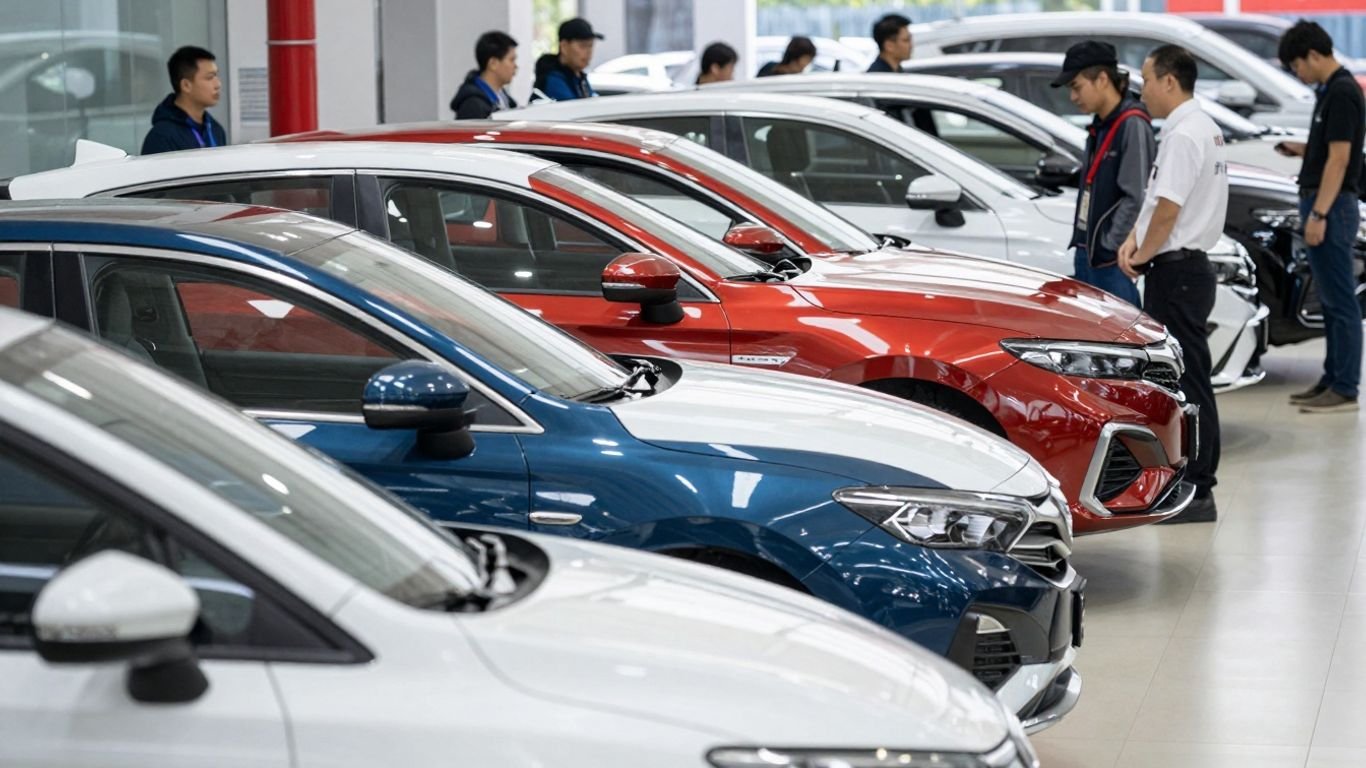

Major automakers, including BMW and General Motors, are implementing significant price cuts on a wide range of vehicles in China. This aggressive strategy comes in response to falling sales, intensified competition from domestic brands, and a shift in consumer preferences towards more affordable, tech-savvy options. The move signals a challenging market environment for legacy manufacturers in the world’s largest automotive market.
Intensifying Competition and Falling Sales
BMW is facing a considerable challenge in the Chinese market, where the rise of domestic automakers is steadily eroding its market share. Buyers are increasingly drawn to locally produced vehicles that offer advanced technology at substantially lower prices. This trend indicates that brand prestige alone is no longer sufficient to maintain market dominance.
BMW Group reported a 12.5% decrease in sales in China for the past year, selling 625,527 cars, a stark contrast to the peak of 847,900 units in 2021. To counteract this weakening demand, the company has initiated price reductions on 31 models, describing it as “regular price management.” For instance, the i7 M70L is now 301,000 yuan cheaper, and the iX1 eDrive25L sees a 24% discount.
Aggressive Pricing Strategies
General Motors has also joined the price-cutting wave, authorizing significant discounts on its Buick and Cadillac vehicles. Official dealer incentive sheets reveal reductions of over thirty percent on several key models. The Cadillac XT5 Metropolitan, for example, has seen a 35.5% price reduction, while the Buick Regal Super Enjoy Edition offers a 33.1% cut. These aggressive tactics place GM alongside BMW and Volkswagen in a growing trend of automakers employing strong sales tactics.
This strategy persists despite recent draft guidelines from Chinese regulators aimed at preventing “abnormal pricing.” Automakers argue that with market capacity exceeding demand, price reductions are a necessary measure to stimulate sales and clear inventory. These discounts also aim to align official prices more closely with actual transaction prices, reducing pressure on dealers to negotiate further at the retail level.
Future Outlook and Localized Strategies
While sales in China are a concern for BMW, the company has experienced stronger momentum in other regions, with demand rising in Europe and the Americas. However, China remains the world’s largest car market and BMW’s most significant single market. To address the specific challenges in China, BMW is banking on locally produced and designed “Neue Klasse” models, including a long-wheelbase iX3, to help reverse the sales slide.
Despite the current difficulties, German luxury automakers like BMW, Mercedes, and Audi remain committed to the Chinese market in their competition against domestic brands. BMW’s manufacturing facilities in China are crucial to its global production network. The current pricing strategies underscore a competitive survival instinct, prioritizing market share defense over immediate regulatory concerns in the dynamic Chinese auto industry.