

Vincent de Boer grew up in Groningen at a time when the city was quietly figuring out its own identity. Not Amsterdam. Not Rotterdam. Somewhere that did things on its own terms, without much interest in waiting for permission. He is 25 now, and the agency he runs, Socials, carries that same quality.
He studied communication at university, graduating with research on how hospitality brands can better connect with the tourist market and sharpen their positioning online. It was practical, focused work. But the education that shaped Socials happened in parallel: years spent inside social media professionally, watching how brands behaved, how audiences responded, and slowly building a picture of what was going wrong.
What was going wrong, as De Boer saw it, was almost everything.

Built from frustration
Socials started, as De Boer tells it, out of a specific kind of irritation. Brands were posting. Agencies were billing. But nothing was actually landing. The content looked competent and felt like nothing. “Social media shouldn’t just look good,” he says. “It should mean something and move people.” The idea is simple enough to sound obvious. In practice, it turns out to be surprisingly hard to find.
His theory is that the problem starts long before any content gets made. Most agencies arrive at a client with a strategy already built, a template they’ve used before, a tone of voice lifted from whoever was culturally relevant six months ago. The brand gets fitted into a shape that was never theirs. The result is content that technically exists but belongs to nobody.
Socials works the other way around. De Boer starts by getting close to the brand: understanding what it actually believes, how it talks when nobody is performing, what story it is genuinely capable of telling. Strategy and content follow from that. Not before it.
Speed as a value
The agency is full-service: content creation, strategy and consulting, community management, the whole thing. Clients range from local Groningen businesses to national brands and creative and cultural companies. What they share, more often than not, is a feeling that their previous agency was always one meeting behind the moment.
De Boer is fairly direct about what he thinks larger agencies get wrong. “Big agencies often sell polished strategies, layers of meetings, and safe campaigns that look good in presentations,” he says. “But social media doesn’t live in boardrooms. It lives in culture, speed, and instinct.” At Socials, the gap between idea and execution is kept deliberately short. No long approval chains. No corporate filter killing every instinct before it reaches the feed. If something feels right for the brand and the moment, it gets made.
This is the thing he comes back to most: content that feels alive rather than manufactured. It is harder to produce than it sounds, because it requires a kind of trust between agency and client that most relationships never quite build. Socials, being smaller and closer, can afford to build it.
The North, without apology
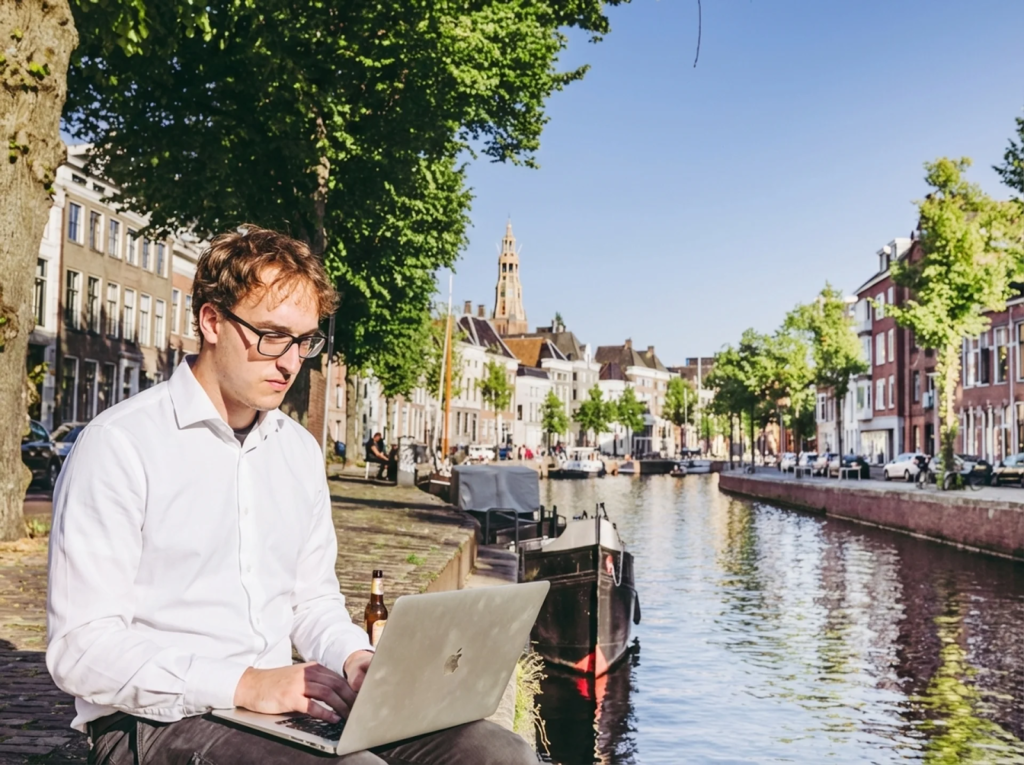
There is something worth noting about Groningen as a base for this kind of work. The city has a large student population, a distinct creative scene, and a long habit of not particularly caring what the Randstad thinks. For De Boer, that is less a background detail and more a working principle. Socials is not trying to replicate what an Amsterdam agency does from a cheaper postcode. It is trying to do something different.
The difference, in the end, comes down to proximity and honesty. Socials means something specific by that: the willingness to tell a client when their idea is not good enough, to push harder than is comfortable, to protect a brand’s voice even when the brand itself is tempted to soften it. It is the kind of candour that tends to get smoothed away in larger organisations, where the relationship between agency and client is managed more than it is practiced.
Where bigger agencies chase trends, Socials focuses on building a voice and a story that actually belongs to the brand. That is the clearest version of what he is offering. And, looking at what most branded social media currently sounds like, it is not a small thing to offer.