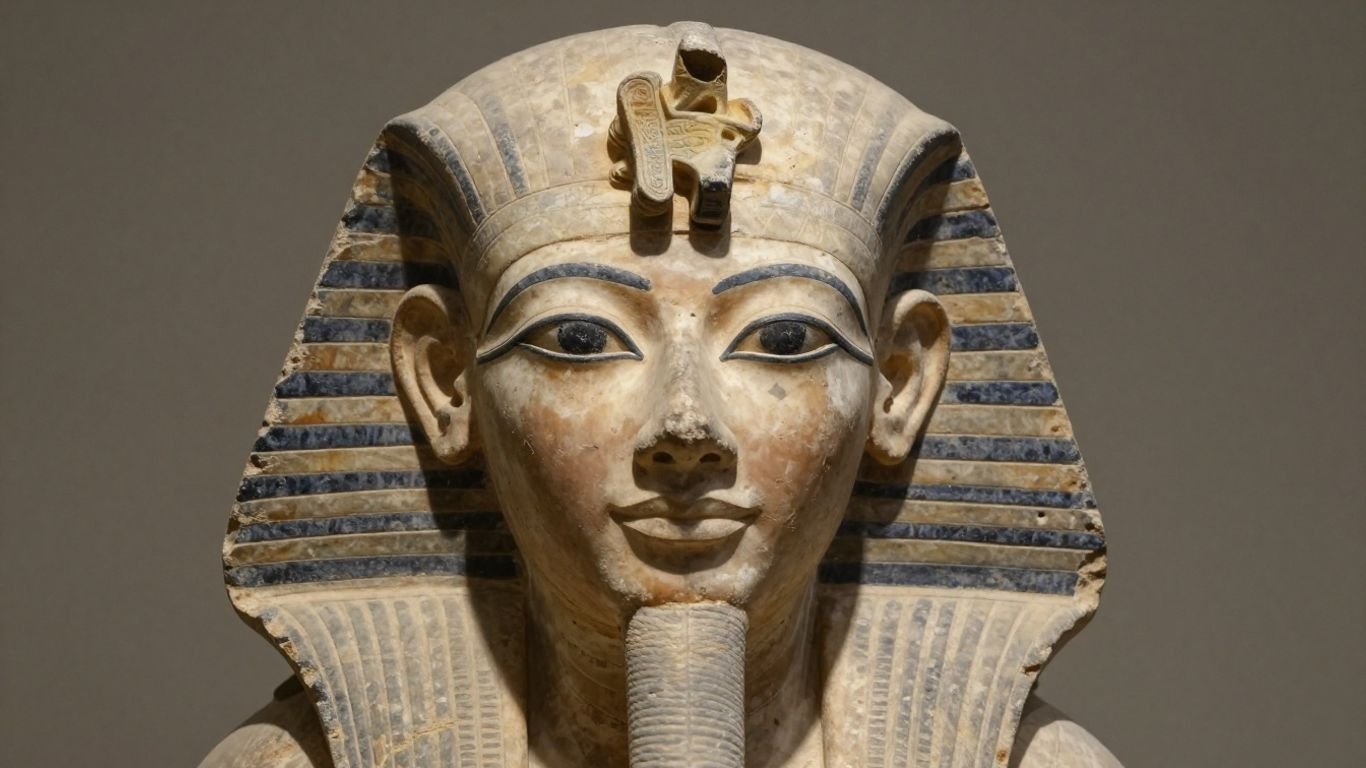

A significant artifact from the era of Pharaoh Thutmose III, a 3,500-year-old stone head, has been officially returned to Egypt by the Netherlands. The sculpture was looted during the instability of the Arab Spring and resurfaced in Europe, leading to an international investigation and its eventual repatriation.
The stone head, believed to be part of a larger statue depicting a senior official from Thutmose III’s reign (1479–1425 BCE), was illegally removed from Egypt, likely between 2011 and 2012 amidst the turmoil of the Arab Spring. For years, the artifact remained off the radar until it surfaced in 2022 at an art and antiques fair in Maastricht, Netherlands.
Following an anonymous tip, Dutch police and cultural heritage inspectors launched an investigation. In 2025, they confirmed the sculpture had been unlawfully removed from Egypt. The art dealer who had acquired the piece, Sycomore Ancient Art, voluntarily surrendered it upon learning of its questionable provenance.
This recovery was a result of coordinated legal and diplomatic efforts involving Egyptian, Dutch, and Spanish authorities. The Egyptian embassy in The Hague played a key role, working with the Ministry of Tourism and Antiquities and the Public Prosecutor’s Office. The Spanish National Police were instrumental in uncovering manipulated ownership documents, facilitating the legal recovery.
During a formal handover ceremony in The Hague, Dutch Minister of Education, Culture and Science emphasized the Netherlands’ policy to return items that do not belong to them to their rightful owners. Egypt’s Ambassador to the Netherlands, Emad Hanna, stated that Egypt actively monitors artifacts appearing in exhibitions and auctions, underscoring the cultural, touristic, and economic importance of such repatriations.
Egyptian officials expressed gratitude for the Dutch authorities’ multi-year efforts and highlighted the case as a model for voluntary restitution of smuggled antiquities. This repatriation aligns with Egypt’s broader policy to reclaim artifacts taken through illicit means and protect its cultural heritage for future generations.
Experts believe the sculpture originated from Luxor in southern Egypt. The period of Thutmose III is a significant era in ancient Egyptian history, known for its military campaigns and extensive building projects. The return of such artifacts is vital for understanding Egypt’s rich past and bolstering its tourism sector. Plans for the sculpture’s display are yet to be announced, but it is expected to be a valuable addition to Egypt’s museum collections, potentially including the recently opened Grand Egyptian Museum.