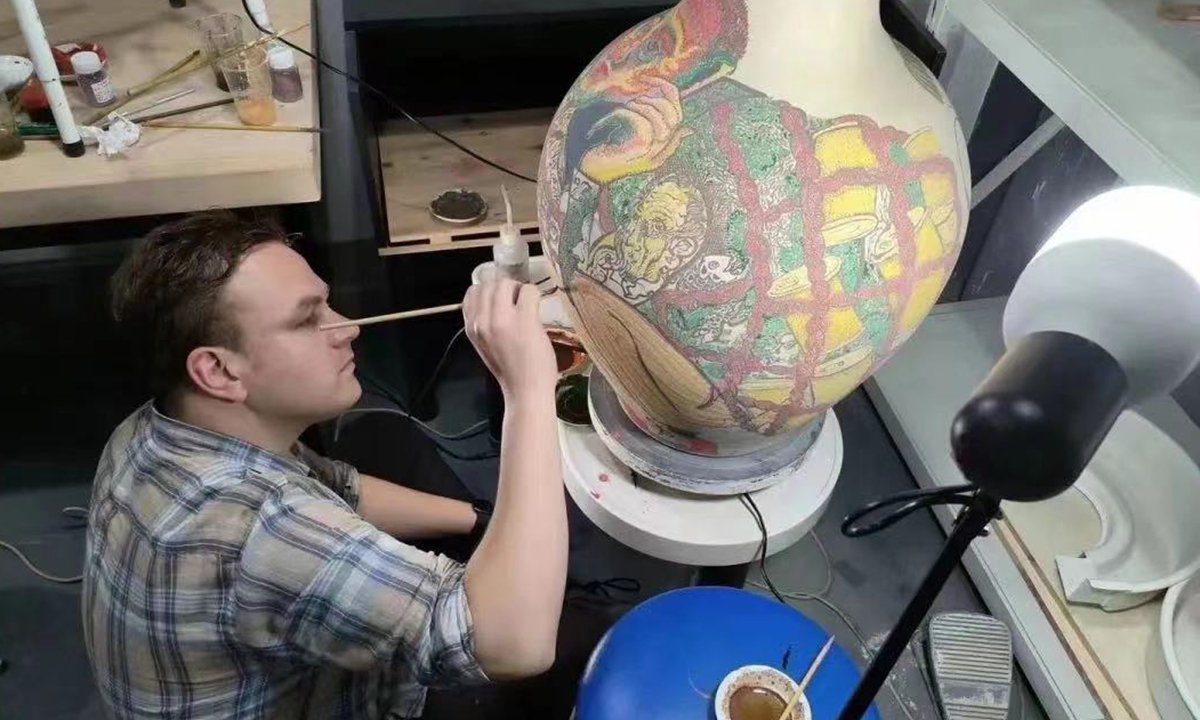

Jingdezhen, known globally as China’s “porcelain capital,” stands as a city steeped in cultural and historical significance. From the Song Dynasty era to the present day, it has led the world in porcelain production, symbolizing the epitome of traditional Chinese artistry and craftsmanship. Recently, Jingdezhen’s slow-paced lifestyle, welcoming atmosphere, and vibrant artistic community have attracted a growing number of foreign artists, transforming the city into a hub of global creativity and innovation in porcelain art.
Spanish porcelain artist Jaume Ribalta is among those who have made Jingdezhen their home. His work, inspired by the natural beauty surrounding his studio, combines elements of his Spanish heritage with traditional Chinese motifs. Jaume’s journey to Jingdezhen was fueled by a desire to delve deeper into the origins and evolution of porcelain, a material he has long been passionate about. In Jingdezhen, he found a community of young artists eager to push the boundaries of traditional porcelain art, drawing inspiration from the city’s rich historical and cultural tapestry.
Similarly, French artist Kami found her calling in Jingdezhen. Initially fascinated with clay as a child, she traveled through Europe for her studies before ultimately settling in Jingdezhen. Over eight years, she has established a deep connection with the city, embracing local customs and language. Her work often incorporates Western elements into traditional Chinese themes, creating a unique fusion that sometimes surprises her Chinese colleagues.
American artist Denis Naymark, who goes by the Chinese name “Ni De Ming,” meaning “Xiao Ming who plays with clay,” also fell in love with Jingdezhen. His passion for porcelain art led him to move to Jingdezhen, where he was captivated by the city’s ancient charm and the expertise of local artisans. Denis’s creations, inspired by his love for the ocean and the environment, often feature marine themes.
At its peak, Jingdezhen attracted over 5,000 foreign residents, including renowned artists and scholars, turning it into a global epicenter for cultural exchange in porcelain art. The city has fostered partnerships with universities across the US, UK, France, Japan, and South Korea, facilitating international students’ pursuit of porcelain art and promoting cultural exchanges.
Beyond their artistic contributions, these international artists have integrated into the local community, embracing Jingdezhen’s way of life. They not only create art but also engage with local craftsmen, sharing knowledge and experiences. This cultural integration has been supported by the local government, which established a foreign talents service office to assist with visa, residence, and entrepreneurship needs.
The impact of Jingdezhen’s porcelain culture on these artists is profound. Whether it’s Kami’s tea rituals and motorcycle rides through the city, Jaume’s plans to explore different porcelain styles across China, or Naymark’s aspiration to continue creating in a small, vibrant community like Jingdezhen, each artist’s story is a testament to the city’s allure and its role as a global melting pot of porcelain artistry.
Through their unique artistic expressions, these international artists in Jingdezhen are not only preserving the rich legacy of Chinese porcelain but also enriching it with their diverse cultural perspectives. In doing so, they continue to build bridges across cultures, making Jingdezhen a beacon of global artistic collaboration and cultural exchange.
READ MORE: