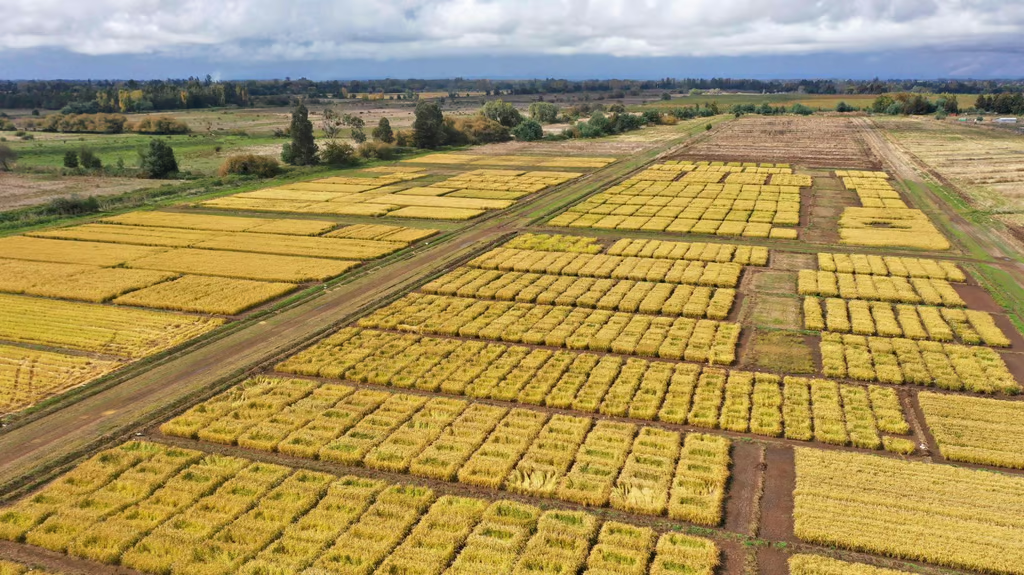

In the dry southern regions of Chile, scientists have developed a new rice strain called “Jaspe” that may revolutionize rice farming in the face of increasing water scarcity and climate change. Traditionally a tropical crop requiring vast amounts of water, rice has long been cultivated in Chile by flooding fields. However, with the country now facing a 15-year-long megadrought driven by global warming, this approach is becoming unsustainable.
Jaspe, created by researchers at the Agricultural Research Institute (INIA) under the Chilean Ministry of Agriculture, is specifically adapted to grow in cold and dry conditions. Developed by crossing a native Chilean seed with a Russian variety suited for harsher climates, the result is a robust long-grain white rice that thrives even when grown without flooding. When paired with a planting technique first developed in Madagascar in the 1980s—using spaced-out seedlings, enriched soil, and intermittent irrigation—the benefits multiply.
Farmer Javier Munoz has seen promising results on his land in the Ñuble region. With Jaspe, he has halved water consumption compared to traditional flooded fields and increased yield dramatically, with each seed producing up to 30 plants—around ten times more than conventional methods. Encouraged by this success, Munoz plans to expand his cultivation area from one to five hectares next year.
Chile’s rice production, primarily based in Maule and Ñuble, must evolve to meet ongoing climate challenges. With each kilogram of traditional rice requiring roughly 2,500 liters of water, the need for water-efficient alternatives is urgent. Moreover, flooded rice paddies significantly contribute to global methane emissions. By eliminating constant flooding, the Jaspe method not only conserves water but also reduces methane output, enhancing environmental sustainability.
Although the research is yet to appear in a peer-reviewed journal, the Chilean government has approved Jaspe for commercial release. International experts see this as a major advancement in sustainable agriculture. The method has the potential to be replicated in other drought-prone rice-producing regions, including Brazil and beyond, offering a resilient and eco-friendly path forward for global rice farming.
READ MORE: