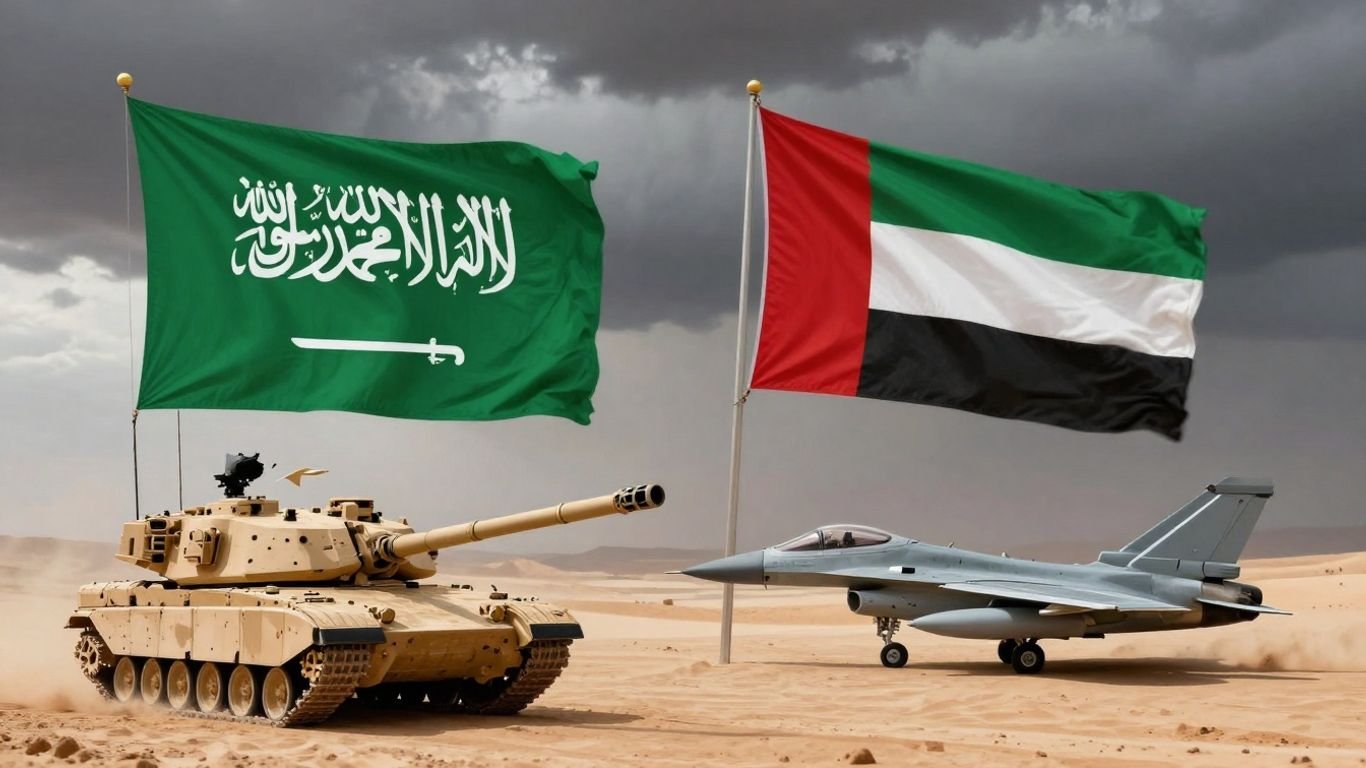

A recent military confrontation in Yemen between Saudi Arabia and the United Arab Emirates (UAE) has brought simmering tensions between the two Gulf powerhouses into the open. The incident, involving a Saudi airstrike on a UAE weapons shipment, has exposed deep-seated divergences in their foreign policy visions and risks fracturing regional alliances.
Divergent Visions Fueling Conflict
The direct confrontation occurred when Saudi Arabia bombed the Yemeni port city of Mukalla, targeting what Riyadh described as a weapons shipment for separatists, which the UAE claimed was intended for its own security forces. This incident marked the first direct military clash between the two erstwhile allies.
Analysts point to differing foreign policy strategies as the root cause of the rift. Saudi Arabia, a regional heavyweight, prioritizes stability, economic cooperation, and working through established international institutions like the UN. In contrast, the UAE is seen as pursuing a more assertive, “break-to-build” model, often supporting non-state actors across the region, including in Libya, Sudan, and Yemen, to gain influence.
This divergence has placed them on opposite sides of various conflicts. While Saudi Arabia has mediated in Sudan and backed its internationally recognized government, the UAE has been accused of supporting paramilitary groups. Similarly, the UAE has normalized relations with Israel, a move Saudi Arabia has not yet made, and has been accused of encouraging separatist factions in Syria, where Saudi Arabia supports the Syrian government.
Yemen as a Flashpoint
Yemen has become a critical flashpoint for these diverging agendas. While both Saudi Arabia and the UAE initially intervened in 2015 to counter the Iran-backed Houthi movement and support the internationally recognized government, their support for rival Yemeni factions has created a proxy conflict.
The UAE’s backing of the Southern Transitional Council (STC), which seeks to re-establish a separate state in southern Yemen, directly conflicts with Saudi Arabia’s goal of a unified and stable Yemen on its border. The recent seizure of oil-rich provinces by UAE-backed forces, sometimes from Saudi-backed factions, further exacerbated these tensions.
Following the airstrike, the UAE announced the withdrawal of its remaining troops from Yemen, stating it concluded the presence of its counterterrorism forces. However, experts believe the UAE’s underlying strategy of supporting non-state actors will likely persist, albeit with adjusted tactics.
Risk of a Wider Regional Split
The escalating tensions between Saudi Arabia and the UAE raise concerns about a potential “Cold War” dynamic in the Middle East, potentially forcing other regional players to align with one of the two blocs. This could undermine US efforts to build a new regional security architecture.
The conflict has also had direct consequences on the ground, with hundreds of tourists reportedly stranded on the island of Socotra due to flight cancellations amid the escalating mainland tensions. The situation in Yemen remains volatile, with the Houthis potentially benefiting from the divisions among their adversaries.