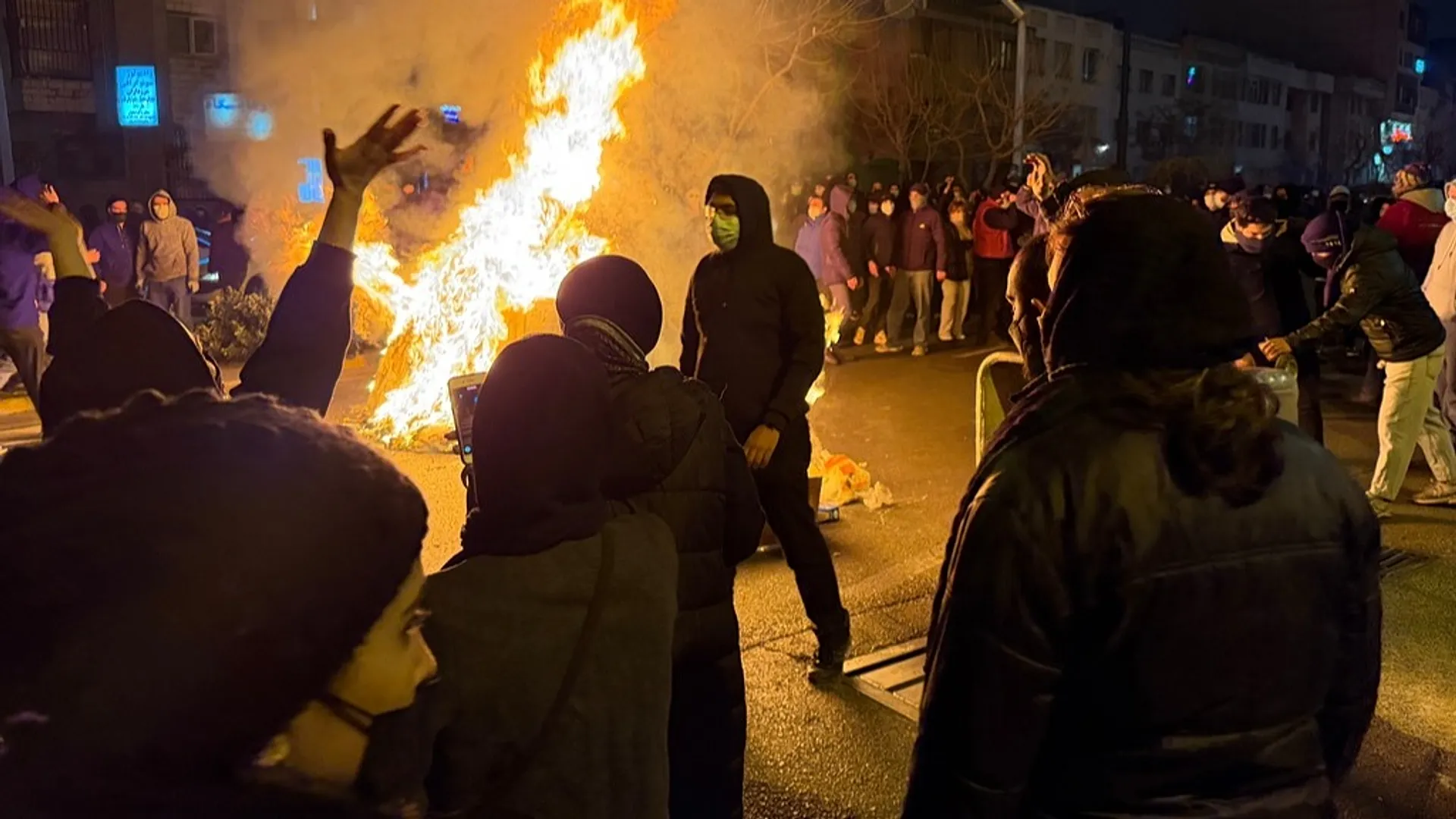

The US president offered no details on what “help” would involve, while Tehran warned that any US action would carry consequences.
US President Donald Trump called on Iranians to continue nationwide demonstrations against the Islamic Republic, saying “help is on the way,” as a US-based monitoring group reported that the death toll in the unrest has climbed above 2,000.
In a message posted on Truth Social, Trump encouraged protesters to keep mobilising and to “take over” institutions, while urging them to document alleged abuses and identify those responsible. He also said he had cancelled all meetings with Iranian officials until the killing of protesters stops, without clarifying what assistance he was promising.
Trump’s comments come amid growing signals from Washington that a range of options is being discussed inside the administration. According to the report, senior White House figures and officials began meeting in recent days to develop possible responses spanning diplomacy through to military strikes. Trump has warned repeatedly that military action could be on the table if the US concludes Tehran is using lethal force against protesters.
Tehran, for its part, issued a warning via the country’s parliamentary speaker, saying US forces and Israel would be considered “legitimate targets” if Washington uses force in an attempt to protect demonstrators.
The Human Rights Activists News Agency put the death toll at 2,003, saying 1,847 of those killed were protesters and 135 were government-affiliated. Euronews noted it could not independently verify the figures, and Iranian authorities have not released an overall casualty count.
The protests began a little over two weeks ago, initially driven by anger over Iran’s weak economy, before rapidly widening into broader anti-theocracy demonstrations — including calls against Supreme Leader Ayatollah Ali Khamenei. With internet access largely cut, outside observers have struggled to track developments.
On Tuesday, Iranian authorities eased some restrictions for the first time in days, allowing people to place mobile calls abroad — though incoming overseas calls were still blocked, and limits on internet access and SMS remained in place.
European governments also escalated diplomatic pressure. France, Germany and the Netherlands summoned Iranian ambassadors to protest Tehran’s crackdown, while European Commission President Ursula von der Leyen said the EU would move quickly to propose additional sanctions targeting Iranian officials.