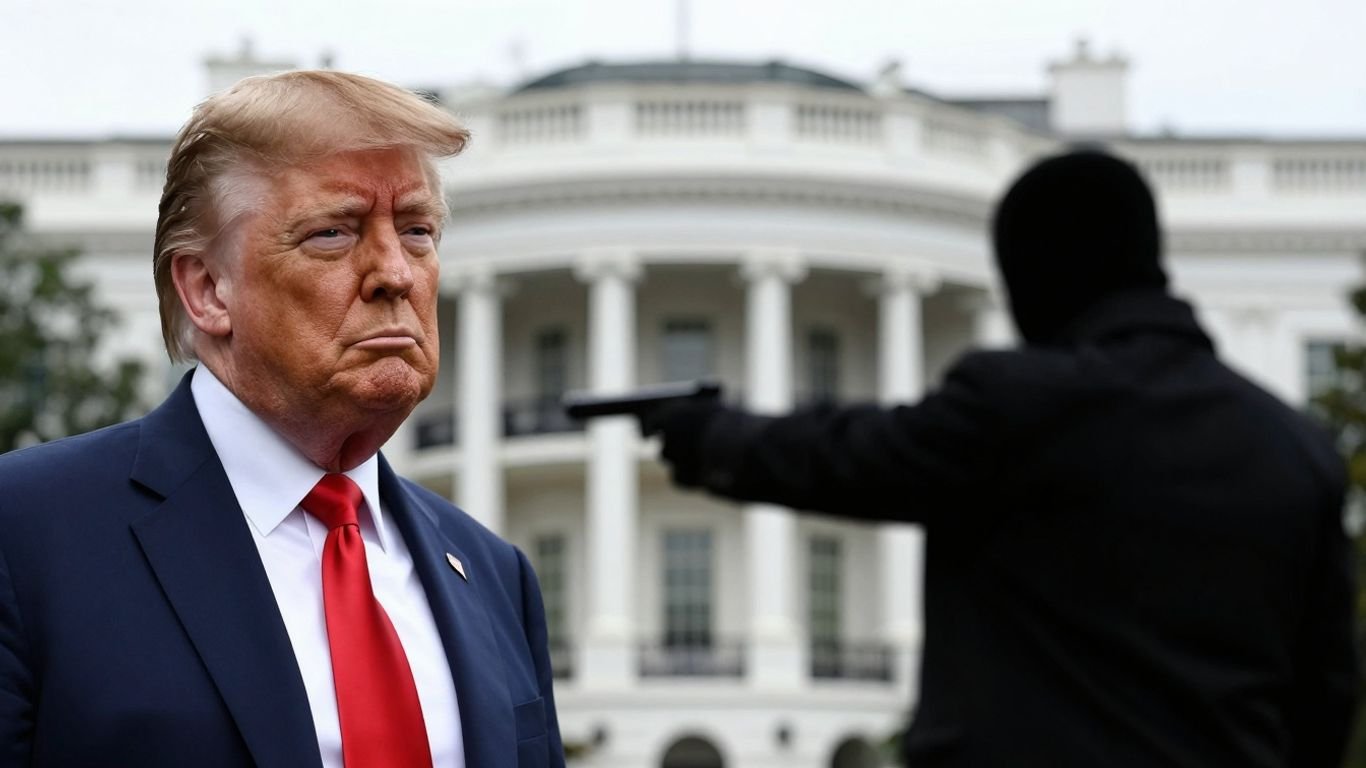

Iranian state television recently broadcast a disturbing threat against former President Donald Trump, utilizing an image from the 2024 assassination attempt in Butler, Pennsylvania. The broadcast featured a sign held by a demonstrator at a pro-Iranian regime gathering, displaying a photograph of Trump with a bloodied ear after being grazed by a bullet during a campaign rally. A caption in Farsi below the image ominously stated, “This time, it (the bullet) won’t miss.”
The clip, shared by i24 news correspondent Amachia Stein, showed the sign with the now-familiar image of Trump on stage, moments after the bullet struck him, with Secret Service agents intervening. The accompanying Farsi text translated to a direct threat of future harm.
The Secret Service has acknowledged its awareness of the broadcast and the image circulating.
Context of Rising Tensions
This threat emerges against a backdrop of escalating tensions between the United States and Iran. It also coincides with ongoing internal unrest within Iran, where citizens have been protesting against the regime of Supreme Leader Ayatollah Ali Khamenei. These protests are largely fueled by a severe economic crisis, marked by the significant devaluation of Iran’s currency, the Rial.
The Iranian regime has responded to the protests with a harsh crackdown, reportedly resulting in thousands of state-sanctioned killings. Reports from various human rights organizations indicate a substantial death toll among both protesters and security forces.
U.S. Response and Diplomatic Stance
In response to the crackdown, the Trump administration has been considering military action. Former President Trump himself has publicly condemned the violence, stating on social media that “HELP IS ON ITS WAY” and that he had canceled meetings with Iranian officials until the killings stopped. He later announced that hundreds of scheduled executions had been halted, attributing this to the pressure exerted.
While Trump has remained noncommittal on the specifics of potential military action, reports indicate that a U.S. aircraft carrier has been moved to the region, and missile defense systems are expected to be deployed to protect U.S. and allied bases. The situation remains under close observation.