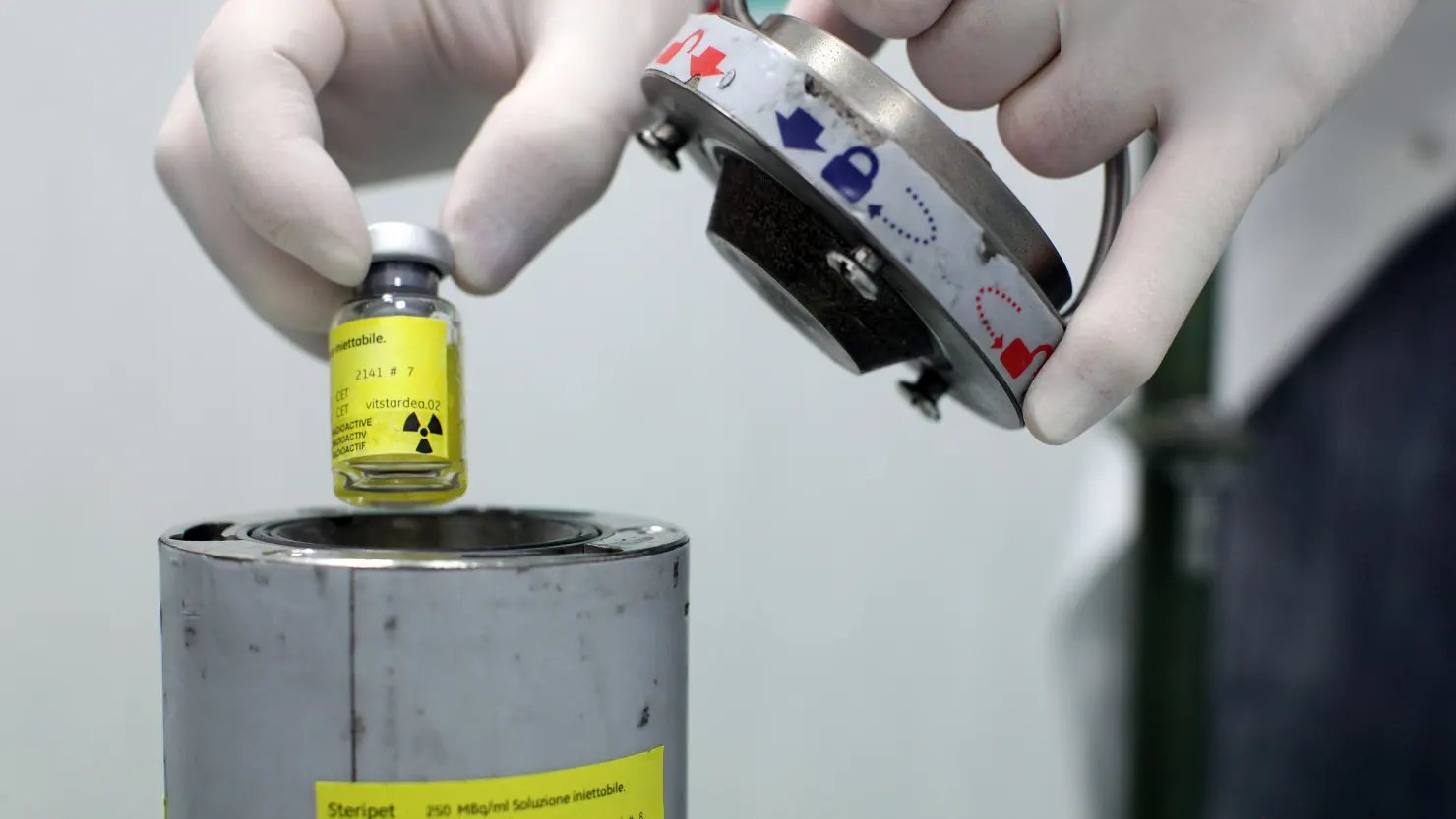

Pharmaceutical companies are increasingly investing in radiopharmaceuticals, a promising technology that targets cancer cells with radioactive materials, aiming to reduce the damage to healthy tissues. Industry giants like Bristol Myers Squibb, AstraZeneca, and Eli Lilly have spent around $10 billion on acquisitions and partnerships to accelerate the development of these treatments.
Radiopharmaceuticals work by attaching radioactive particles to a targeting molecule that binds to specific cancer cell markers, allowing radiation to attack cancer cells directly. This precision minimizes harm to healthy cells, a significant improvement over traditional cancer treatments. Novartis, a pioneer in this space, has already brought two radiopharmaceuticals to market: Lutathera, approved in 2018 for pancreatic and gastrointestinal cancers, and Pluvicto, approved in 2022 for prostate cancer. Combined, these drugs are expected to generate around $4 billion in sales by 2027.
The success of Novartis’ products has sparked broader interest across the pharmaceutical industry. Eli Lilly’s $1.4 billion acquisition of Point Biopharma and Bristol Myers Squibb’s $4.1 billion purchase of RayzeBio exemplify the commitment to building radiopharmaceutical capabilities. Manufacturing these drugs is a complex process due to the rapid decay of radioactive materials, making production and logistics challenging. To address these issues, companies are investing heavily in infrastructure, with Novartis expanding its radiopharmaceutical manufacturing sites in the U.S.
The potential of radiopharmaceuticals extends far beyond the cancers currently being treated. Novartis is exploring markers found in various tumors, including breast, lung, and pancreatic cancers. If successful, these drugs could revolutionize cancer care, potentially turning radiopharmaceuticals into a major class of cancer treatments.
Large pharmaceutical companies like AstraZeneca and Bristol Myers Squibb are also exploring how to combine radiopharmaceuticals with existing treatments, such as immunotherapy, to enhance cancer-fighting capabilities. However, with many radiopharmaceuticals still in early development stages, it will take years to determine the full scope of this technology’s impact on cancer treatment.
For patients like Ronald Coy, a retired firefighter battling prostate cancer, radiopharmaceuticals have been life-changing. After just one treatment with Pluvicto, his cancer levels dropped dramatically. Though the technology is still evolving, stories like Coy’s give hope that radiopharmaceuticals could represent a significant breakthrough in cancer therapy.
READ MORE: