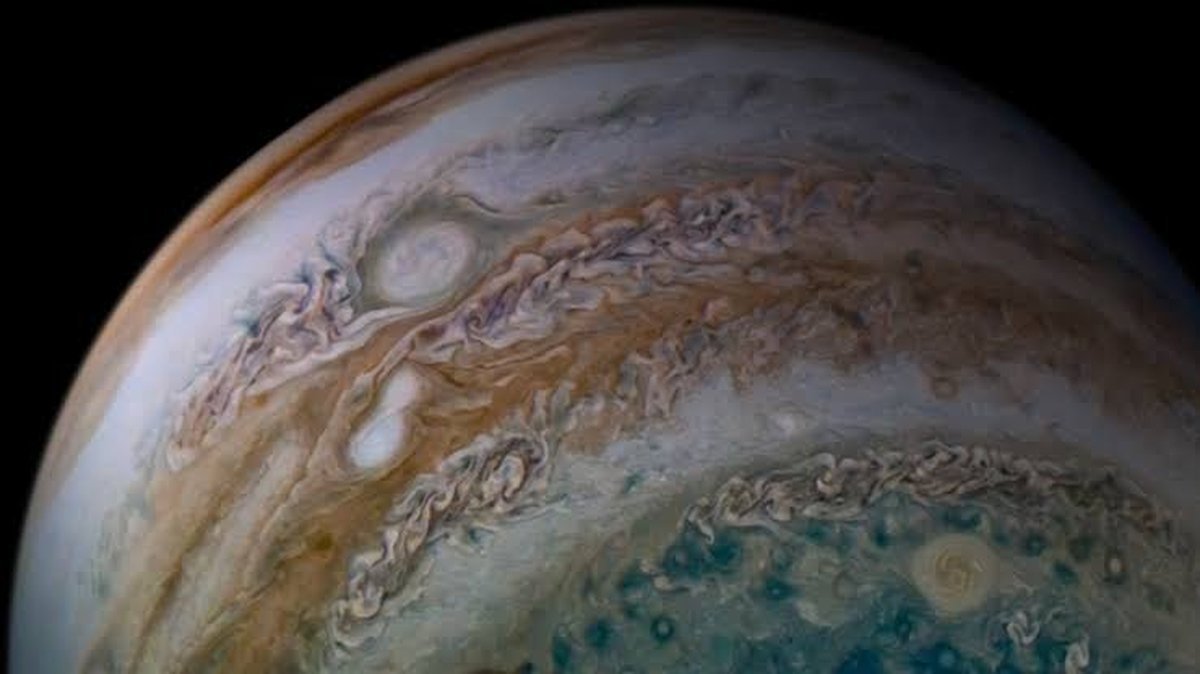

Researchers at the China Academy of Space Technology have tested a star-based method for guiding spacecraft in deep space, an approach they say prepares the ground for the country’s planned mission to Jupiter in 2030. The trial took place aboard the Tianhui-7 satellite in a low-Earth-orbit experiment in January.
The technique, known as stellar aberration positioning, reads tiny shifts in the apparent positions of stars to calculate how fast a probe is moving and in what direction. That allows a spacecraft to fix its own position in real time without constant tracking and commands from Earth.
During the experiment, Tianhui-7 pinpointed its position to within about 5km, a result the researchers described as comparable to the antenna-based Deep Space Network operated by Nasa. The findings appear in a paper set for publication in the Journal of Deep Space Exploration.
The distances involved explain why autonomy matters. Jupiter can lie up to 900 million km from Earth, and radio signals take more than 50 minutes to travel one way, making real-time intervention by ground controllers impossible. The researchers noted that while China can track craft as far as Jupiter, it cannot do so as precisely as Nasa or the European Space Agency.
Tianwen-4 will be China’s first mission to explore the Jupiter system, studying the planet and its moons, their evolution, environment and internal structures. The method builds on a wider push into deep-space capability that has already produced China’s lunar sample-return work.
Tianhui-7 launched aboard a Long March 4B rocket from the Jiuquan Satellite Launch Centre in northwestern China on December 30, 2025. State news agency Xinhua initially said only that the satellite would serve geographic mapping, land surveys and scientific research.
The satellite carried three highly precise star cameras and an infrared sensor, running the positioning test for 20 hours at about 500km above Earth, with the planet standing in for Jupiter. The cameras photographed patches of sky while the infrared sensor observed Earth, and the combined measurements were checked against GPS data to gauge accuracy.
Stellar aberration itself dates back about 300 years, to the English astronomer James Bradley, who noticed stars appearing to shift as Earth moved around the sun. The shift occurs because a moving observer meets incoming starlight, much as rain seems to slant toward the windscreen of a moving car.
The precision required is extreme. Nasa funded the StarNAV project in 2020 to make the milliarcsecond-level measurements needed, angles equivalent to the apparent width of a grain of rice seen from 500km away. Tianhui-7’s cameras were accurate to about 50 milliarcseconds, aided by an optical reference system that tracked tiny shifts in the cameras caused by launch vibration and temperature changes.
Over the 20-hour test, the system settled at a margin of error of around 5km for position and 5 metres per second for velocity against GPS. Correcting systematic errors later improved those figures to better than 4km and 4 metres per second.
The team cautioned that conditions around Jupiter would differ sharply, and whether the technique performs as well in orbit around the gas giant has yet to be tested. China is developing a new generation of milliarcsecond-level star cameras, a prototype of which has already been built and put through ground tests.