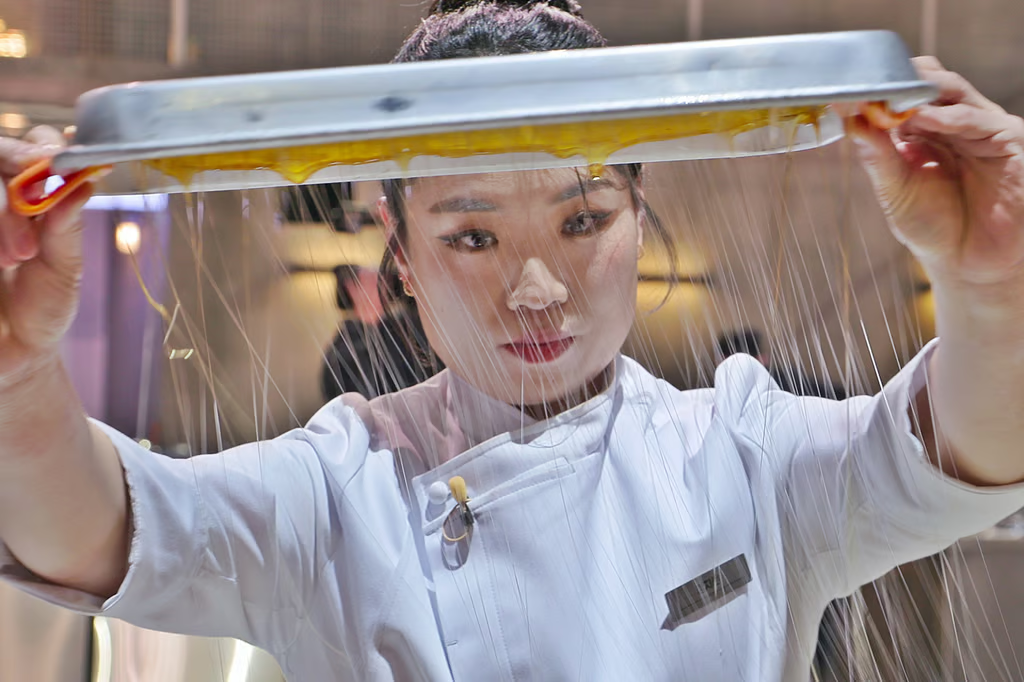

For three weeks between September 16 and October 6, Netflix’s Culinary Class Wars claimed the top spot in the non-English series category, becoming the longest-running Korean variety show in the rankings. Netflix confirmed on October 15 that a second season is already in production, slated for release in the second half of 2025.
The show’s success wasn’t guaranteed from the start. There were initial concerns about how the two judges—Paik Jong-won, a mainstream dining veteran, and Anh Sung-jae, the chef of Seoul’s three-Michelin-starred Mosu—would interact. “There was a strange tension when they first met,” said director Kim Eun-ji. Casting Anh, who had no prior experience on cooking shows, was a risk. “He was confident to the point of arrogance, but we knew he was the right choice,” added director Kim Hak-min.
The format of Culinary Class Wars pits 20 elite “white spoon” chefs against 80 lesser-known “black spoon” chefs in a battle for a grand prize of 300 million won (US$219,000). Notably, even the prestigious white spoon chefs were unaware of their status until the first day of filming. The unexpected division added a twist to the competition and created tension on set, especially among the black spoon chefs. “We were worried some might walk off the set,” said Kim Hak-min.
The show’s creators were mindful of potential racial or class-based controversy, especially for international audiences. The set was designed like a Go board to focus on competition rather than race, and the international version of the show omitted the black and white spoon references.
While there were criticisms of unfair play during the final restaurant mission, the show avoided major controversy over its class-based structure. Writer Mo Eun-seol explained, “We debated whether the black and white spoon structure was appropriate, but in the end, mutual respect between the chefs made it work.” The show resonated with audiences, as viewers appreciated the theme of fairness based on hard-earned achievements.
Season one delivered memorable moments, such as Anh Sung-jae’s emotional reunion with a former student and Edward Lee’s dramatic towel throw after winning a challenging tofu cooking mission. As the team prepares for season two, Kim Eun-ji teased that future contestants would need to clearly demonstrate why they belong to either the black or white spoon teams. She also hinted at the possibility of bringing renowned British chef Gordon Ramsay as a guest for the upcoming season.
READ MORE: