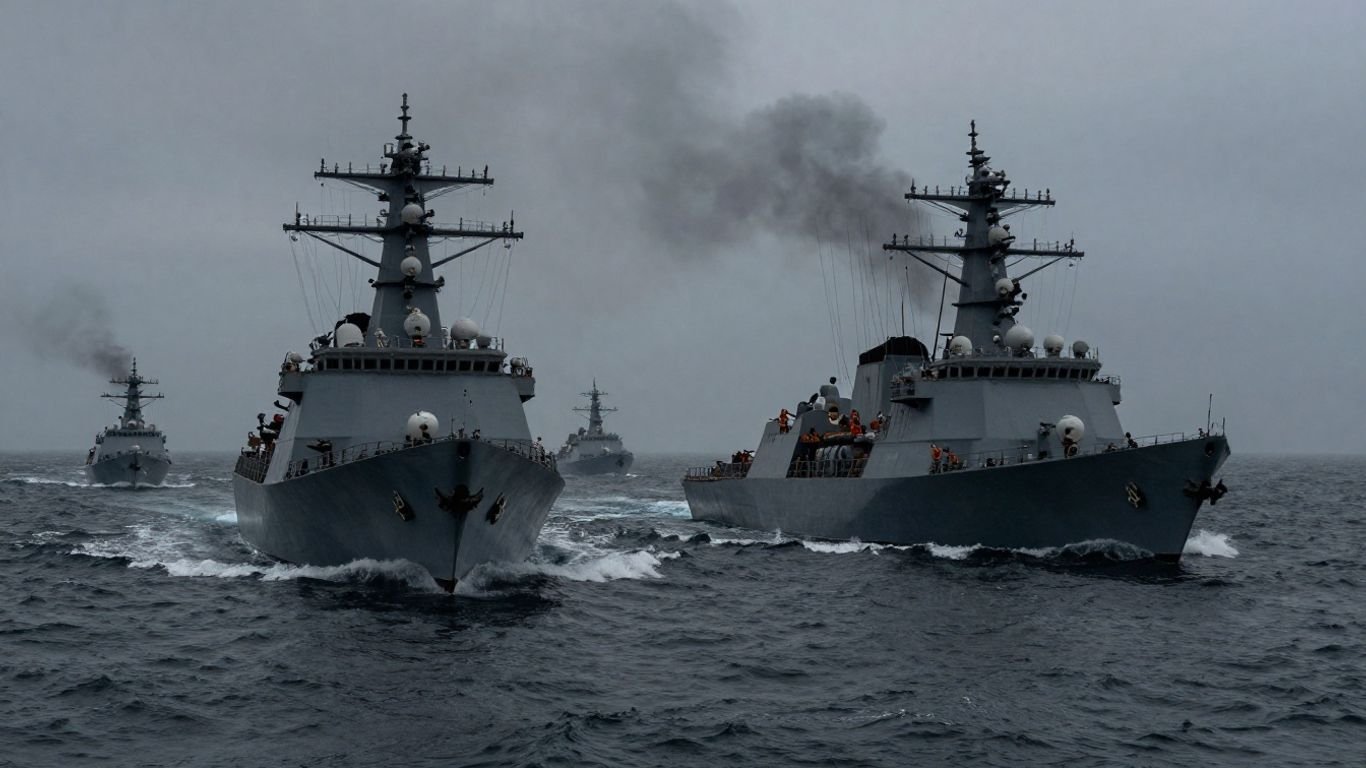

Tensions have dramatically escalated in the Persian Gulf as Iran has once again closed the vital Strait of Hormuz, citing alleged “piracy” and “repeated breaches of trust” by the United States. The move follows a series of attacks on commercial vessels transiting the waterway, further complicating ongoing diplomatic efforts and raising concerns about global energy supplies.
Iran’s military announced on Saturday that it was reimposing strict controls on the Strait of Hormuz, a critical chokepoint for global oil and LNG shipments. This decision came just hours after Iranian officials and US President Donald Trump had suggested the waterway was reopening, sparking brief optimism.
The UK Maritime Traffic Organization reported that Iranian Revolutionary Guards gunboats fired on a tanker and that a second vessel, a container ship, was hit by an “unknown projectile” off the coast of Oman. These incidents occurred shortly after Iran’s military stated that the strait had “returned to its previous state” and would remain under “strict control” unless the US ended its blockade of Iranian ports.
President Trump stated that “very good conversations” were ongoing with Iran but emphasized that the US would “not be blackmailed” over the strait. He reiterated that the US naval blockade on Iranian ports would persist until a complete end to the war was agreed upon. Despite these assertions, Trump also expressed optimism about the progress of negotiations, suggesting a deal was “very close.”
However, Iranian officials have pushed back against claims of significant concessions. Iran’s Supreme National Security Council indicated it was examining new US proposals but reiterated demands for extended control over the Strait of Hormuz as a condition for its reopening. Pakistan has been actively mediating between the two nations, with its military chief concluding a visit to Tehran aimed at de-escalating tensions.
The fluctuating status of the Strait of Hormuz has significant implications for global energy markets. While initial reports of the strait reopening led to a drop in oil futures, the renewed closure has reintroduced uncertainty. Analysts warn that even a full reopening would take weeks to normalize supply chains, and damage to energy infrastructure could prolong shortages and elevated prices.
Meanwhile, unrelated tensions persist in the region. A French soldier was killed in Lebanon during a UN peacekeeping mission, with France suggesting Hezbollah’s involvement, which the group denied. This incident occurred amidst a fragile ceasefire between Israel and Lebanon.