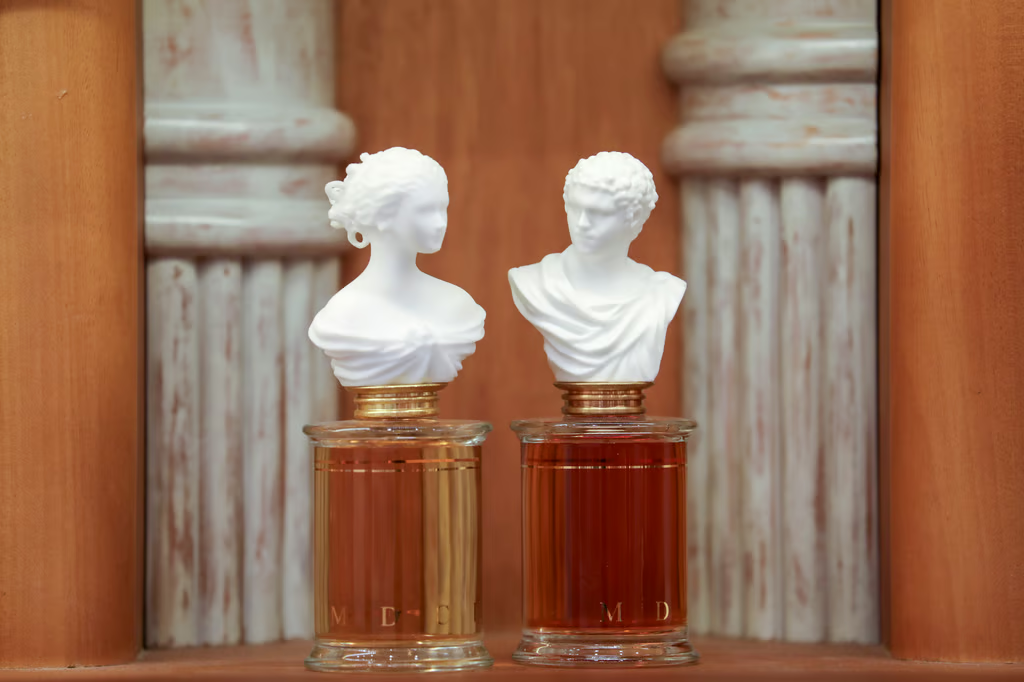

Fragrances can reveal much about personality and cultural identity, with trends shaped by history and individual preferences. In Asia, evolving tastes in perfumes are redefining the fragrance industry, with bespoke and niche scents gaining popularity over traditional luxury brands.
Patrick Hui, founder of Hong Kong perfume boutique Scented Niche, notes that Hongkongers’ preference for English perfumes like Jo Malone and Penhaligon’s reflects the city’s colonial past. Mainland China, however, has experienced a shift from traditional florals like osmanthus, rose, and jasmine—once associated with innocence—to unique and complex fragrances. Perfume trends now favor unisex scents, with woody notes like cedarwood and sandalwood leading the way.
Established in 2018, Scented Niche offers exclusive brands from France, Australia, and Italy, catering to perfume lovers seeking individuality. Hui highlights the growing demand for clean, uncomplicated fragrances, especially in Asia’s second- and third-tier cities. First-tier city consumers, often saturated with options, seek distinct and rare compositions.
Maison 21G, a Singapore-based brand, takes personalization to the next level, allowing customers to craft custom perfumes by selecting their preferred notes. Co-founder Maxime Vanhoestemberghe Patas explains that bespoke experiences resonate with customers, who enjoy creating scents that reflect their personalities and attach memories to the process. Popular notes in Singapore and Hong Kong include sandalwood, ginger, rhubarb, and fresh citrus, while consumers in mainland China lean toward clean, light woods and medicinal scents like sage and vetiver.
Cultural nuances play a significant role in fragrance preferences. In Singapore, white florals such as frangipani are unpopular due to their association with the supernatural, despite their popularity in France. Vanilla, widely appreciated in the US and Europe, is considered too strong and exotic in mainland China, where sweeter gourmand notes are generally avoided. Similarly, lavender, despite its medicinal qualities, is not a favorite among Chinese consumers.
The Chinese perfume market is evolving, with niche brands slowly gaining traction. Market growth in China is projected to double between 2023 and 2028, reflecting a compound annual growth rate of 14%, far exceeding the global average. This underscores a cultural shift as consumers increasingly seek fragrances that emphasize individuality and personal connection over mainstream luxury.
Fragrances are no longer just accessories—they are extensions of identity, shaped by history, culture, and the desire for self-expression. Whether through niche perfumes or bespoke creations, the fragrance landscape in Asia continues to evolve, offering a unique window into the region’s diverse tastes and traditions.
READ MORE: