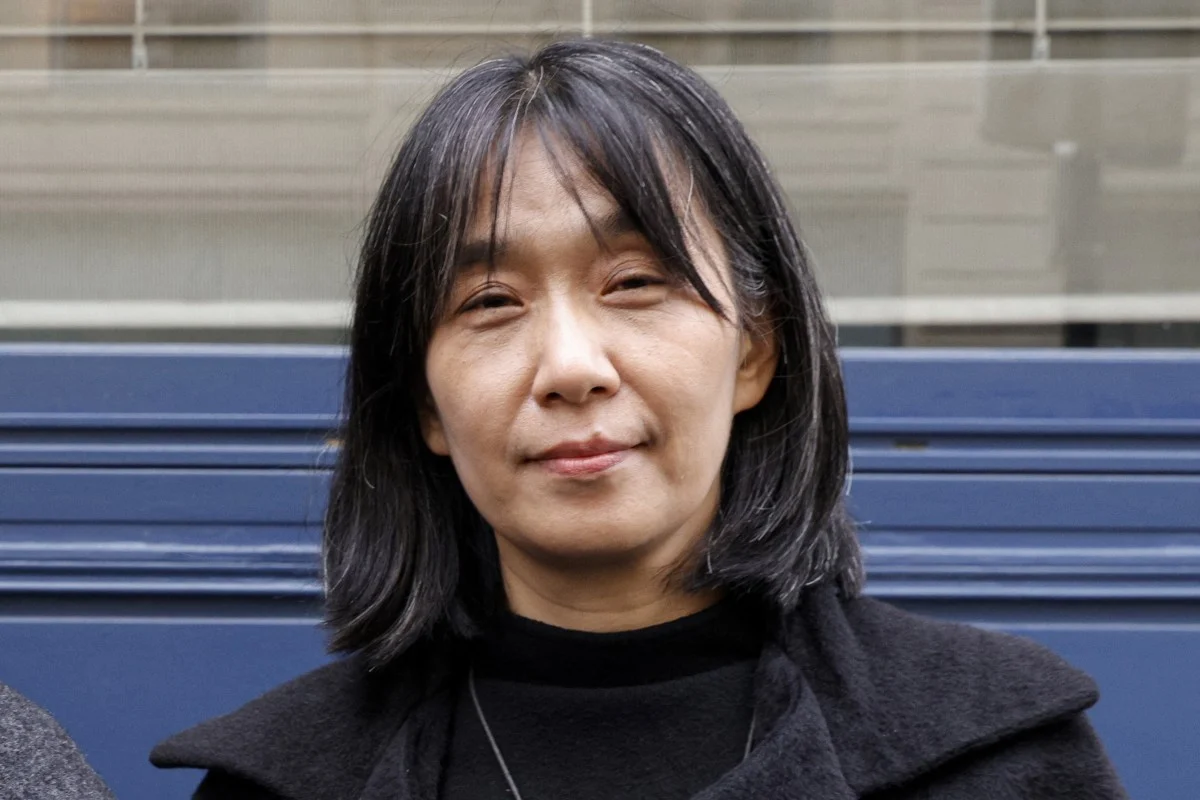

After having lived a little more—these words open a quiet, profound reflection on the intersection of life and literature. “After Having Lived a Little More” is a two-page essay by South Korean author Han Kang, whose writing continues to blur the lines between poetry and prose. With measured stillness and emotional clarity, the piece contemplates the act of writing as both a vessel of survival and a measure of a life fully lived.
The essay begins with a question: when standing at the threshold of death, will one be able to say that they truly embraced life through the act of writing? It’s a thought that lingers gently yet powerfully, guiding the rest of the piece with its quiet urgency. Kang’s tone is contemplative but never distant—there is intimacy in her voice, a closeness to the reader that feels almost like a whispered confession. Her words do not demand attention; rather, they invite reflection.
This deeply personal meditation concludes Light and Thread, Kang’s newest publication and her first since receiving the Nobel Prize in Literature in October 2024. The book itself is a tapestry of interconnected reflections, fragmented narratives, and poetic vignettes, with “After Having Lived a Little More” serving as its subtle coda. The essay feels like a parting breath, not of finality, but of clarity—an acknowledgment of the path she has walked and the silent truths she has tried to preserve through language.
Kang’s gift lies in her ability to express intangible human experiences—grief, longing, memory, and silence—with startling precision. In this brief essay, she suggests that writing is not merely a craft but a kind of evidence. It is the trace left behind, a sign that one has lived with attention and feeling. The simplicity of the language belies its emotional weight. Every line seems to echo, asking the reader not only to reflect on her journey but to consider their own.
“After Having Lived a Little More” does not attempt to provide answers. Instead, it opens a space in which the reader is gently prompted to ask themselves: What remains when all else is gone? And has the life we’ve lived been held close enough to be remembered in words?
READ MORE: