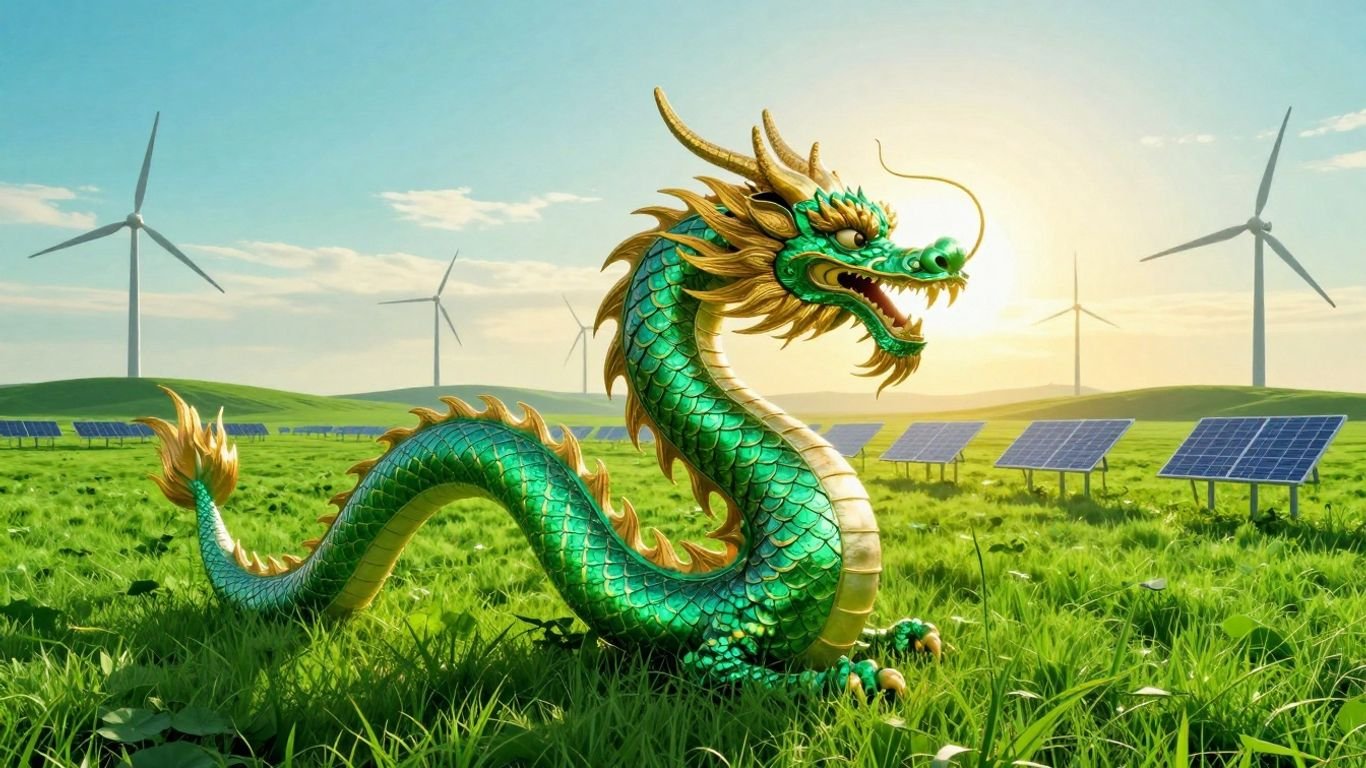

China is increasingly leveraging its ambitious climate goals as a strategic economic advantage. By investing heavily in renewable energy and green technologies, the nation is not only addressing environmental concerns but also positioning itself as a global leader in the burgeoning green economy, potentially reshaping international trade and industrial landscapes.
The Green Economy as a New Frontier
China’s commitment to reducing carbon emissions and transitioning to cleaner energy sources is more than an environmental imperative; it’s a calculated economic maneuver. The country has become a dominant force in the manufacturing of solar panels, wind turbines, and electric vehicles. This dominance is fueled by substantial government support, economies of scale, and a forward-looking industrial policy.
Driving Innovation and Market Share
Through aggressive investment and policy support, China has rapidly advanced its capabilities in green technologies. This has allowed it to capture a significant share of the global market for renewable energy components and electric vehicles. Companies like BYD and CATL are now global leaders in their respective sectors, demonstrating China’s prowess in innovation and mass production within the green technology space.
Global Implications and Shifting Power
The implications of China’s green push extend far beyond its borders. As the world seeks to decarbonize, China’s established supply chains and manufacturing capacity position it as a crucial partner and competitor. This could lead to a reordering of global economic influence, with nations that embrace and invest in green technologies gaining a competitive edge. The strategic alignment of climate action with economic growth presents a compelling model for other nations to consider.