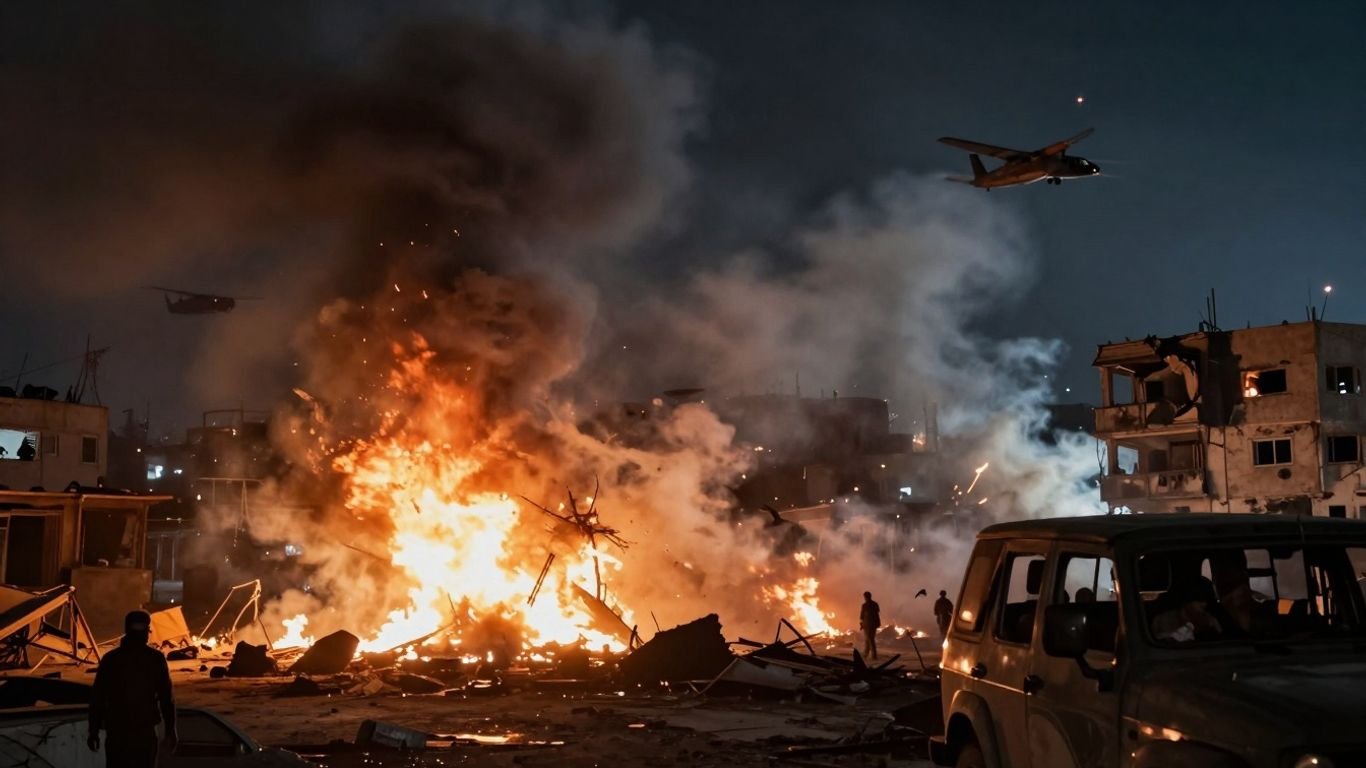

Israel launched a significant wave of fresh airstrikes across southern Lebanon, targeting what it described as Hezbollah infrastructure and weapons smuggling routes along the Syria-Lebanon border. The intensified military action follows earlier raids that resulted in casualties and comes amid ongoing tensions despite a year-old ceasefire.
Israeli warplanes carried out raids on buildings in several southern Lebanese towns, including Qanarit and Kfour. These strikes followed evacuation warnings issued by the Israeli army to residents in areas where sites were intended to be targeted. The Israeli military stated these actions were in response to Hezbollah’s “repeated violations of the ceasefire understandings.”
The recent strikes have not been without consequence. An AFP photographer was among those slightly wounded in Qanarit, alongside two other journalists working near a heavy strike site. Earlier in the day, the Lebanese health ministry reported that an Israeli strike on a vehicle in Zahrani killed one person. Another strike targeting a vehicle in Bazuriyeh, Tyre district, also resulted in one fatality. Israel claimed to have struck Hezbollah operatives in both instances.
In a separate development, the Israeli military announced it had struck four border crossings along the Syria-Lebanon border in the Hermel area. These crossings were identified as being used by Hezbollah for weapons smuggling. This action underscores a broader strategy by Israel to disrupt Hezbollah’s logistical capabilities.
Lebanon’s army condemned the Israeli targeting of “civilian buildings and homes,” labeling it a “blatant violation of Lebanon’s sovereignty” and the existing ceasefire deal. The Lebanese statement also indicated that such attacks hinder the army’s progress in implementing a plan to disarm Hezbollah, a commitment made under significant US pressure. While Lebanon reported completing the first phase of this disarmament plan south of the Litani river, Israel has criticized the pace as insufficient.
The November 2024 truce aimed to end over a year of hostilities. However, Israel accuses Hezbollah of rearming, while the group has refused calls to surrender its weapons. The current wave of strikes highlights the fragility of the ceasefire and the persistent tensions along the border.