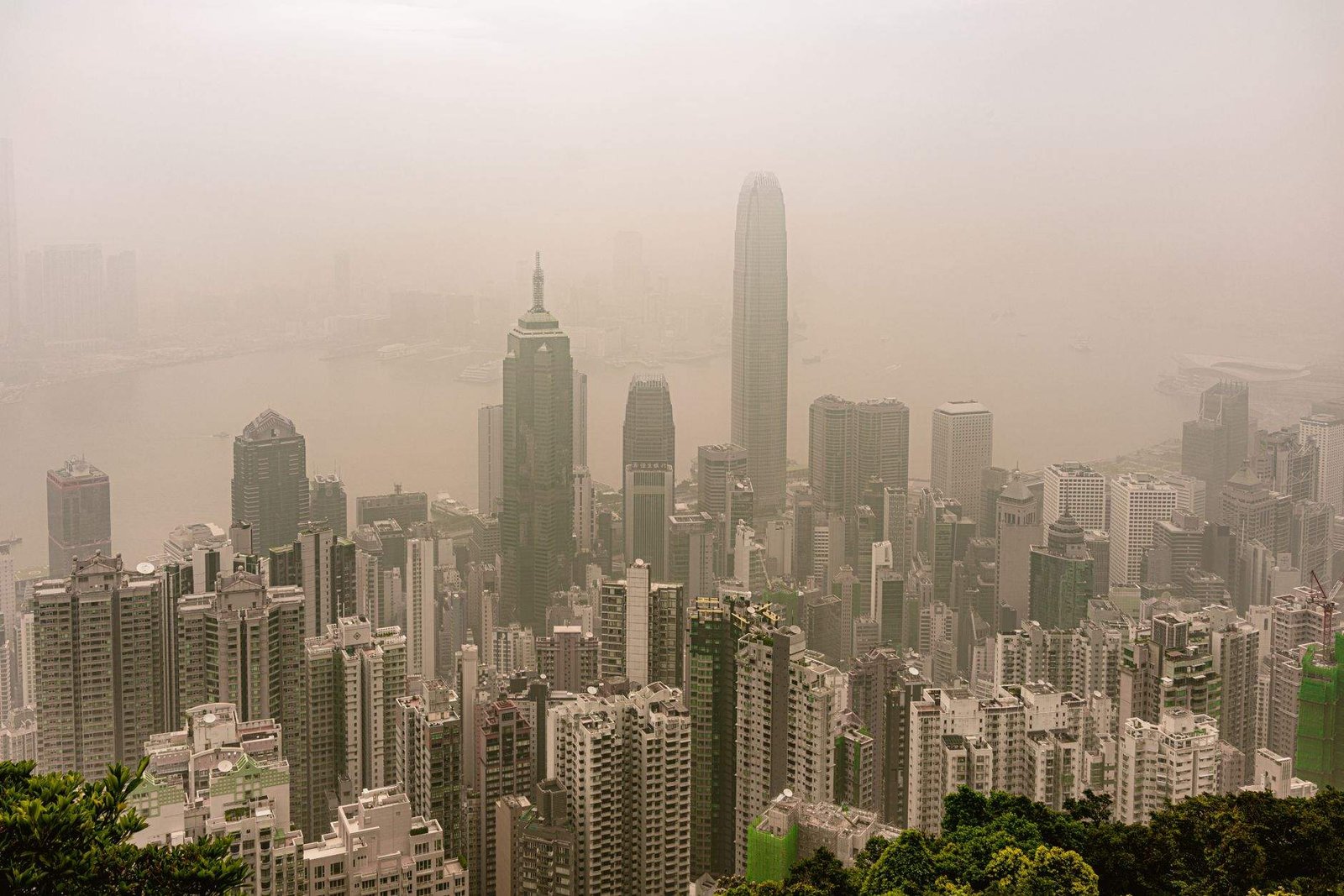

Hong Kong recorded its hottest temperature in 142 years of measurement on Sunday, with the mercury climbing to 36.9 degrees Celsius (98.4 Fahrenheit) as Severe Typhoon Dolphin funnelled extreme heat across southern China while barrelling toward the mainland’s east coast.
The Hong Kong Observatory registered 36 degrees at its Tsim Sha Tsui station by 1pm, before the reading later peaked at 36.9 degrees, surpassing all previous highs since records began in the 1880s. Forecasters attributed the scorching conditions to the outer subsiding air associated with Dolphin, which brought generally fine but oppressively hot weather to Guangdong province.
The heat proved deadly. A 64-year-old Filipino man, a Hong Kong identity card holder, was found unconscious by fellow hikers on the Plover Cove Reservoir Country Trail in Tai Po early Sunday afternoon. Police received a report at 2.17pm, and firefighters, rescue teams and the Government Flying Service were dispatched to the mountainside, but the man was later confirmed dead.
Farther north, Dolphin triggered mass evacuations along China’s east coast, where authorities moved more than one million people to safety ahead of the storm’s expected landfall. Widespread transport disruptions and flood warnings were issued across the affected provinces as the typhoon approached.
The extreme conditions have reignited debate over Hong Kong’s workplace heat protections. Labour unionists criticised authorities after the lowest-level heat stress at work warning remained in force throughout the record-breaking day, arguing the alert system failed to reflect the genuine danger facing outdoor workers.
Unionists, backed by a leading meteorologist, also called for the law to be relaxed so that heatstroke could be recognised as a work-related injury, which would entitle affected workers to compensation. The proposals add pressure on the government to overhaul a system critics say has not kept pace with intensifying summer heat.
Sunday’s record extends a pattern of increasingly severe weather in the region, echoing episodes in which the city has grappled with typhoons and extreme temperatures at the same time. Meteorologists have repeatedly linked such compound events to broader climate trends.
Authorities urged residents to limit outdoor activity, stay hydrated and check on elderly and vulnerable neighbours as the heat persisted. Emergency services reported elevated call volumes related to heat-related illness across the territory.
The Observatory is expected to maintain heat warnings in the coming days as Dolphin’s influence lingers over southern China, while eastern coastal regions brace for flooding and further disruption as the storm makes landfall.