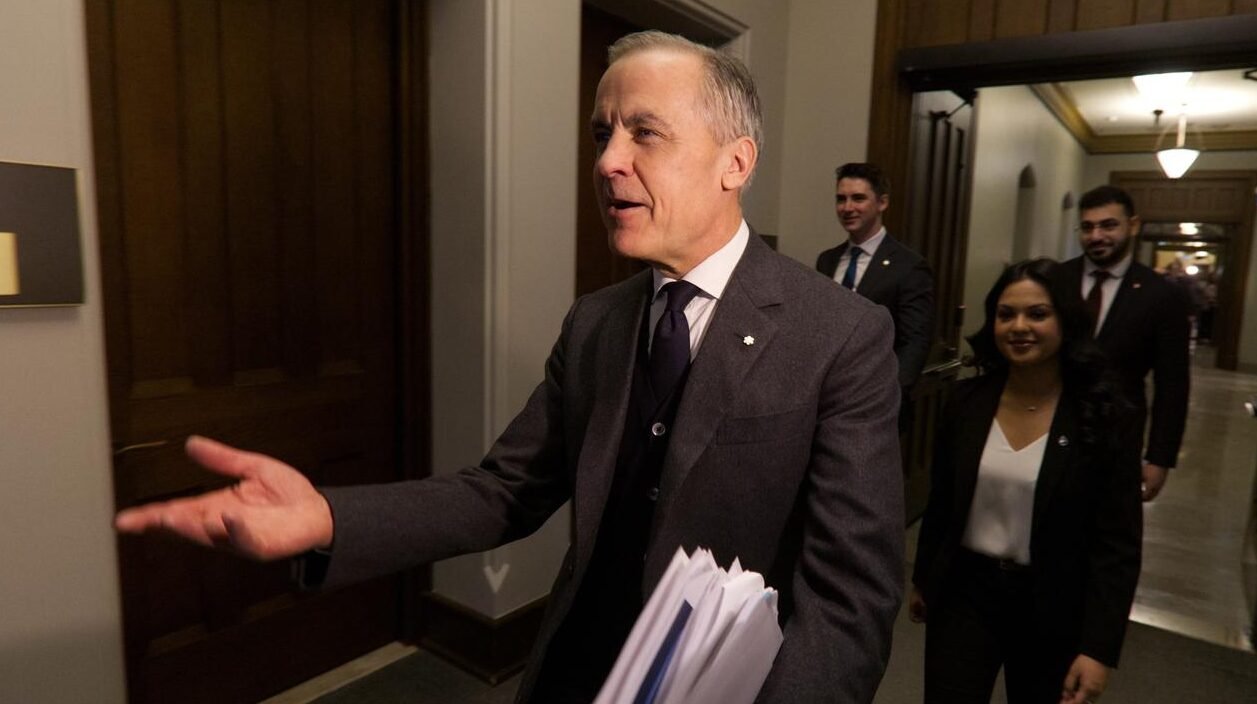

Canada’s Prime Minister Mark Carney said his government has “no intention” of pursuing a free trade agreement with China, pushing back against claims from US President Donald Trump that Ottawa is preparing a major deal with Beijing.
Carney’s comments come after Trump threatened to slap a 100% tariff on Canadian goods if Canada moves ahead with any agreement that deepens its economic partnership with China. Trump argued that a Canada-China deal could allow Chinese products to enter the US through Canada, escalating trade tensions between Washington and Ottawa.
Speaking to reporters, Carney said Canada is respecting its obligations under the North American trade deal with the United States and Mexico, which places limits on free trade agreements with “non-market economies” without notifying partners. He stressed that Canada’s recent engagement with China was narrowly focused on fixing specific trade disputes rather than negotiating a broad free trade pact.
Carney also sought to clarify that Ottawa’s approach is about protecting Canadian industries while keeping trade channels stable. Canadian officials have pointed to recent efforts aimed at defending sensitive sectors such as electric vehicles and agriculture, while managing friction in areas like food exports and tariffs.
The dispute highlights rising political and economic pressure on Canada as it navigates two major realities at once: maintaining access to its largest market, the United States, while dealing with China as a significant global trading partner. It also shows how quickly trade policy could become a flashpoint again, with Trump’s threat raising concerns about supply chain disruption across manufacturing, farming, and cross-border commerce.