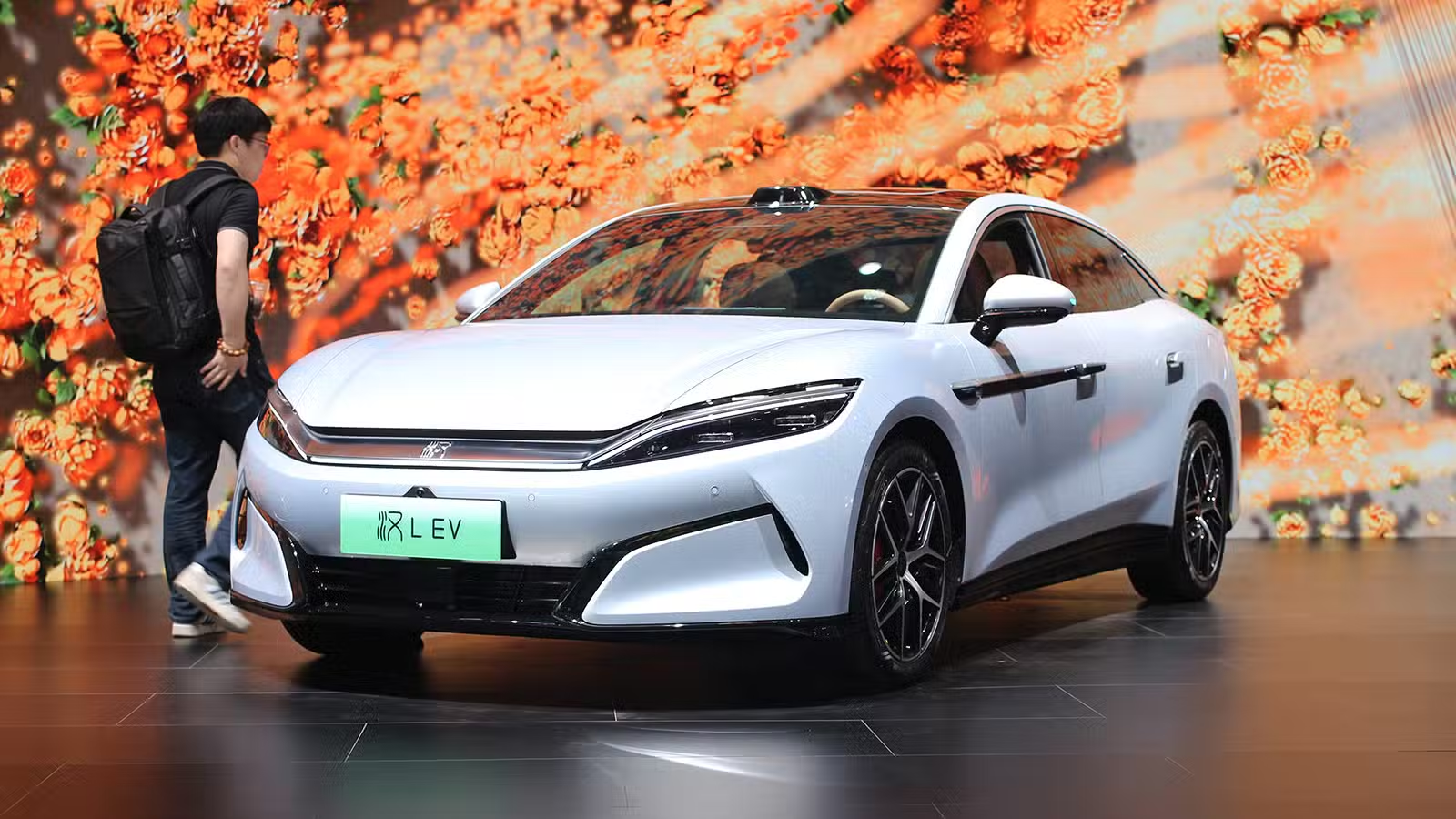

Shanghai has released detailed rules for its 2026 vehicle scrappage and trade-in subsidy program, outlining how individuals can qualify for one-time payments tied to the purchase price of a new car, with maximum support reaching 20,000 yuan for eligible cases.
The rules were issued by Shanghai Municipal Commission of Commerce alongside seven other departments, and the policy is effective from Jan. 1, 2026, with an application deadline of Jan. 10, 2027.
For scrappage-based support, the policy targets older registrations and links the payout to the sale price of the replacement vehicle. Individuals who scrap qualifying passenger vehicles registered before specific cutoff dates—gasoline passenger cars registered on or before June 30, 2013, diesel and other-fuel passenger cars registered on or before June 30, 2015, or new energy passenger vehicles registered on or before Dec. 31, 2019—and then purchase an eligible replacement may receive a one-time subsidy.
The maximum support is highest when the replacement is an eligible new energy passenger vehicle: the subsidy can be calculated at 12% of the new car’s sales price, capped at 20,000 yuan. For qualifying fuel-vehicle replacements (2.0 liters and below), the policy indicates a 10% subsidy, capped at 15,000 yuan.
The rules also include a separate track for trade-ins (vehicle transfer and replacement purchase), with subsidies tied to the price of the replacement vehicle and capped lower than the scrappage route. The trade-in track sets support at 8% for eligible new energy purchases (cap 15,000 yuan) and 6% for eligible fuel-vehicle purchases (cap 13,000 yuan).
Documentation timing matters: the policy specifies required certificates and invoices must be obtained within defined 2026 windows, and it links eligibility to where paperwork is issued and where registration is completed.