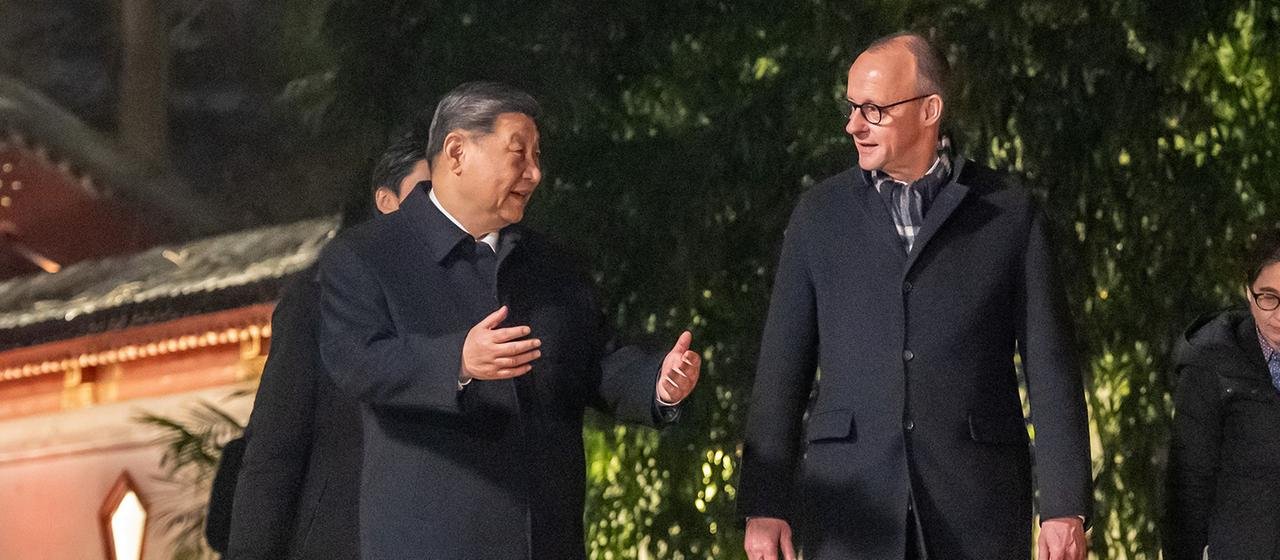

German Chancellor Friedrich Merz concluded a significant state visit to Beijing, meeting President Xi Jinping amid mounting global uncertainties. The talks aimed to recalibrate the relationship between the world’s second- and third-largest economies, focusing on deepening trade, addressing rising competition, and tackling geopolitical challenges.
Chancellor Merz traveled to China with a delegation of high-profile German business leaders, highlighting the importance of China as Germany’s top trading partner. Merz and Xi expressed a mutual desire to intensify economic ties. Notably, China agreed to purchase up to 120 aircraft from European manufacturer Airbus, a substantial boost for German and European industry.
However, Merz raised German concerns about the rapidly expanding trade imbalance. Germany’s deficit with China more than quadrupled since 2020 and reached a record €90 billion ($106 billion) in 2025. While Germany’s imports from China rose by nearly 9% last year, exports to China dropped by almost 10%. Merz called for “a more equal playing field,” citing ongoing challenges such as limited market access for some German sectors and market-distorting subsidies in China.
President Xi emphasized the need for strategic communication and practical cooperation in a turbulent international environment. Xi highlighted shared responsibility between the two nations to uphold multilateralism, free trade, and international stability – especially amid disruptions caused by U.S. tariff policies and shifting alliances.
Both sides acknowledged Germany’s transition toward more innovative sectors such as electric vehicles, where Chinese companies are becoming dominant competitors. German leaders stressed the importance of open markets and called for reductions in policies that distort competition.
Geopolitics featured prominently in the talks. Chancellor Merz urged Xi to use China’s influence to help bring an end to the war in Ukraine, stressing that “signals from Beijing are taken seriously in Moscow.” Xi responded by reiterating China’s support for a peaceful, negotiated solution but called for dialogue that addresses the concerns of all parties.
The issue of Taiwan was also raised. Merz affirmed Germany’s commitment to the one-China policy but insisted any moves toward reunification must exclude military force, underlining the necessity of peaceful engagement.
Both governments agreed to increase cooperation in technology, innovation, climate change, and cultural exchanges, aiming for a partnership marked by mutual respect and benefit. The visit underscored Germany’s strategy of engaging China even as it pursues diversified global partnerships and as the wider European Union reassesses its economic reliance on Beijing.
This high-stakes meeting sets the tone for future dialogue, with further ministerial visits and bilateral consultations already in the works. As global power dynamics shift, both China and Germany appear determined to reinforce channels of dialogue, manage economic frictions, and maintain stability in a changing world.