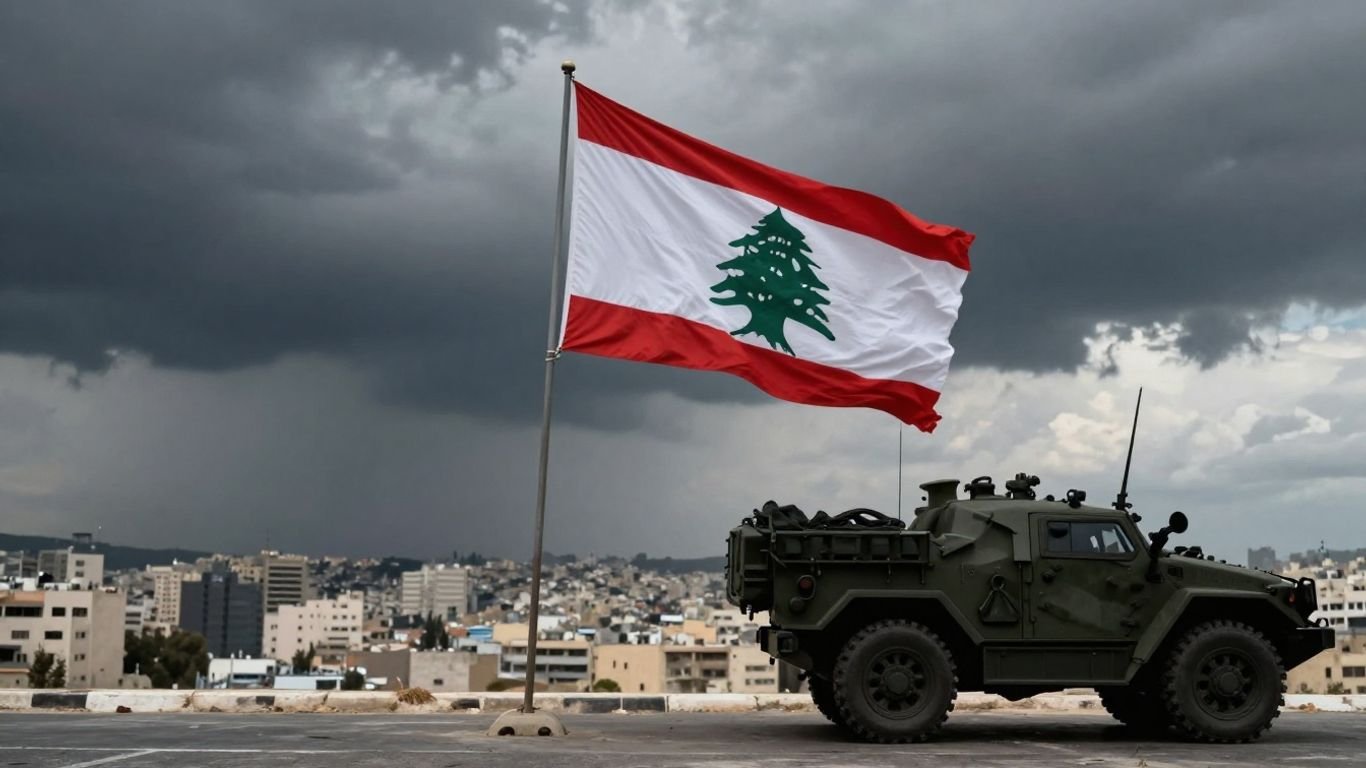

Lebanon’s government has announced an immediate ban on Hezbollah’s military and security activities, a significant move following rocket attacks on Israel and subsequent Israeli airstrikes. Prime Minister Nawaf Salam urged the group to surrender its weapons to the state and confine itself to political action, emphasizing that decisions of war and peace rest solely with the Lebanese government. This decision comes after Hezbollah launched drone and missile attacks in retaliation for the killing of Iran’s Supreme Leader Ali Khamenei.
Hezbollah claimed responsibility for launching drone and missile attacks against Israel, stating it was in revenge for the killing of Iran’s Supreme Leader Ali Khamenei. In response, Israel conducted a series of intense airstrikes targeting Beirut and numerous villages in southern Lebanon. Lebanon’s Ministry of Health reported at least 31 deaths and 149 injuries resulting from these Israeli attacks.
Following an extraordinary cabinet meeting, Lebanese Prime Minister Nawaf Salam declared the “immediate suspension” of all Hezbollah military and security activities. He stressed that the Lebanese state rejects any military or security actions conducted outside the framework of official state institutions and instructed security forces and the army to prevent any missile or drone launches from Lebanese territory. Salam also called on Hezbollah to immediately surrender its weapons to the state.
In the wake of the attacks, the Israeli military issued 18 urgent evacuation warnings covering 16 villages and towns in southern and eastern Lebanon, as well as the southern Beirut suburb of Burj al-Barajneh. The Israeli army stated that buildings in these targeted areas were being used by the Hezbollah armed group. Israel also confirmed the killing of Hussein Maqalid, identified as Hezbollah’s intelligence chief, in an overnight strike in Beirut.
The Lebanese government had previously announced plans to disarm Hezbollah after a ceasefire in November 2024, but Israel continued its strikes, accusing the group of rebuilding its military capabilities. Prime Minister Salam called on the United States and France, as guarantors of the ceasefire agreement, to ensure Israel’s compliance with halting attacks. Lebanon has expressed readiness to resume negotiations with Israel under international supervision to prevent further escalation. The situation remains highly volatile, with intensified diplomatic efforts aimed at containing the widening conflict along the Lebanese-Israeli border.