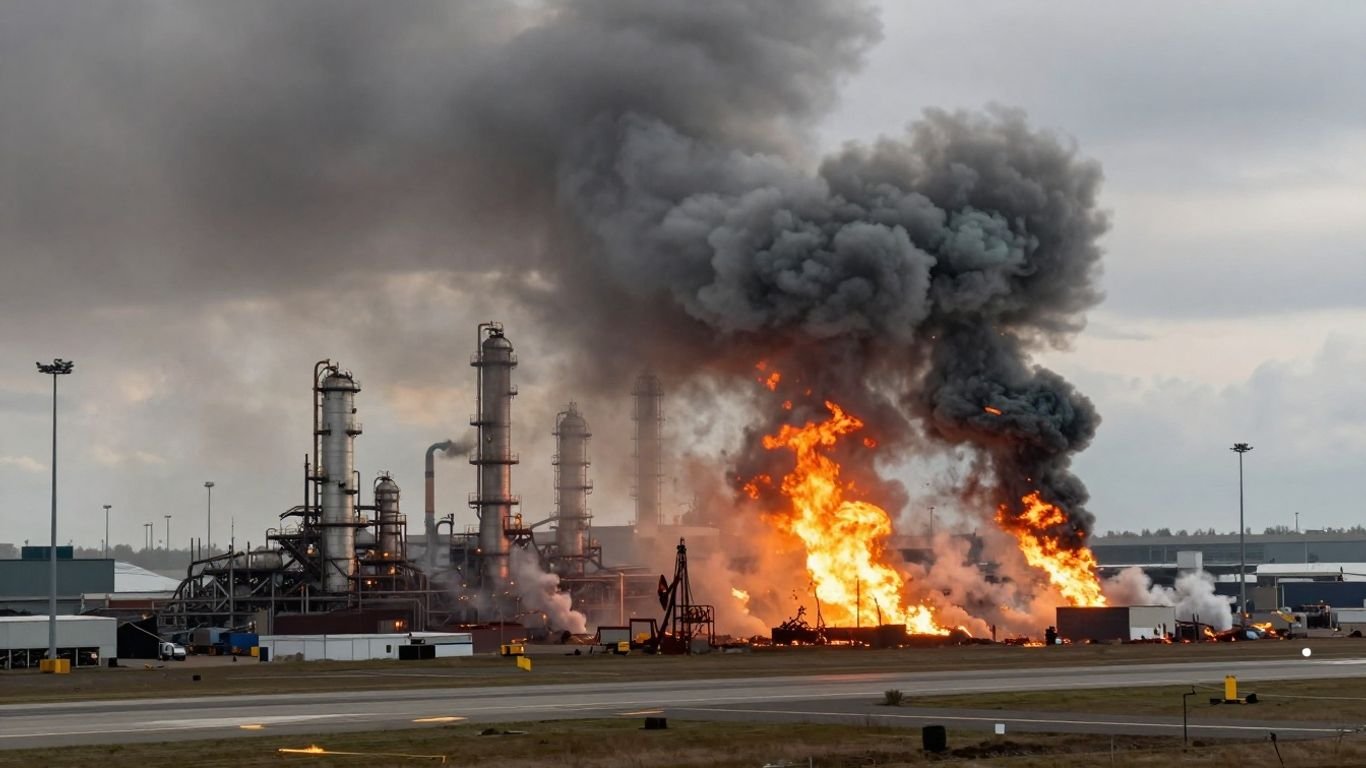

Iran has launched attacks targeting Qatar’s critical energy infrastructure and its main airport, resulting in injuries and a significant disruption to global energy supplies. The strikes have led to a sharp increase in international gas prices, with Qatar, a major liquefied natural gas (LNG) exporter, halting production.
The attacks on Qatar’s energy infrastructure, including facilities in Ras Laffan Industrial City and Mesaieed Industrial City, have prompted QatarEnergy to halt all liquefied natural gas (LNG) production. This move has sent shockwaves through the global energy market, with European gas prices experiencing a dramatic surge of up to 50%.
In addition to the energy sector, Qatar’s airport was also targeted, leading to injuries. The full extent of the damage and casualties is still being assessed.
Qatar is one of the world’s largest LNG exporters, supplying approximately one-fifth of global supplies. The suspension of its production is expected to have a significant impact on energy security worldwide, particularly for Europe, which relies heavily on LNG imports. Analysts warn that this disruption could lead to sustained price increases and potential shortages.
These strikes are part of a wider pattern of escalating conflict in the Middle East. Saudi Arabia also reported that its Ras Tanura oil refinery, one of the largest in the region, was targeted by drones, causing a fire and leading to the temporary shutdown of some operations. The Saudi Ministry of Defence stated that the refinery sustained limited damage with no casualties.
The attacks come amid ongoing retaliatory strikes between Iran and the US-Israeli coalition, following earlier US and Israeli air strikes on Iran. The situation has drawn condemnation from Gulf states and the US, who have denounced Iran’s “indiscriminate and reckless missile and drone attacks” as a threat to regional stability.