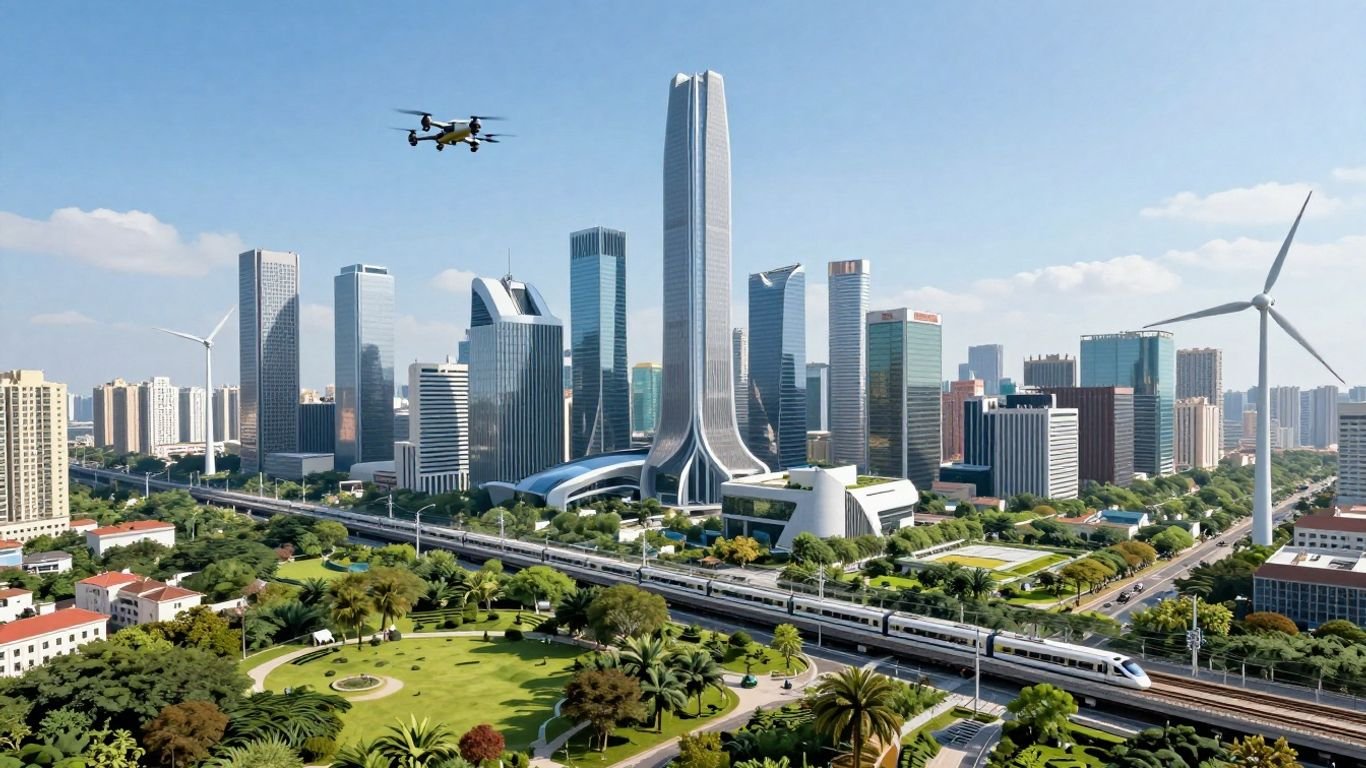

China has officially unveiled its development targets for the 2026-2030 period, signaling a strong commitment to technological advancement, environmental sustainability, and robust economic growth. The newly released 15th Five-Year Plan outlines key objectives aimed at propelling the nation towards its long-term vision of becoming a moderately developed country by 2035.
The Chinese government has emphasized innovation-led development as a cornerstone of its strategy. The plan projects an annual average increase of at least 7% in nationwide research and development spending. This focus is intended to bolster the overall performance of China’s innovation system and establish a robust framework for the integrated development of education, science, technology, and human resources. Beijing is channeling significant investments into high-tech sectors, including semiconductors and artificial intelligence, to reduce its reliance on foreign technology.
In line with global efforts to combat climate change, China has set ambitious targets for decarbonization. The plan aims for a total reduction of 17% in carbon dioxide emissions per unit of GDP between 2026 and 2030. This initiative is part of a broader strategy to promote green development and improve environmental quality, building on previous efforts to reduce pollution and enhance air quality in major cities.
Beyond technological and environmental goals, the 15th Five-Year Plan also addresses social and economic well-being. A key objective is to raise the value added of core digital economy industries to 12.5% of GDP. Furthermore, the plan aims to increase the average life expectancy to 80 years and maintain the urban unemployment rate below 5.5% by 2030. These targets underscore a commitment to improving the quality of life for citizens and ensuring inclusive economic growth.