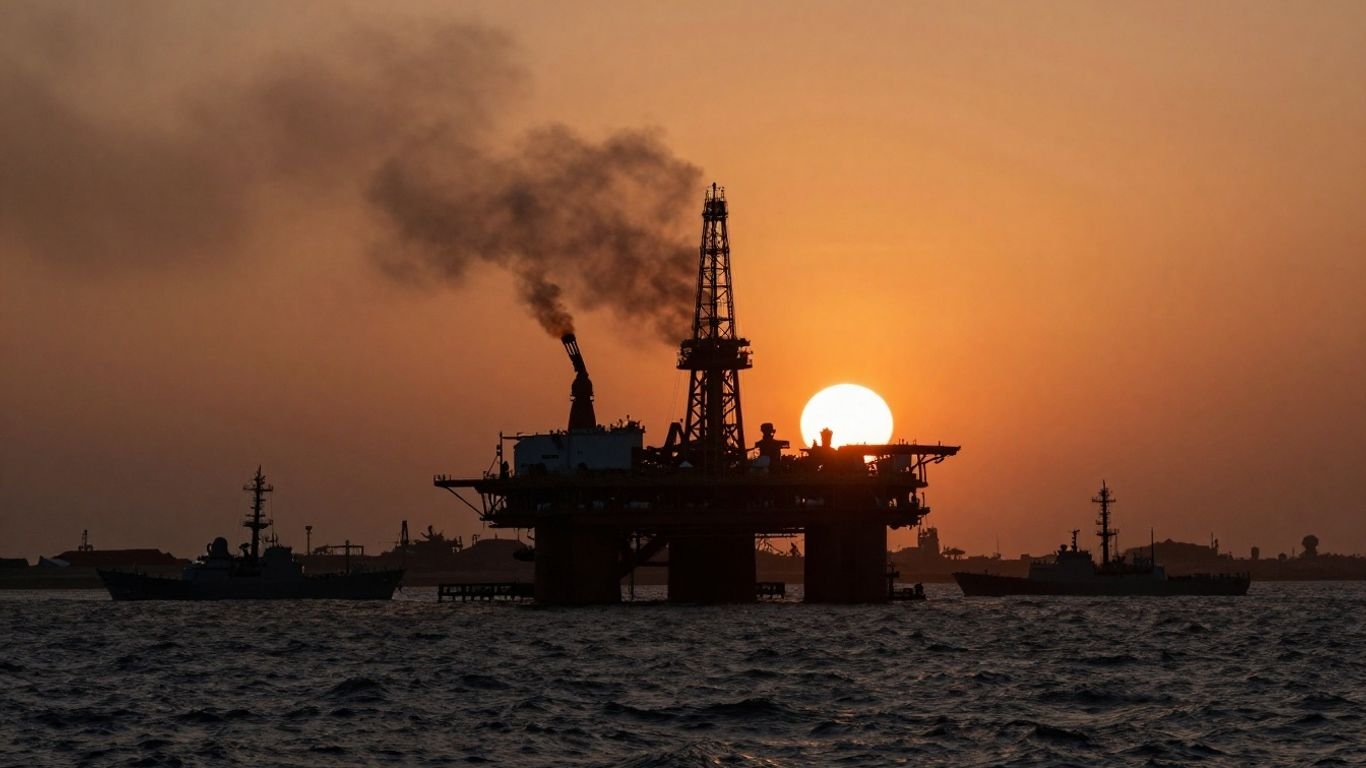

Kuwait has announced significant cuts to its oil production and refining output, a precautionary measure taken in response to escalating tensions with Iran and the subsequent disruption of shipping lanes through the Strait of Hormuz. This move by Kuwait, a key OPEC producer, follows similar reductions by Iraq and Qatar, highlighting the growing impact of the conflict on global energy supplies.
The Strait of Hormuz, a critical chokepoint for global oil and LNG trade, has become largely impassable due to threats from Iran. Approximately 20% of the world’s oil consumption is exported through this narrow waterway. The inability of tankers to transit the gulf has led to a significant buildup of oil in the Middle East, forcing producers to reduce output as storage facilities reach capacity.
Kuwait Petroleum Corporation stated that the production cuts are a precautionary measure and will be reviewed as the situation evolves. The company affirmed its readiness to restore production levels once conditions permit. In February, Kuwait was producing around 2.6 million barrels per day of crude oil. The declaration of force majeure signifies the severity of the operational challenges faced by the nation’s oil industry.
The disruption has already sent shockwaves through the energy market. Oil prices have seen substantial weekly gains, with Brent and West Texas Intermediate futures experiencing significant surges. Analysts warn that prolonged closure of the Strait of Hormuz could lead to further dramatic price increases, potentially exceeding $100 per barrel for Brent crude if production cuts exceed 4 million barrels per day globally.
Kuwait’s decision mirrors actions taken by other regional producers. Iraq has already implemented significant production cuts due to storage limitations, and Qatar has halted liquefied natural gas (LNG) production. Analysts predict that the United Arab Emirates and Saudi Arabia may soon be compelled to follow suit if the crisis persists and storage capacity is depleted. The ongoing conflict is not only impacting oil but also disrupting global natural gas supplies, with significant implications for electricity generation and heating worldwide.