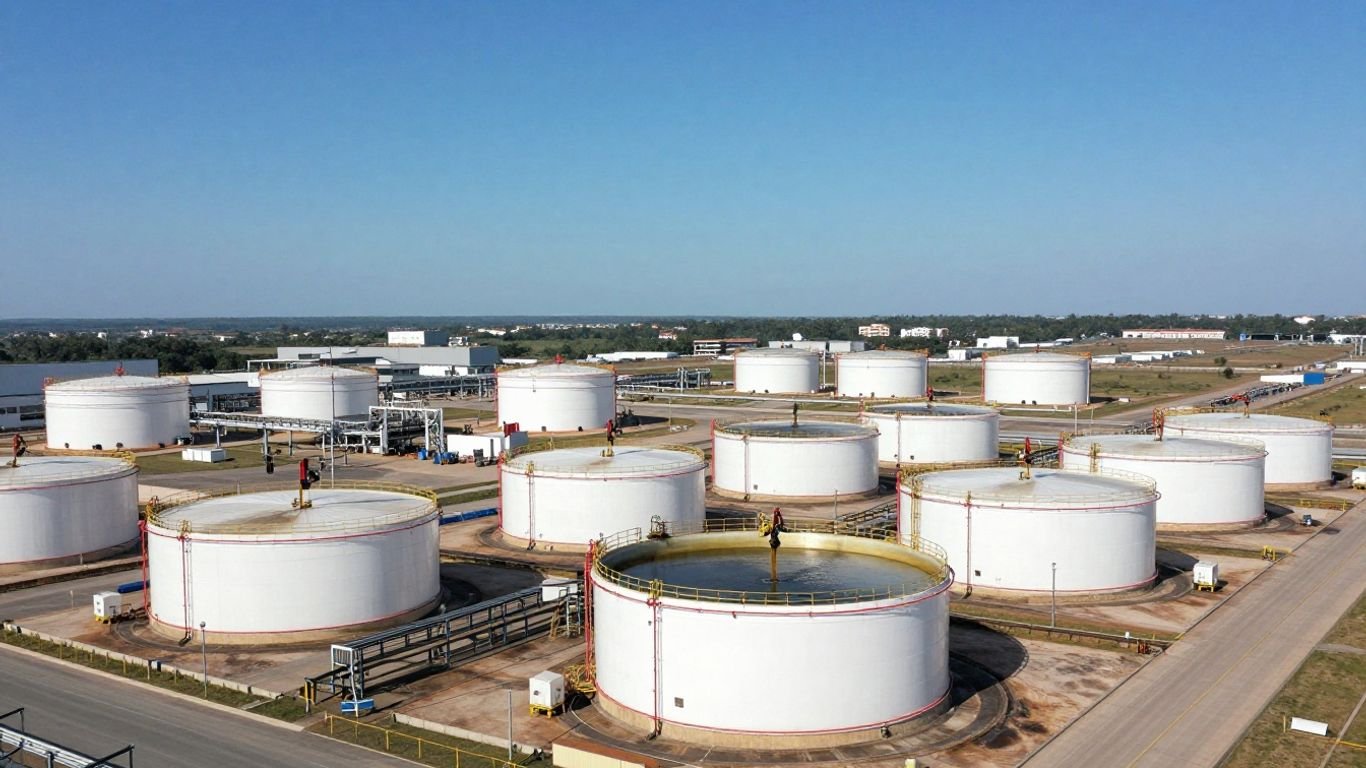

Saudi Arabia has begun cutting oil production as the critical Strait of Hormuz remains largely impassable due to ongoing conflict, leading to a buildup of stored crude. This move by the world’s largest oil exporter follows similar reductions by other OPEC nations, including the UAE, Kuwait, and Iraq, as they seek to manage overflowing storage capacity and avoid complete output shutdowns.
The ongoing conflict in the Middle East has severely impacted maritime traffic through the Strait of Hormuz, a vital chokepoint for global oil trade. With only a fraction of normal vessel traffic passing through, oil exports have been significantly hampered, leading to a surge in oil prices to over $100 per barrel. In response, Saudi Arabia, a major oil producer, has initiated production cuts. This strategy aims to prevent oil fields from being completely shut down by managing the growing volume of stored crude.
While Saudi Arabia is attempting to mitigate the impact by rerouting some of its oil exports from the Persian Gulf to the Red Sea via pipeline, the existing infrastructure has limited capacity to fully compensate for the lost volumes. This has led to an increase in export shipments from Yanbu on its west coast, significantly above average levels. Analysts suggest that Saudi Arabia possesses substantial storage capacity, potentially allowing it to weather the disruption longer than some of its neighbors. However, overall storage capacity in the region is a growing concern, with estimates indicating that available capacity is being rapidly depleted.
The near-collapse of traffic in the Strait of Hormuz has not only led to production cuts but has also prompted Saudi Arabia to offer crude oil on the spot market, an unusual move. The escalating situation has fueled an oil price rally to multi-year highs, raising concerns about global inflation. In response to the supply squeeze, the G7 nations are reportedly considering a joint release of oil from strategic reserves to stabilize the market.