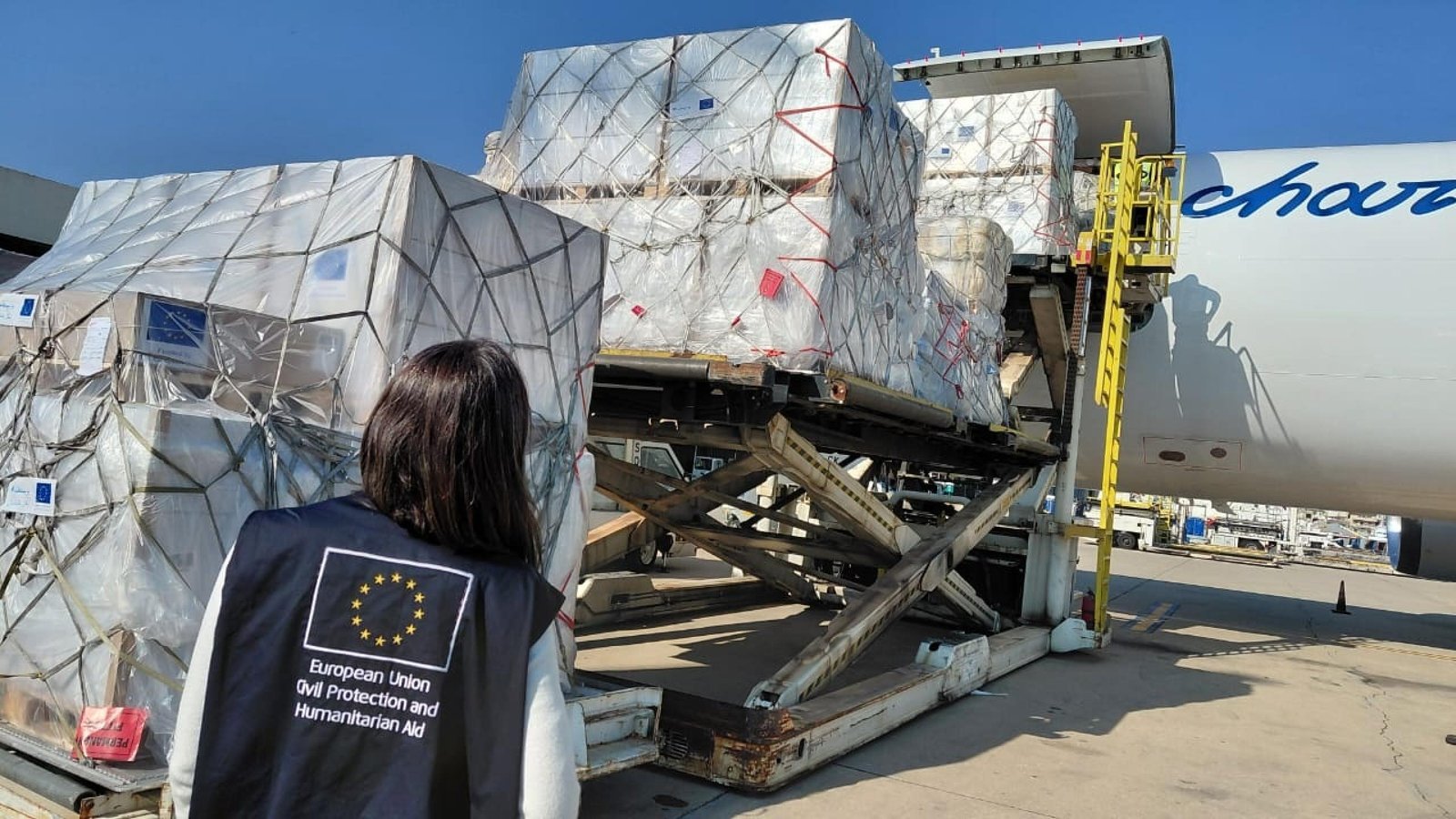

The European Union has announced significant humanitarian aid packages totaling hundreds of millions of euros to address the escalating crises in the Middle East, with substantial allocations directed towards Palestine, Lebanon, and Syria. This commitment aims to provide life-saving assistance amidst severe humanitarian needs and strained international support.
The European Commission has committed €450 million in humanitarian aid for 2026, targeting Palestine, Lebanon, Syria, Jordan, and Egypt. This funding is crucial as major donors withdraw and international humanitarian law faces unprecedented strain. The aid aims to sustain life-saving assistance for millions of people across the region.
In Syria, €210 million will support emergency response and protection efforts. Despite the fall of the Assad regime in late 2024, 16.5 million people still require assistance, with over 3.2 million returnees facing destroyed infrastructure and a lack of livelihood opportunities. The funding will cover food, healthcare, shelter, clean water, and education for out-of-school children.
Palestine will receive €124 million to support food assistance, health, protection, shelter, and education. Over 3.3 million people remain in need, with 2.1 million in Gaza and 1.2 million in the occupied West Bank. Civilians in Gaza are facing malnutrition, a collapsed healthcare system, and systematic obstruction of aid.
Lebanon is set to receive €100 million for emergency healthcare, basic assistance, protection services, shelter, and education. The country faces acute needs, with over three million people requiring humanitarian assistance even before the current crisis, exacerbated by ongoing developments in Iran. Israeli airstrikes in March 2026 have displaced over 800,000 people, with EU airbridge flights already delivering essential items.
Jordan will receive €15.5 million to sustain essential services like health and protection, and meet the needs of refugees. Egypt will get €8 million for multi-sectoral assistance to the most vulnerable, including education for out-of-school children and disaster preparedness programs, supporting over 1.5 million refugees and asylum seekers.
Commissioner for Equality, Preparedness and Crisis Management Hadja Lahbib emphasized the EU’s role: “In a war-torn Middle East, the European Union is stepping up while others step back. We are now the largest donor still delivering humanitarian aid in some of the world’s most severe crises, helping people living through the darkest moments of their lives.” She stressed the importance of defending international humanitarian law and continuing to deliver aid as long as needed.
In addition to the 2026 allocations, the EU previously boosted its humanitarian response with an additional €83 million in May 2025. This included €50 million for Gaza and the West Bank, bringing the total for 2025 to €170 million, and €20 million for North-East Syria, raising the total for Syria in 2025 to €202.5 million. Lebanon also received an additional €13 million to support vulnerable Syrian refugees and Lebanese communities.
However, the delivery of humanitarian aid across the region is significantly hampered by operational and logistical constraints, limited access, reduced humanitarian space, and continuous violations of international humanitarian law. The EU’s funding is implemented through its network of UN agencies, international organizations, and NGOs, ensuring aid reaches those most in need based on humanitarian principles.