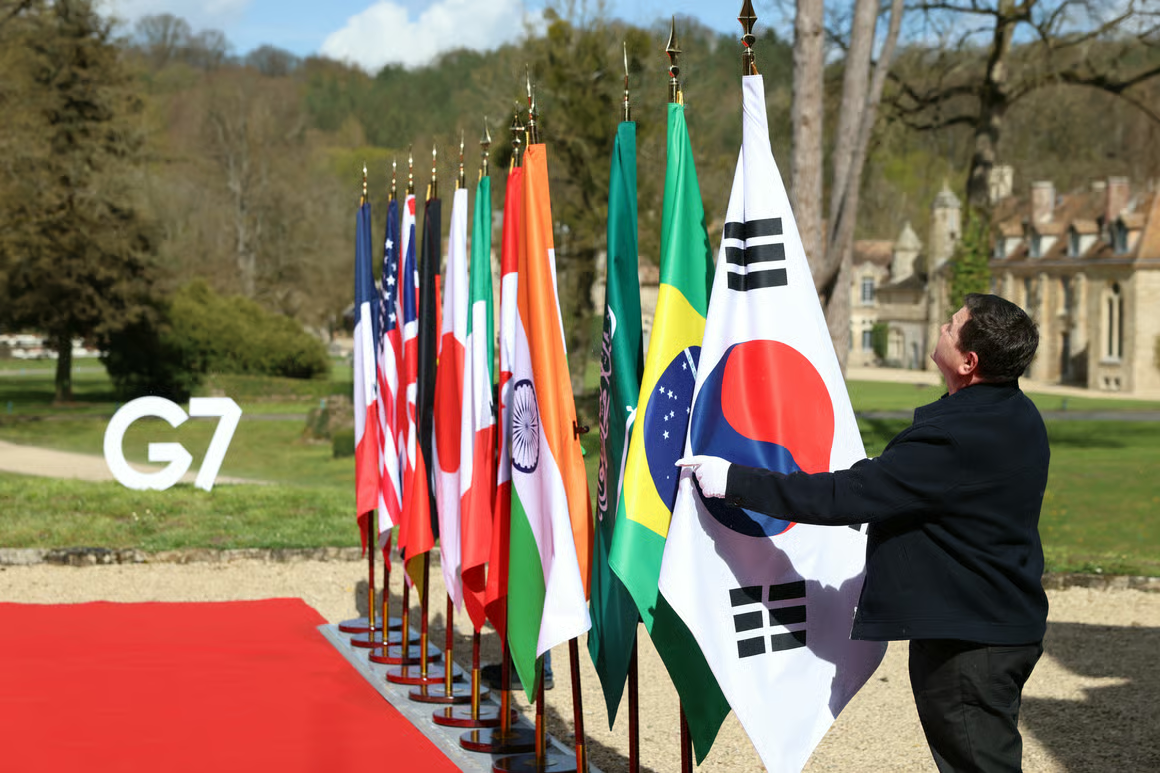

The upcoming Group of Seven (G7) leaders’ summit in June will see an expanded guest list, with invitations extended to India, South Korea, Brazil, and Kenya. Notably, China has not been invited to the high-profile international gathering, signaling a potential shift in diplomatic engagement strategies.
The decision to include these four nations underscores a broader approach to global dialogue by the G7. The inclusion of major economies like India and South Korea, alongside rapidly developing nations such as Brazil and Kenya, suggests a focus on addressing a wider range of international challenges and fostering collaboration on a more global scale.
The absence of China from the summit’s guest list is a significant point of discussion. While the specific reasons for this exclusion have not been detailed, it comes at a time of complex geopolitical dynamics and ongoing discussions surrounding international trade, security, and global governance. The G7, comprising Canada, France, Germany, Italy, Japan, the United Kingdom, and the United States, often uses its summit to coordinate policy on critical global issues.
The expanded format of the G7 summit could lead to more diverse perspectives and potentially new avenues for cooperation on issues such as climate change, economic stability, and global health. The invitation of these specific countries may reflect their growing influence on the world stage and their importance in addressing shared global concerns. The exclusion of China, however, may also highlight existing points of contention or strategic disagreements between the G7 nations and Beijing.