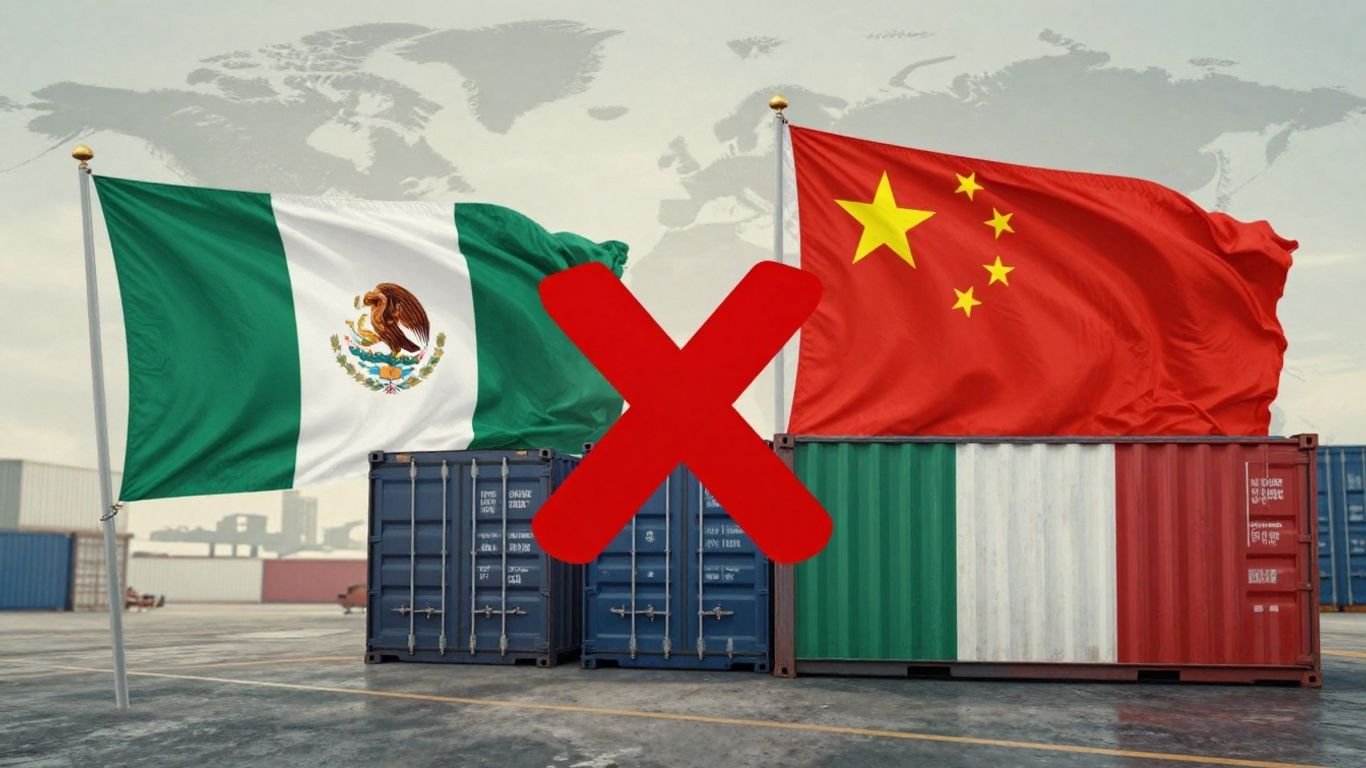

China has accused Mexico of imposing trade barriers through recent tariff hikes on its goods, signaling a significant escalation in trade tensions between the two nations. Beijing has stated its right to retaliate against these measures, which primarily impact Chinese products and are seen by China as a breach of trade rules.
In January, Mexico implemented revised tariff rates on over 1,400 products, with additional duties ranging from 5% to 50%. These measures, which primarily affect Chinese goods such as steel and vehicles, were approved by the Mexican Congress in late 2025. China’s Ministry of Commerce concluded an investigation, launched in September, determining that these tariffs, along with other measures like protracted customs clearances and stricter rules of origin, constitute “direct or indirect discrimination or restrictions” on Chinese imports.
China’s Ministry of Commerce stated that Mexico’s actions breach trade rules and that Beijing has the right to take countermeasures. The ministry indicated that the new tariffs could lead to estimated losses of approximately $9.4 billion for China’s mechanical and electrical sectors, with the automotive and auto parts industries bearing a significant portion of these losses. While China possesses the right to retaliate, the value of Mexico’s exports to China is considerably smaller than Chinese imports into Mexico, limiting the potential for comparable damage to Mexican exporters. China may first pursue bilateral talks or escalate the issue to a multilateral body like the World Trade Organization.
Mexico’s Economy Minister, Marcelo Ebrard, defended the tariffs as a measure to protect domestic industries and jobs, citing textiles, footwear, and steel as key sectors. He also suggested that some Chinese companies benefit from government subsidies, allowing them to sell goods in Mexico at prices lower than comparable Mexican products. While Mexico denies succumbing to U.S. pressure, the timing of these tariffs has been noted, particularly ahead of the USMCA trade pact review.
The trade relationship between Mexico and China is characterized by a significant imbalance. In 2025, China accounted for a substantial portion of Mexico’s imports, while Mexico’s exports to China were a small fraction, resulting in a large trade deficit for Mexico. Beyond tariffs, Mexico is also implementing measures to protect its steel industry, including anti-dumping investigations and permanent duties on steel products from China and Vietnam. The Mexican government also plans to phase out temporary import permits for steel products under the IMMEX program to encourage domestic sourcing and prevent the use of Mexico as a transshipment channel for Chinese goods entering the U.S.