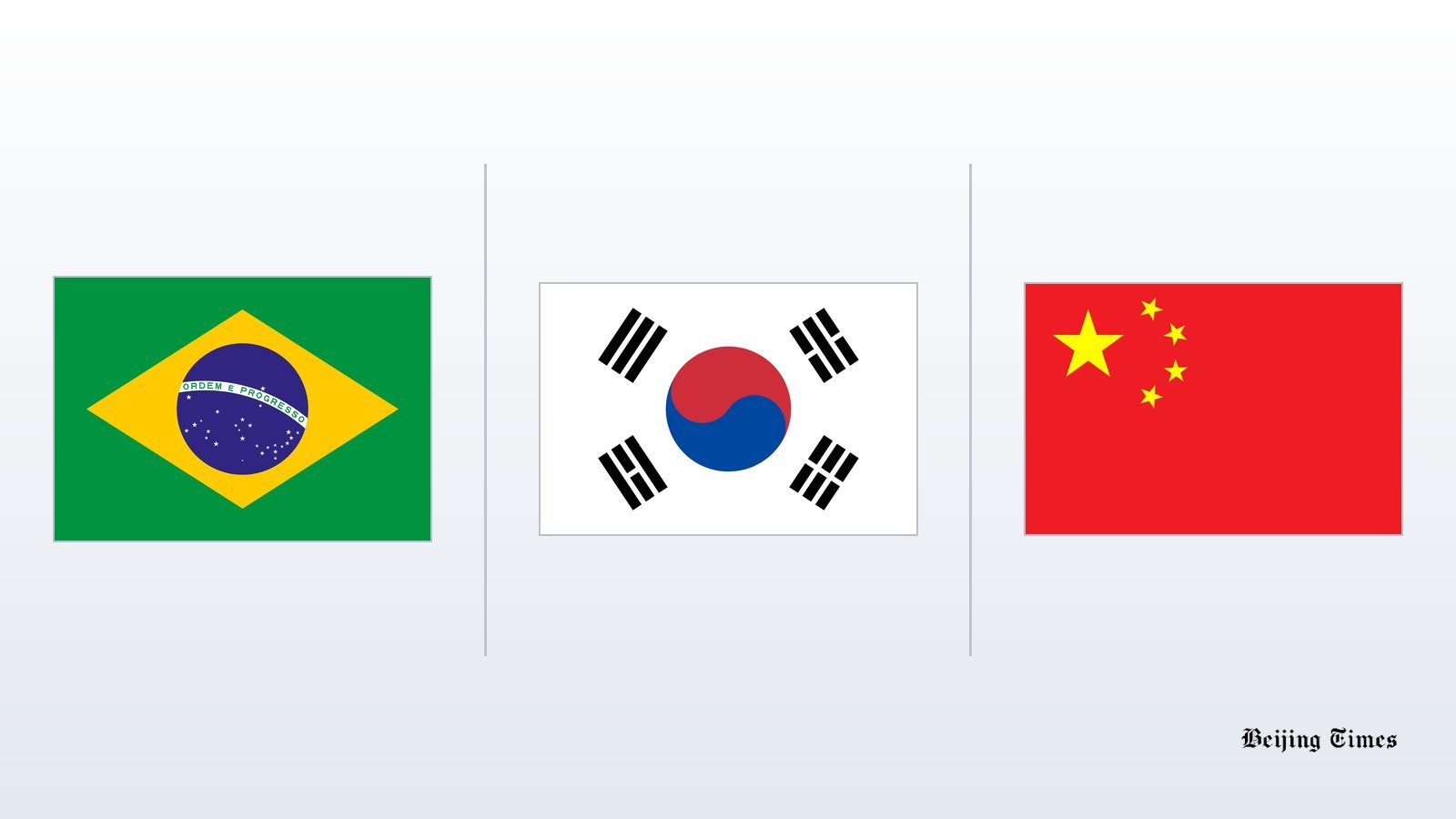

Brazil has agreed to accelerate negotiations for trade agreements linking the Mercosur bloc with both China and South Korea, marking a significant recalibration of the South American nation’s commercial strategy amid shifting global trade dynamics.
Chinese President Xi Jinping and Brazilian President Luiz Inacio Lula da Silva spoke by telephone for more than an hour on Sunday night, agreeing to speed up talks for a Mercosur-China accord. The Brazilian presidency stated that the two leaders “coincided on the importance” of advancing the negotiations.
The move represents a notable reversal for Brasilia, which for years led resistance within Mercosur to a broad trade pact with China. Brazilian industry had long expressed concern that closer commercial ties could expose domestic manufacturers to a surge of Chinese imports.
In parallel, Brazil and South Korea have agreed to advance discussions toward a separate Mercosur trade deal, broadening the bloc’s outreach across Asia.
Mercosur, the customs union comprising Argentina, Brazil, Paraguay and Uruguay, has been seeking to diversify its export markets and reduce dependence on any single trading partner.
The shift comes as Brazil navigates the impact of tariffs imposed by the administration of U.S. President Donald Trump, which have prompted several economies to seek alternative markets. The recalibration echoes broader global trade realignments, including shifts among other major exporters weighing new import arrangements in response to Washington’s trade posture.
China is already Brazil’s largest trading partner, purchasing substantial volumes of soybeans, iron ore and crude oil. A formal Mercosur-China agreement could deepen those flows and open additional sectors to preferential terms.
Brazil has also drawn interest from the United States and Europe, which have sought greater access to the country’s critical minerals as part of efforts to reduce reliance on Chinese supply chains.
Analysts suggest that the simultaneous pursuit of agreements with China and South Korea reflects Brasilia’s intent to position itself flexibly among competing economic powers rather than align exclusively with any one bloc.
The negotiations remain at an early stage, and no timeline has been set for concluding either agreement. Both deals would require consensus among all Mercosur members, a process that has historically proven lengthy.
The talks are expected to feature prominently in Brazil’s trade agenda in the coming months as the bloc weighs its options in an increasingly fragmented global economy.