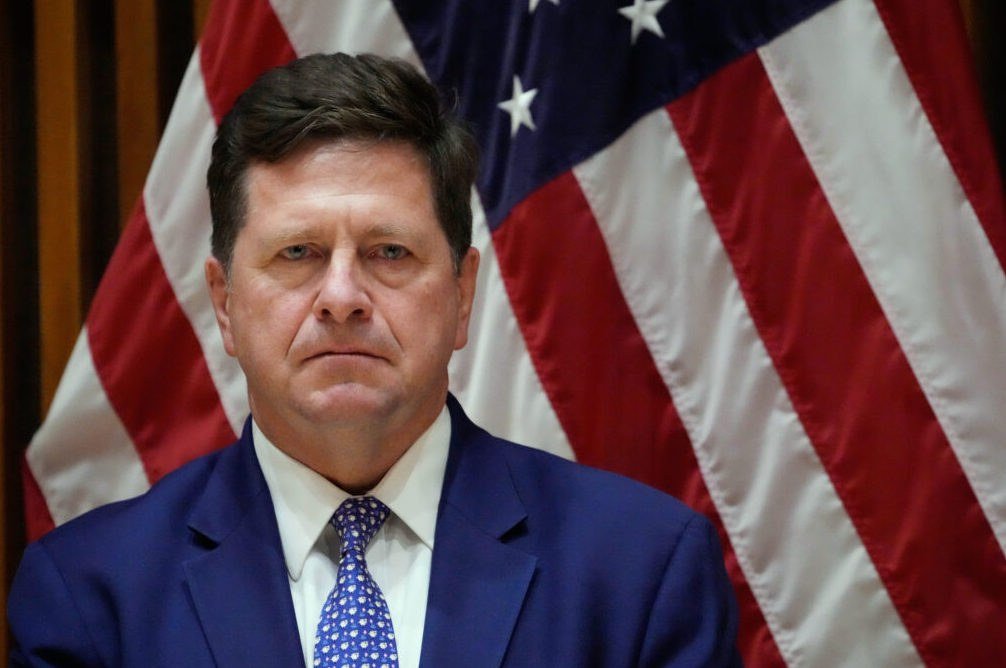

Jay Clayton was sworn in Monday as the U.S. director of national intelligence, taking charge of the country’s sprawling spy apparatus following a divisive Senate confirmation that split lawmakers largely along party lines.
Clayton, a former chairman of the Securities and Exchange Commission, secured the post despite firm opposition from Democrats. His confirmation hearing turned contentious after he repeatedly declined to directly acknowledge that President Donald Trump lost the 2020 presidential election, a refusal critics seized upon as evidence of political deference.
“The safety and security of the American people” would be his central priority, Clayton stated, framing his tenure around intelligence gathering and national defense.
The position had been vacant since June, when Tulsi Gabbard stepped down. Her tenure was marked by repeated clashes with congressional Democrats, who accused her of advancing the president’s political agenda and amplifying discredited claims about the 2020 vote.
Senate Republicans pushed the nomination through their narrow majority, a result reached in a party-line confirmation vote that underscored the partisan divide over intelligence leadership.
The director of national intelligence oversees coordination across the 18 agencies that make up the U.S. intelligence community, advising the president on threats ranging from foreign espionage to cyberattacks. The role was created in the aftermath of the September 11, 2001 attacks to improve information sharing among agencies.
Democrats questioned whether Clayton, whose professional background lies in financial regulation and securities law rather than intelligence, possesses the experience required for the sensitive post. Supporters countered that his record managing a major federal agency demonstrated the administrative competence the office demands.
Clayton now inherits a portfolio that includes assessing global flashpoints, managing relationships with allied intelligence services, and steering the community through debates over surveillance authorities and emerging technologies.
His confirmation comes as the intelligence community faces scrutiny over its independence and its handling of politically charged assessments. How Clayton navigates those pressures is likely to shape early perceptions of his leadership.
The new director is expected to begin briefing the White House on pressing national security matters in the coming days as he settles into the role.