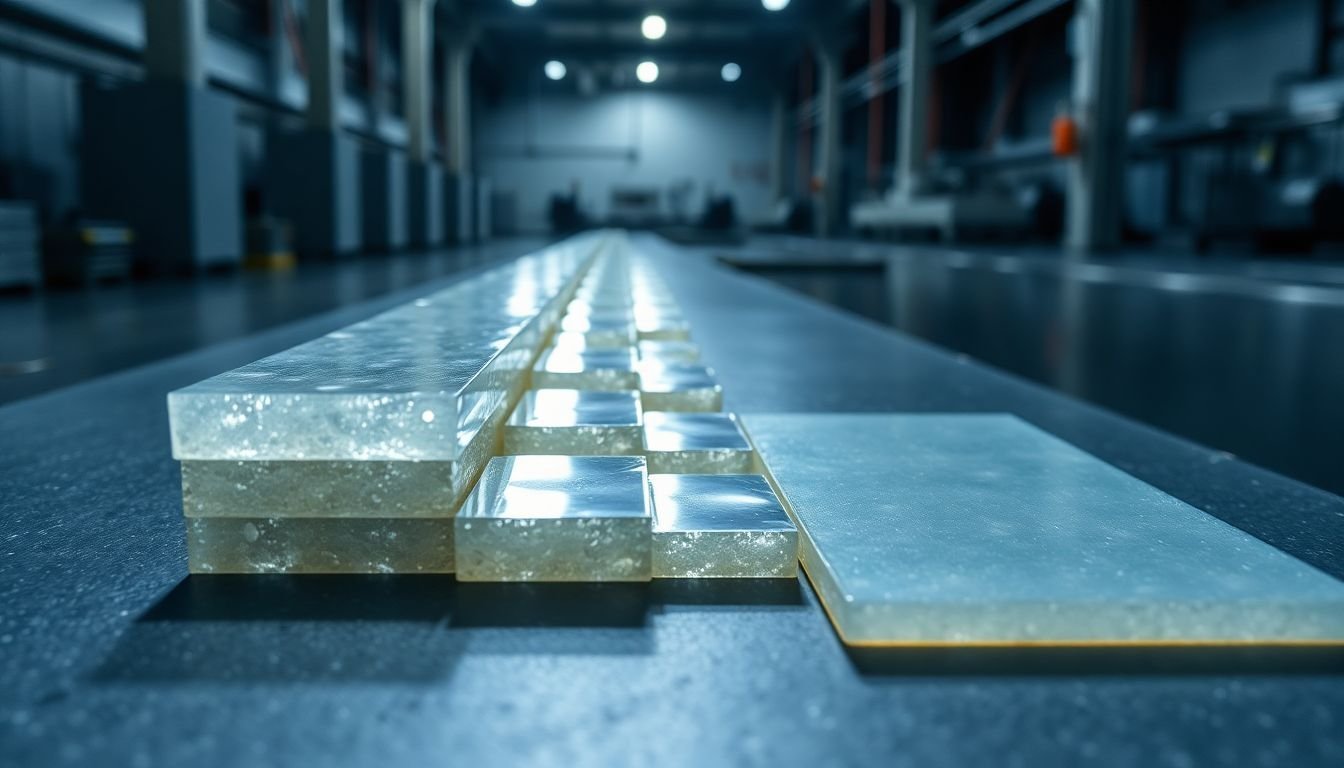

President Donald Trump has ordered a new 15% tariff on imported products made with polysilicon, a key material in semiconductor and solar panel manufacturing that is predominantly produced by China, in a move aimed at strengthening domestic supply chains.
The tariff is scheduled to take effect on December 4 and covers goods manufactured using polysilicon, a refined form of silicon essential to both microchips and photovoltaic cells. The measure is designed to help US chip and solar producers compete with Beijing across artificial intelligence and clean energy markets.
Polysilicon sits at the base of two of the most strategically contested industries of the decade. China dominates global production, giving it significant leverage over the raw inputs that feed both advanced computing and renewable power.
Financial markets reacted quickly to the announcement. Shares of several US solar companies rose in premarket trading, reflecting investor expectations that domestic manufacturers could benefit from reduced competition on imported components.
The tariff marks the latest escalation in a broader trade contest between Washington and Beijing over the technologies underpinning future economic growth. Successive rounds of duties and export controls have reshaped the flow of semiconductors, equipment and raw materials between the two economies.
The measure follows earlier friction in the sector, where the chip industry has navigated overlapping US tariffs and Chinese export restrictions that have complicated long-term investment planning.
For solar developers, the impact is more nuanced. While domestic panel makers may gain protection, higher input costs could ripple through project budgets as the United States expands renewable capacity to meet rising electricity demand, much of it driven by power-hungry AI data centers.
Beijing has consistently framed such measures as protectionist and disruptive to global supply chains, while Washington argues they are necessary to reduce dependence on a single dominant supplier of critical materials.
The tariff also underscores the growing convergence of energy and technology policy, as governments treat control over foundational materials as a matter of both economic competitiveness and national security.
Attention now turns to how manufacturers and importers adjust ahead of the December 4 start date, and whether Beijing responds with countermeasures that could further test the fragile trade relationship between the world’s two largest economies.