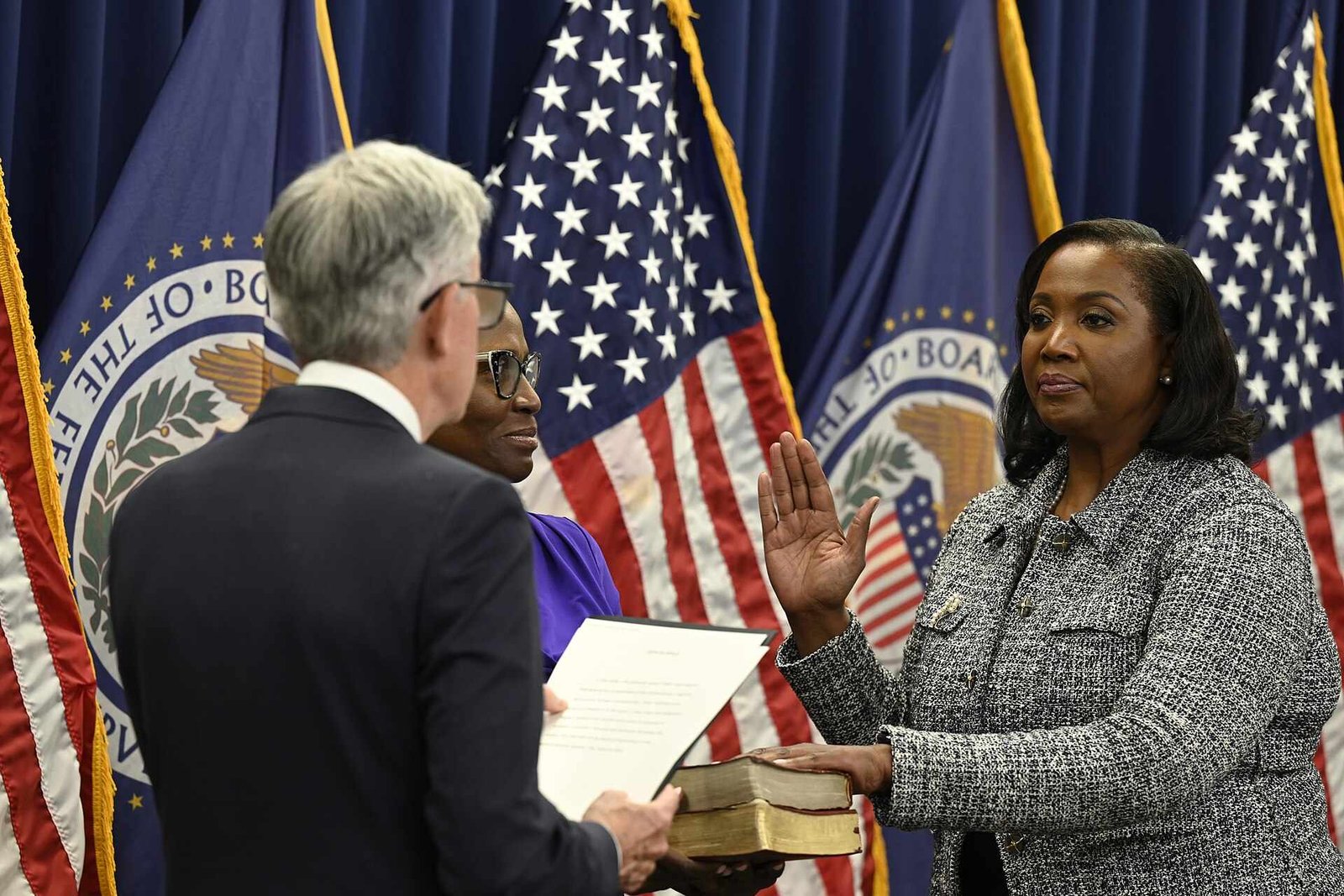

The Trump administration has renewed its effort to remove Federal Reserve governor Lisa Cook, two months after the Supreme Court allowed her to remain in her post while she contests the president’s attempt to fire her over mortgage fraud allegations she has denied.
In a letter delivered this week, White House aide Dan Scavino informed Cook that President Donald Trump was “considering removing you from your position,” citing “sufficient reason to believe that you made false statements on one or more mortgage agreements.” The notice gives Cook until August 26 to challenge the move.
The renewed effort follows a 5-4 Supreme Court decision in June that permitted Cook, a Biden nominee to the Fed’s Board of Governors, to stay in her role at least while her lawsuit challenging her firing proceeds. The administration is appealing a lower-court ruling that sided with Cook.
Chief Justice John Roberts, writing in a footnote to the June opinion, noted that nothing prevented Trump from “trying again” to remove Cook, provided she received proper notice and an opportunity to respond. Trump signaled shortly afterward that he intended to pursue that path, vowing to take action.
The allegations against Cook stem from a criminal referral made last August by Bill Pulte, director of the Federal Housing Finance Agency. The referral accused her of listing two separate homes — one in Ann Arbor, Michigan, and another in Atlanta — as her “primary residence.” Homebuyers can secure lower mortgage rates or smaller down payments on primary residences than on second or vacation properties.
Cook has forcefully rejected the accusations and has continued to serve on the board throughout the dispute. Her legal team has framed the effort as an attempt to erode the independence of the central bank.
The standoff has become a focal point in a broader debate over presidential authority to remove Fed officials, a question that has grown more prominent amid earlier legal battles surrounding the institution’s leadership. A separate case involving scrutiny of senior Fed figures underscored the tensions between the White House and the central bank.
The Federal Reserve’s Board of Governors is designed to operate with a degree of insulation from direct political control, with governors serving staggered 14-year terms and removable only “for cause.” The current dispute tests how far that protection extends when allegations predate an official’s tenure.
The outcome carries implications well beyond Cook’s individual position, as global markets closely watch signs of political pressure on the world’s most influential central bank. A ruling that expands presidential removal power could reshape the balance between the executive branch and the Fed.
Cook now has until late August to formally contest the notice, setting the stage for a fresh round of legal proceedings as her original lawsuit continues to move through the courts.