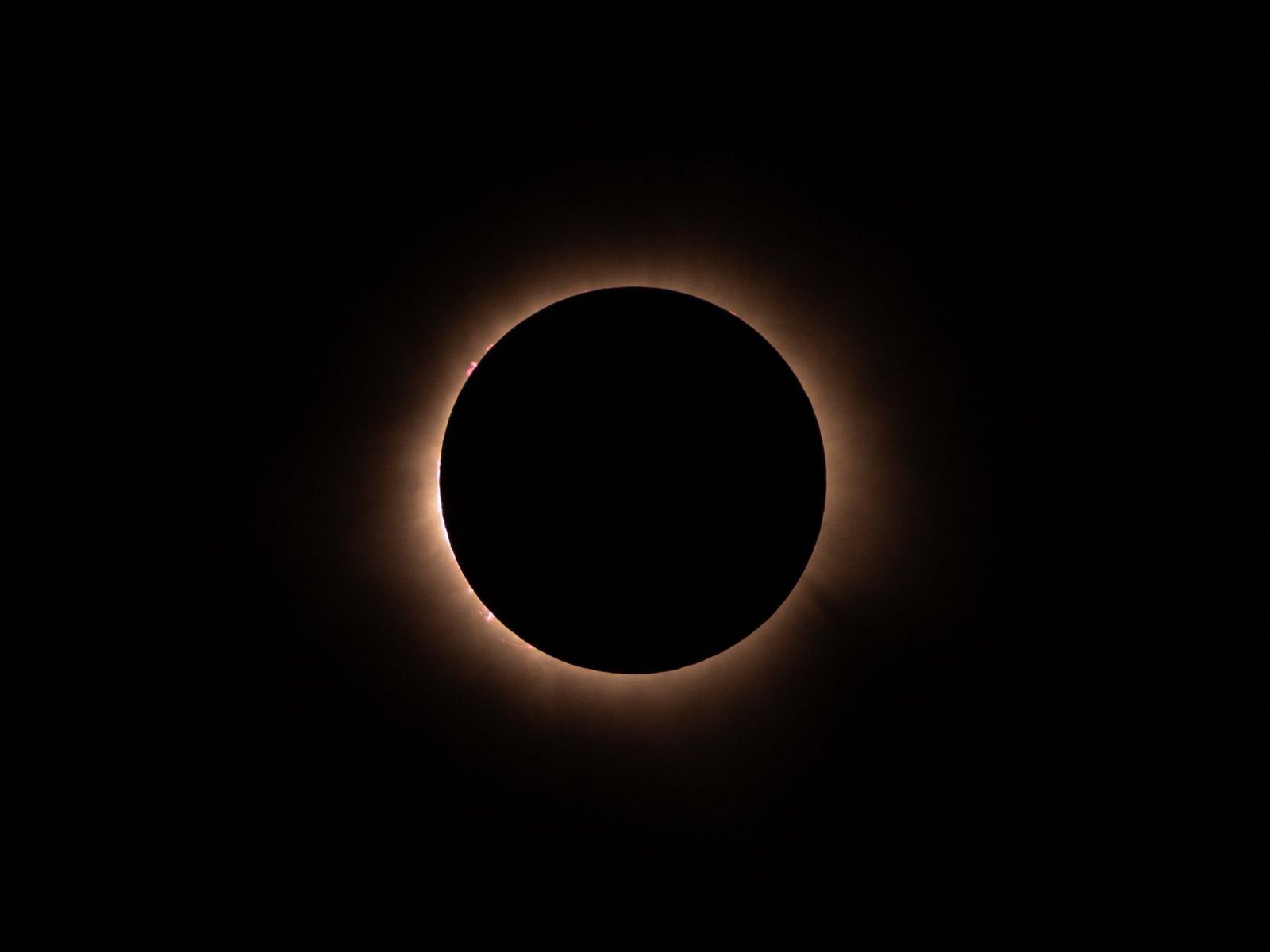

A total solar eclipse swept across western Europe, Iceland and the Arctic on August 12, drawing tens of millions of skywatchers to prime viewing spots along the path of totality in one of the continent’s most anticipated astronomical events in decades.
The eclipse plunged parts of Spain, the United Kingdom and Iceland into brief midday darkness as the Moon passed directly between the Earth and the Sun. For Iceland, it marked the first total solar eclipse visible from the country in 72 years, prompting a surge of visitors arriving by air, land and sea to witness the rare spectacle.
Enthusiasts gathered in the greatest numbers along the narrow band where the Moon fully obscured the solar disk, revealing the Sun’s faint outer atmosphere, or corona. Outside the path of totality, observers across much of western Europe experienced a partial eclipse.
The event triggered a sharp spike in travel demand, with accommodation prices soaring in destinations best positioned for viewing. Some hotel stays in Spain and Iceland climbed above $1,000 a night as visitors competed for limited rooms near the path of totality.
In Iceland, however, prices fell sharply in the days immediately before August 12, as hoteliers adjusted rates amid uncertainty over cloud cover and last-minute booking patterns. The volatility underscored the difficulty of predicting demand for weather-dependent astronomical tourism.
Total solar eclipses occur when the apparent size of the Moon is large enough to completely cover the Sun, a phenomenon possible only because of the coincidental ratio between the two bodies’ sizes and distances from Earth. Any given location on the planet experiences totality on average only once every few centuries.
The gathering reflected the growing popularity of astrotourism, a niche travel trend that draws travellers to dark-sky sites and celestial events. The pursuit has expanded steadily as more people seek out rare natural spectacles far from urban light pollution.
The August event follows a series of high-profile eclipses in recent years, including the annular “ring of fire” eclipse that captivated audiences across South America. Each has drawn dedicated crowds of scientists, photographers and casual observers alike.
The next total solar eclipse will be visible from parts of North Africa, southern Europe and the Middle East in 2027, offering another opportunity for skywatchers to chase the Moon’s shadow across the globe.