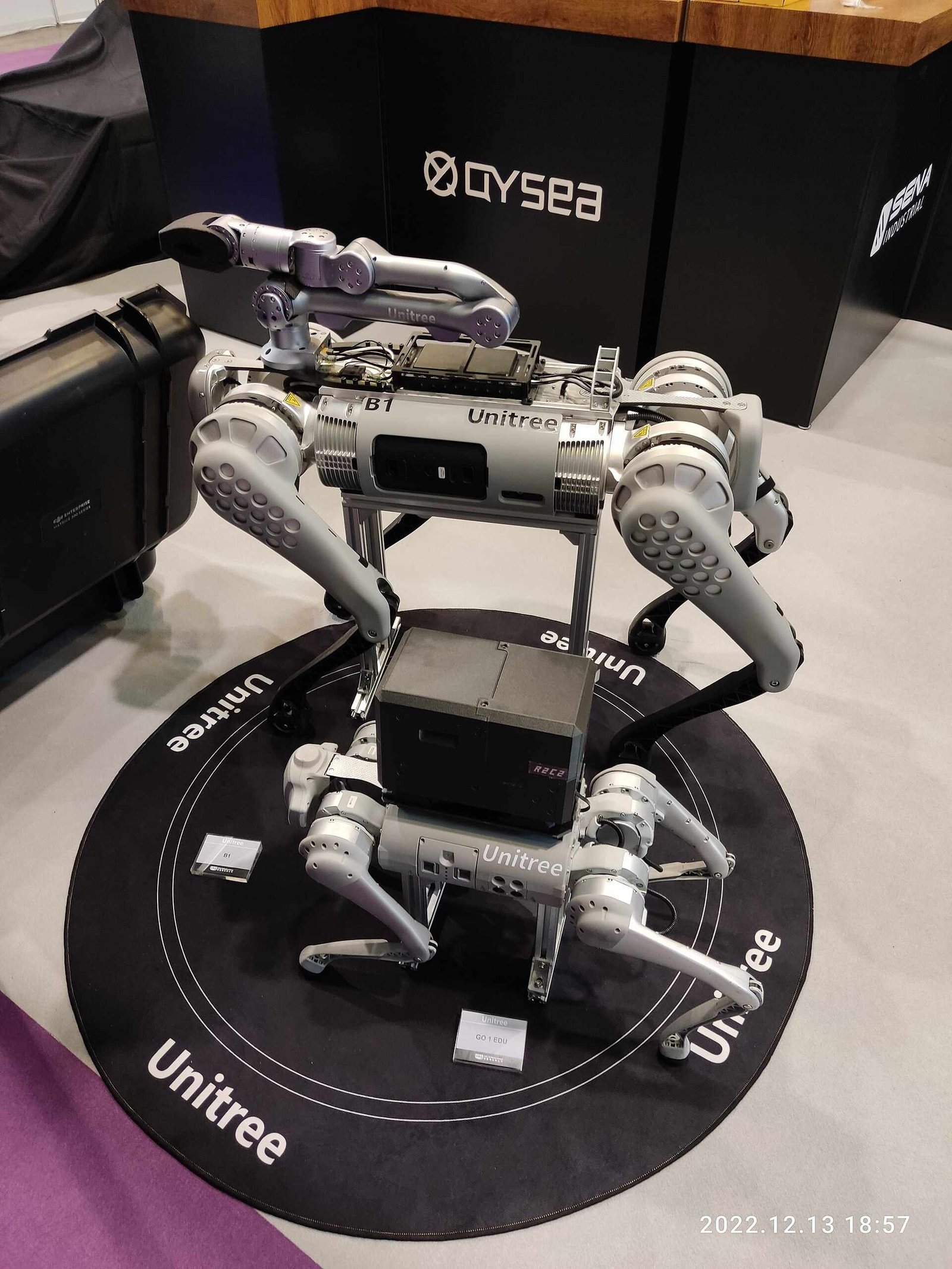

Unitree Robotics saw its shares climb as much as 620% on their trading debut Wednesday, becoming the first humanoid robot company to list on a mainland Chinese exchange and drawing intense investor appetite for the emerging sector.
The Hangzhou-based firm’s stock rocketed from its offer price shortly after markets opened, extending a wave of enthusiasm that had already surrounded the company before it began trading. Unitree makes both four-legged robot dogs and bipedal humanoid machines, products that have moved the company from a niche engineering name into one of China’s most closely watched technology listings.
The reception continues a pattern seen in the run-up to the flotation. Earlier this month, the company’s retail portion drew orders many thousands of times over available shares, a level of demand that pointed to how eager investors were to gain exposure to the field.
Behind the numbers, the debut reflects a broader bet that human-like machines will become commercially viable for factories, warehouses and eventually households. Chinese firms have pushed aggressively into the space, competing on price and manufacturing scale while global rivals develop their own prototypes. Unitree has priced consumer robots far below many Western equivalents, a strategy that has widened its customer base among developers and research institutions.
For a factory operator or a laboratory buying one of Unitree’s machines, the appeal has been affordability paired with capabilities that were once confined to far costlier equipment. That accessibility has helped the company build a following well ahead of the point where humanoid robots become everyday tools.
The listing arrives as investors weigh how quickly the technology can translate into steady revenue rather than demonstration videos. Humanoid robots remain expensive to develop and difficult to deploy reliably outside controlled settings, and the gap between prototype and mass adoption continues to shape valuations across the industry.
Unitree’s founder has previously described the company’s ambition to make general-purpose robots practical at scale, and the flotation gives the firm fresh capital to expand production and research. Whether the market’s early enthusiasm holds will depend on how the company converts its manufacturing edge into sustained orders.
Unitree now faces the task of meeting expectations set by one of the most heated debuts the sector has seen, with plans to scale output and refine its humanoid line as competition among Chinese robot makers intensifies.