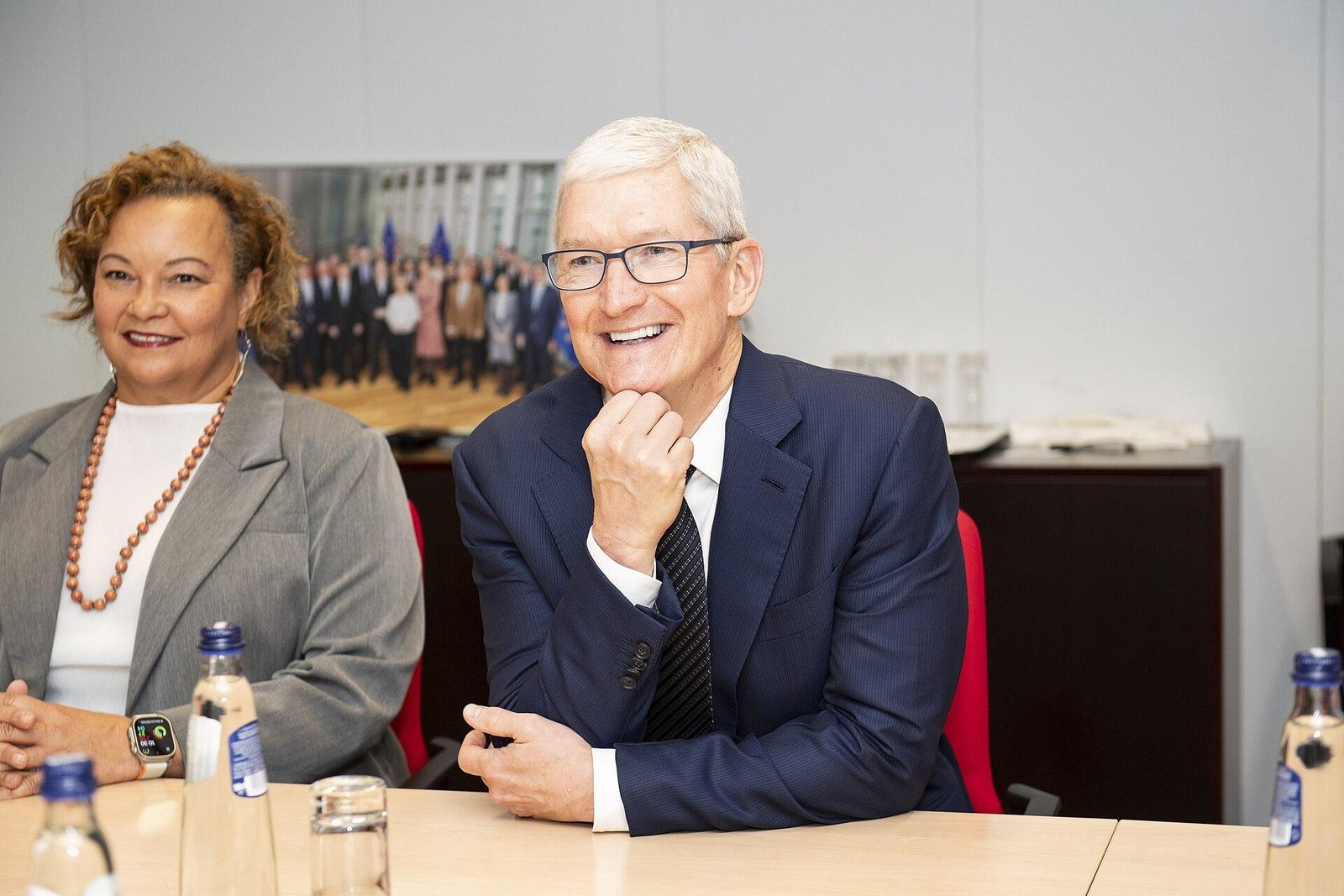

Once dismissed inside Apple as “not a product guy,” Tim Cook spent 14 years demonstrating that operational mastery could carry the company to a market value few thought possible when he took over from Steve Jobs in 2011.
Cook’s approach turned a hardware maker into a logistics machine. Rather than reinventing himself as a visionary designer, he re-engineered how Apple sourced, built, and shipped its products, squeezing inventory cycles and negotiating with suppliers across Asia to protect margins at scale.
That strategy carried real weight. Under his leadership Apple grew from roughly a $350 billion company into the world’s most valuable, crossing multiple trillion-dollar thresholds along the way and generating enormous cash returns through buybacks and dividends.
His record was not without misses. Critics point to a services and wearables pivot that leaned on the existing iPhone base rather than a wholly new category, and to the long, uneven road on artificial intelligence, where Apple has trailed rivals in shipping consumer-facing features. The company’s reliance on a hybrid AI approach reflects that catch-up posture.
Cook’s China relationships were central to the operational story. He cultivated ties with suppliers and officials over years of visits, building the manufacturing base that made the iPhone possible while later diversifying assembly toward India and Vietnam to reduce concentration risk.
Behind the numbers, his ascent carries a quieter lesson for workers. Cook rose to the top job without leaving the operations track that many assumed was a career dead end. He never ran a design studio or a product line in the traditional sense; he became indispensable by mastering the plumbing that let Apple’s designers ship at volume.
For an engineer or manager watching from a cubicle, the message is that you do not need to “move out to move up.” Deep expertise in an unglamorous function, executed consistently, can be a path to the corner office rather than a ceiling.
The transition also closes a chapter defined by predictability. Where Jobs was mercurial and product-obsessed, Cook offered steadiness, principled public stances, and a machine that rarely missed a shipping deadline.
Apple now turns to the question of who inherits that machine and whether the next chief keeps the operational discipline while finally closing the gap on AI. The company’s next leader will be judged not on charisma but on whether the finely tuned system Cook built can absorb its biggest pending bet.