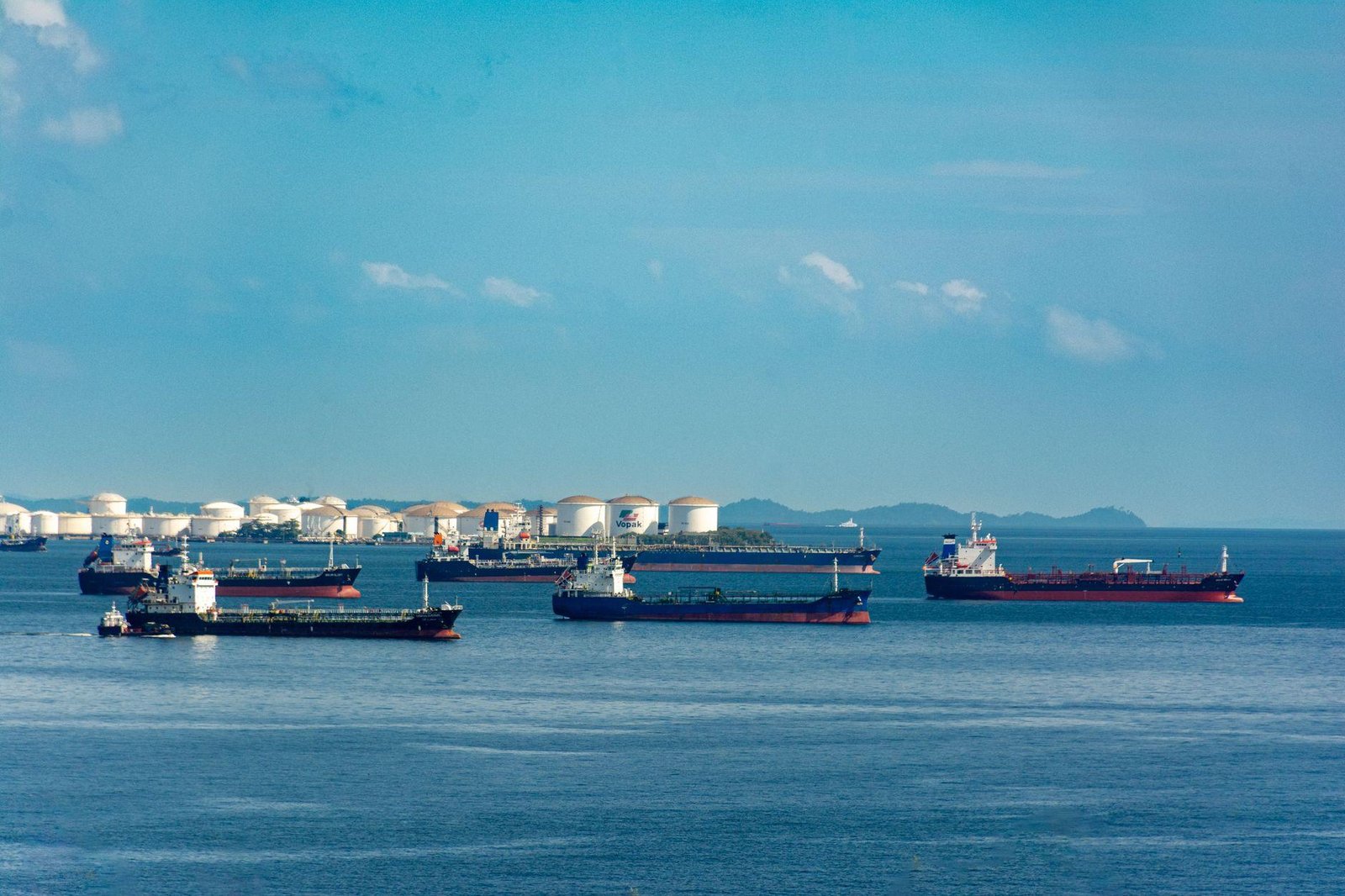

An oil tanker was hit by an unidentified projectile in the Strait of Hormuz on Wednesday, a strike that kept vessels away from the world’s most important energy corridor and challenged Washington’s assertion that the waterway remains open for normal commerce.
The attack added to a run of incidents that has driven shipping through the passage down by about 95 percent, according to industry tracking. The Strait of Hormuz normally carries roughly a fifth of the world’s oil and much of its liquefied natural gas, linking Gulf producers to buyers in Asia and Europe.
US President Donald Trump has described Hormuz as a “functioning strait,” arguing that trade continues despite the security threats. Wednesday’s strike, whose origin was not immediately confirmed, tested that characterisation as owners weighed the cost of sending crews into the narrow channel.
The disruption has rippled far beyond the Gulf. Maritime traffic through Hormuz feeds an industry that moves close to 80 percent of global trade by volume, and the sharp fall in transits has forced rerouting, higher insurance premiums and longer delivery times.
Carriers have diverted some cargoes and slowed schedules as war-risk insurance costs climbed. The reduced flow through the strait has tightened available tonnage elsewhere, pushing up freight rates on alternative routes and adding to energy costs for importers.
The latest strike follows earlier incidents in the same waters this year. Two tankers were reported hit in separate episodes off Oman near the strait, part of a pattern that has kept insurers and shipowners on alert.
The Strait of Hormuz is about 33 kilometres wide at its narrowest point, with shipping lanes hugging the Iranian coast. That geography leaves vessels with little room to avoid threats and concentrates global energy flows through a single choke point.
Gulf exporters including Saudi Arabia, the United Arab Emirates, Qatar and Iraq depend on the passage to reach world markets. A prolonged reduction in transits raises the prospect of supply shortfalls and price volatility for crude and gas buyers across Asia.
Ownership and origin of Wednesday’s projectile had not been established, and no party had claimed responsibility. The vessel’s condition and any casualties were not confirmed in the immediate aftermath of the strike.