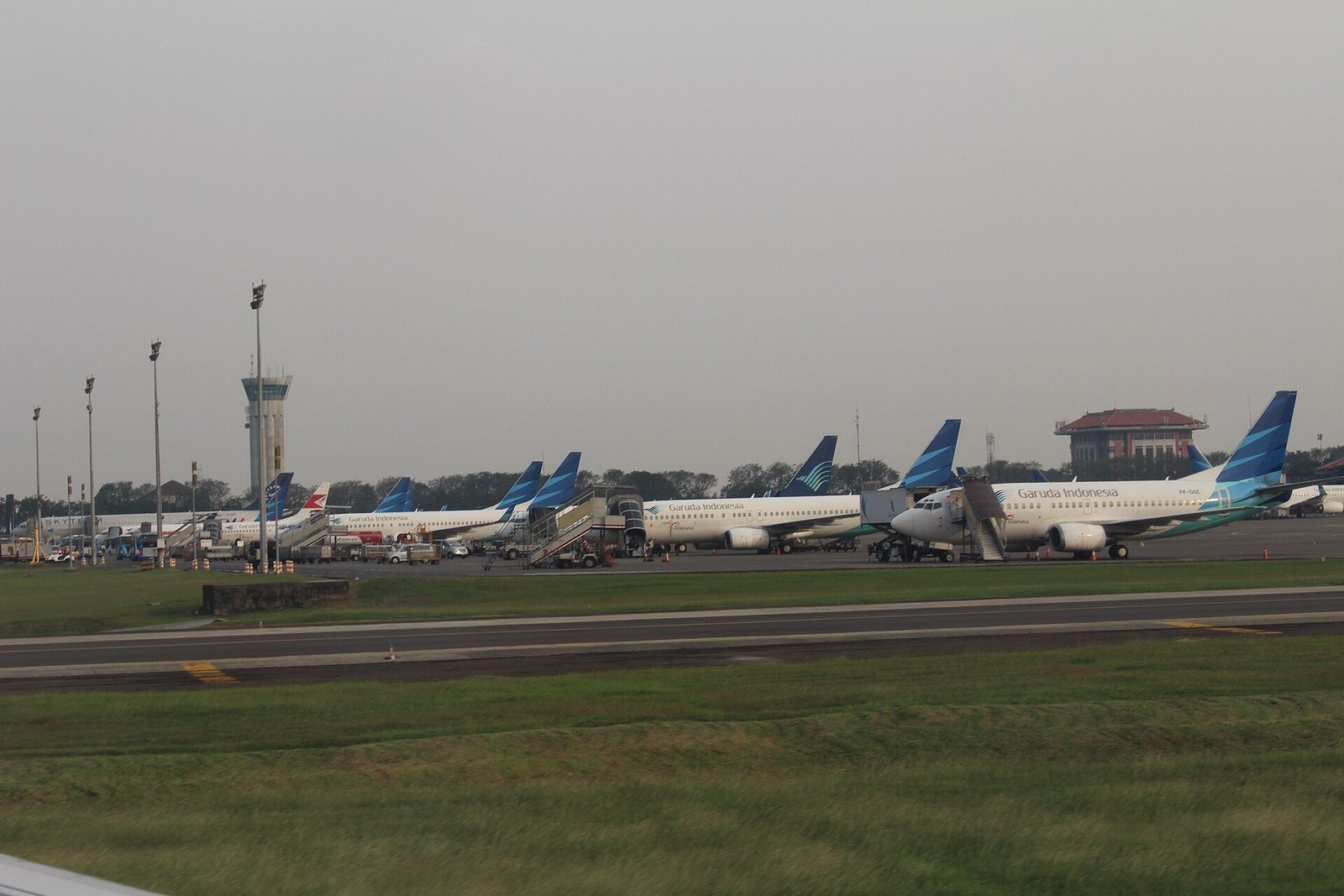

Indonesia’s main airport and four other travel hubs resumed operations early on Tuesday, ending a two-day closure caused by ash from the eruption of Mount Anak Krakatau that had stranded hundreds of thousands of travelers. Soekarno-Hatta International Airport and Halim Perdanakusuma Airport serving Jakarta reopened just after midnight.
Husein Sastranegara Airport in West Java’s Bandung city and two smaller airports in Banten province also came back online. Three other airports stayed shut until 10 a.m., including Radin Inten II Airport in Lampung on the southern tip of Sumatra, despite conditions that had already begun improving across the region.
The closures on Sunday and Monday disrupted nearly 2,961 flights, among them 622 international services, and affected roughly 341,000 passengers across the archipelago. For travelers who spent nights sleeping on terminal floors waiting for rebooked seats, the reopening offered the first clear path home after the sudden shutdown.
Authorities said they moved cautiously even as air tests at several airports showed no traces of ash. “We are taking a conservative approach because wind direction is highly dynamic,” Transportation Minister Dudy Purwagandhi said in a statement. “We want to ensure that volcanic ash has moved away from airports around Anak Krakatau.”
The extended shutdown gave ground crews time to inspect and clean runways, taxiways and aircraft surfaces that may have been exposed to the fine, abrasive particles. Volcanic ash poses a serious hazard to jet engines and can scour cockpit windows, which is why operators halt flights until surfaces are verified clear rather than risk in-flight failures.
The volcano’s continuous eruption, marked by lava fountains and loud booms, ended Sunday, but the island remained active into Tuesday morning. Eruptions were recorded at 5:08 a.m. and 5:34 a.m., though observers could not measure the height of the ash column. Anak Krakatau sits about 150km (93 miles) from Jakarta.
The mountain is the offspring of the historic Krakatoa, whose catastrophic 1883 eruption ranks among the deadliest volcanic events on record. Situated in the Sunda Strait between Java and Sumatra, it has erupted intermittently for years, occasionally forcing the flight cancellations that first disrupted the capital’s air network days earlier.
With most hubs now operating, airlines face the task of clearing a backlog of delayed passengers and repositioning aircraft stranded away from their home bases. Monitoring agencies will continue tracking the volcano, and further disruption cannot be ruled out should wind carry fresh ash back toward Java’s crowded airspace.